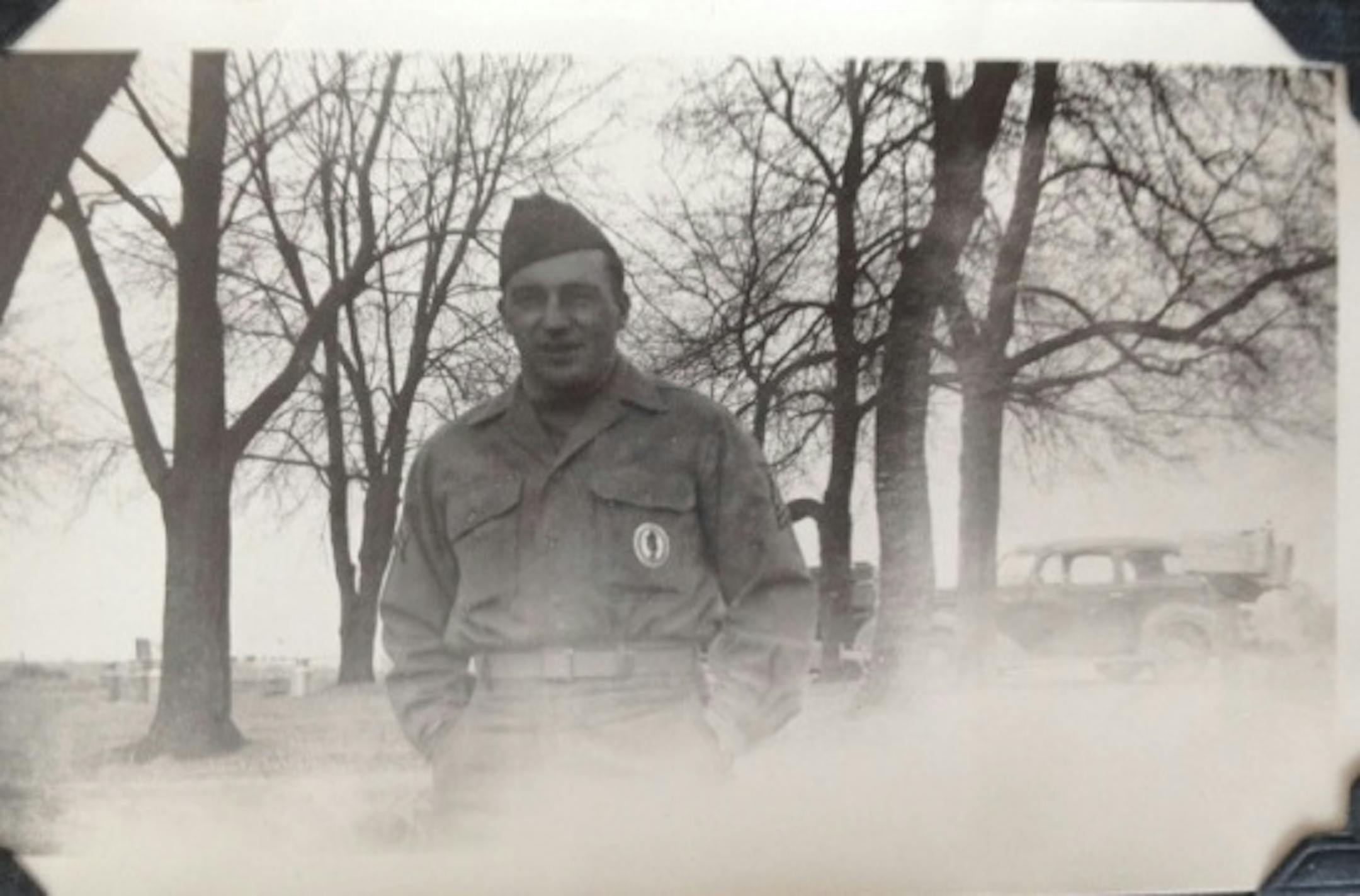
Nazis had just torpedoed Winfred Polzin's landing ship.
"There was an awful jolt," he recalled recently from a rehab center in Cambridge, Minn., where he's fighting off an infection. "And a heck of a noise."
At 97, his memory scalpel sharp, Polzin flashed back 72 years to the month. He was 25, a sergeant from Rush City, Minn. He needed to act fast to dodge the fate of 749 fellow servicemen killed in those early morning hours of April 28, 1944.
Along the southern coast of England, American troops were conducting Operation Tiger — a secret, massive, 30,000-man dress rehearsal for the D-Day invasion of Normandy coming in June.
Things went awry when Nazi torpedoes struck two of the landing boats. Polzin used his bare hands to pry open an airtight door. Stepping past bodies strewn on the deck, he climbed over the railing, inflated his life belt and began crawling down a cargo net toward the dark water below.
That's when a panicked fellow soldier, who couldn't swim, suddenly "grabbed me around the head and down we went" — tumbling into the chilly English Channel.
Lessons gleaned from combat swimming school in London "came back to me right away. I doubled up, kicked my feet into his stomach, reached behind and pushed his chin" to gain separation.
Polzin tried to get the hollering and splashing soldier a life belt. "But he floated away," he said. "I can still see him."