

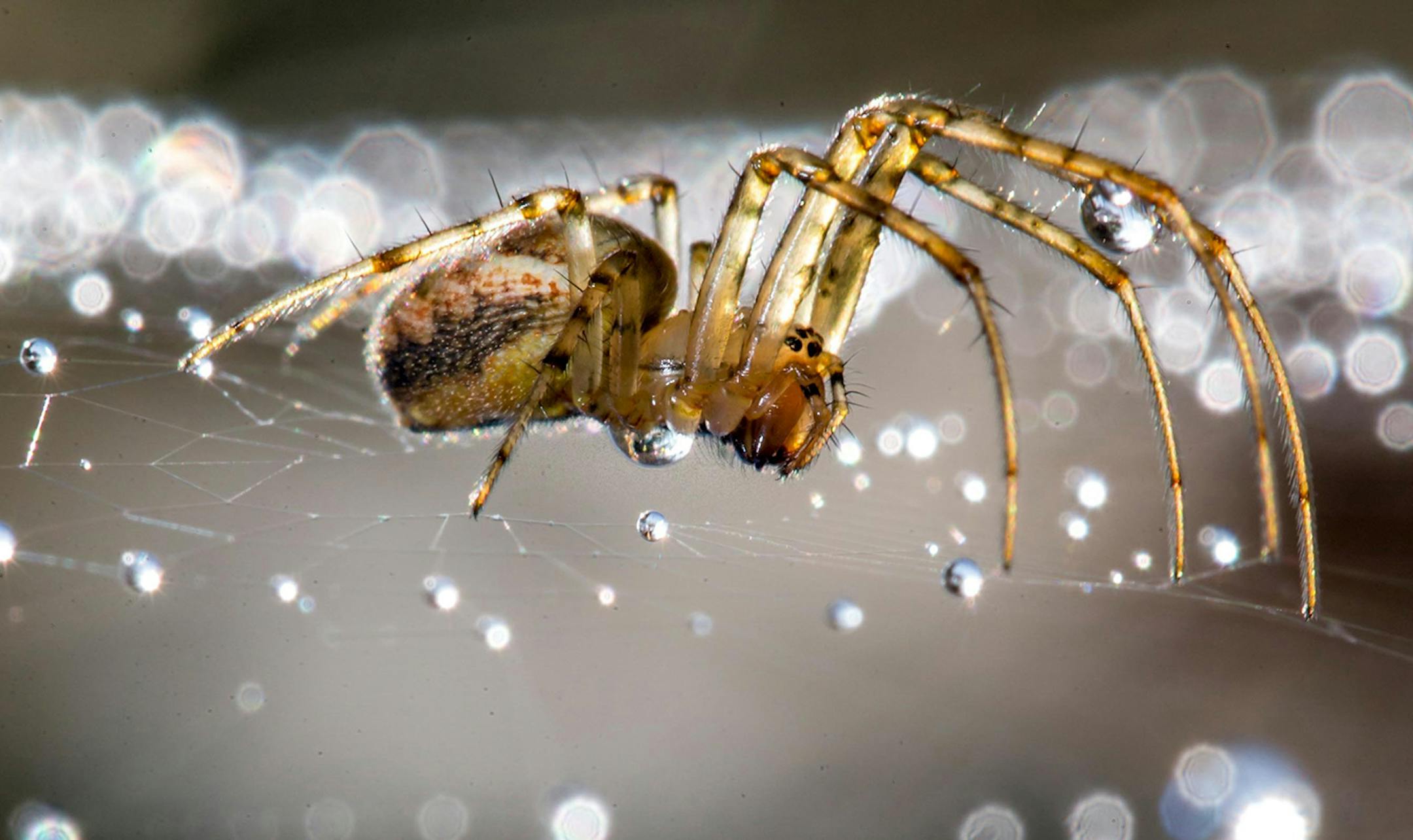
This time of summer, spiders of all kinds become more noticeable. So it's a good time to stop and appreciate them.
We become more aware of their diversity and encounter more webs, though we usually can't tell which spiders made them. Crab spiders don't; they ambush pollinating insects on flowers. And jumping spiders leap onto their prey.
Most familiar are the orb web spiders. They weave large, vertical conspicuously open webs with distinctive spokes that are easily seen on a dewy morning. However, money spiders are probably more significant in control of insect populations. These hidden creatures weave dense, often gossamer-like webs of many shapes in nooks and crannies of rock formations, in brush piles, around branches of plants, and in our homes. Most of the cobwebs we see are by money spiders.
Spiders energetically pursue, seize and consume large numbers of insects. I often think about the numbers of tiny animals that become food for other tiny animals in our backyard. It's not a peaceful scene. But, without spiders, we would be overrun by insects. It is estimated that each year spiders eat enough insects to outweigh the entire human population. If you think about how many mosquitoes it would take to equal your own weight (about 200,000 mosquitoes per pound), perhaps you would be a little friendlier to spiders.
Jim Gilbert's Nature Notes are heard on WCCO Radio at 7:15 a.m. Sundays. His observations have been part of the Minnesota Weatherguide Environment Calendars since 1977, and he is the author of five books on nature in Minnesota.


