

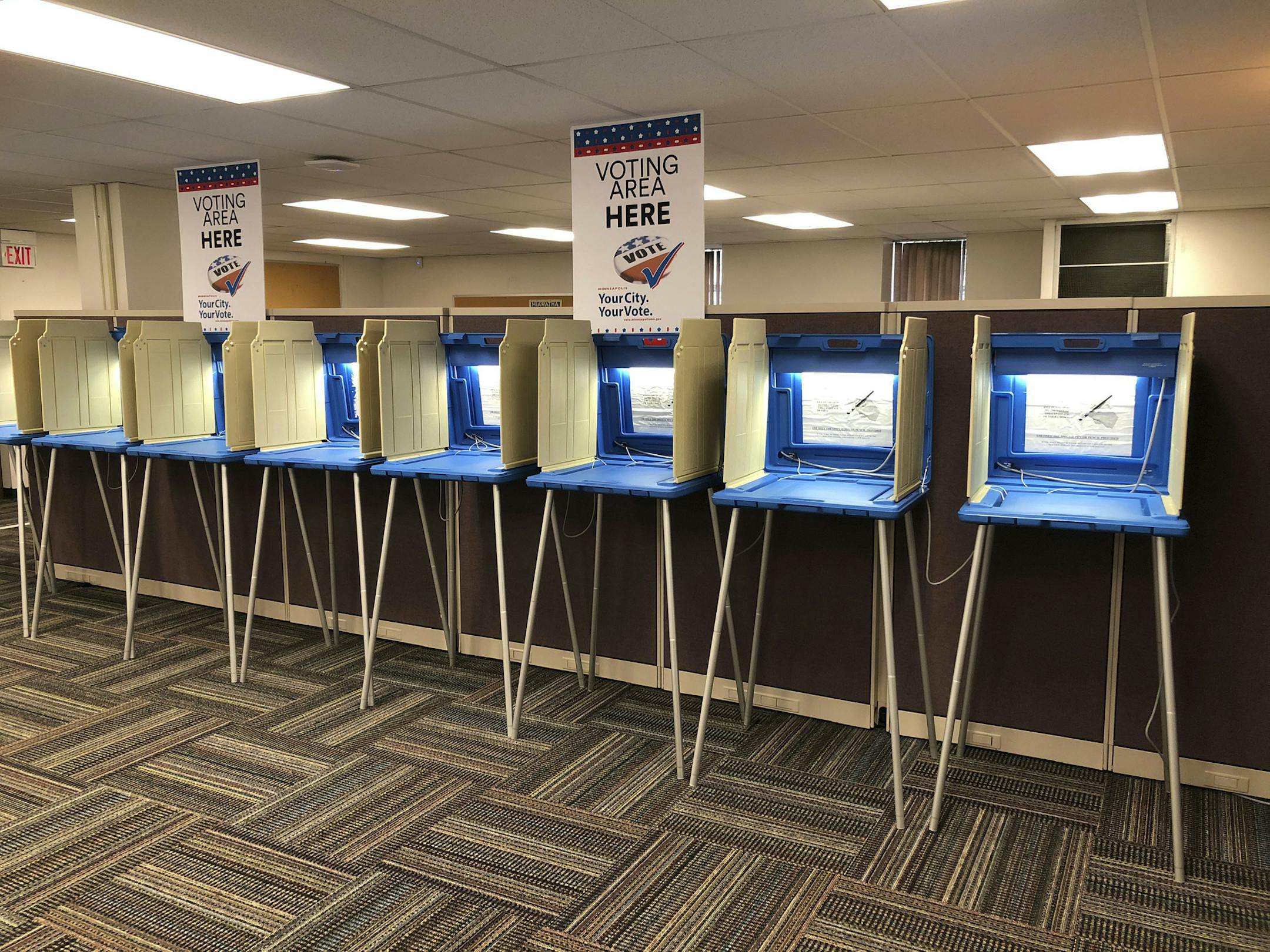
Two national Democratic groups filed a federal lawsuit Wednesday challenging Minnesota ballot designs that will list DFL candidates in the 2020 general election below their major-party rivals, including candidates from two pro-legal marijuana groups.
The complaint, filed by the Democratic Senatorial Campaign Committee, the Democratic Congressional Campaign Committee and two state voters, argues that the current system "creates an unlevel playing field in Minnesota's elections by arbitrarily favoring" candidates based on their political affiliation.
"No party should benefit from an unfair advantage or be penalized because of a systemic disadvantage in our elections," Sen. Catherine Cortez Masto, a Nevada Democrat who chairs the DSCC, said in a statement.
Under current law, major party candidates for partisan races are listed on the ballot based on the average number of votes their party won in the last election, with nominees from the party that received the most votes appearing last.
In the past, those rules meant only that the DFL and the Minnesota Republican Party rotated in the two top slots. But two new political affiliations — the Grassroots-Legalize Cannabis Party and Legal Marijuana Now Party — secured major-party status after winning 5% of the vote in statewide races in 2018. Because their candidates received far fewer votes than the DFL or Republican nominees, state ballots are set to list their nominees first next year.
The plaintiffs are asking the court to block DFL Secretary of State Steve Simon from enforcing the rules and to mandate the creation of a new ballot-order system "that gives similarly situated major-party candidates an equal opportunity to be listed first on the ballot." A spokesman for Simon said the office does not comment on pending litigation.
Ballot order rules vary by state and, in some cases, by election. Some list candidates in alphabetical order, while others perform random drawings or allow the party in power to appear first. In Minnesota, the order for nonpartisan races rotates across precincts, so every candidate appears first on some ballots. Regardless of the system, research suggests the order can make a difference: one 2014 analysis of races in Texas, where the lists are randomized in each county, found that in some cases moving from last to first increased a candidate's vote share by double digits.
David Schultz, a professor of political science at Hamline University, said while Minnesota's system is unusual, Democrats may face an uphill battle demonstrating that they face systemic bias and harm under the current rules.


