

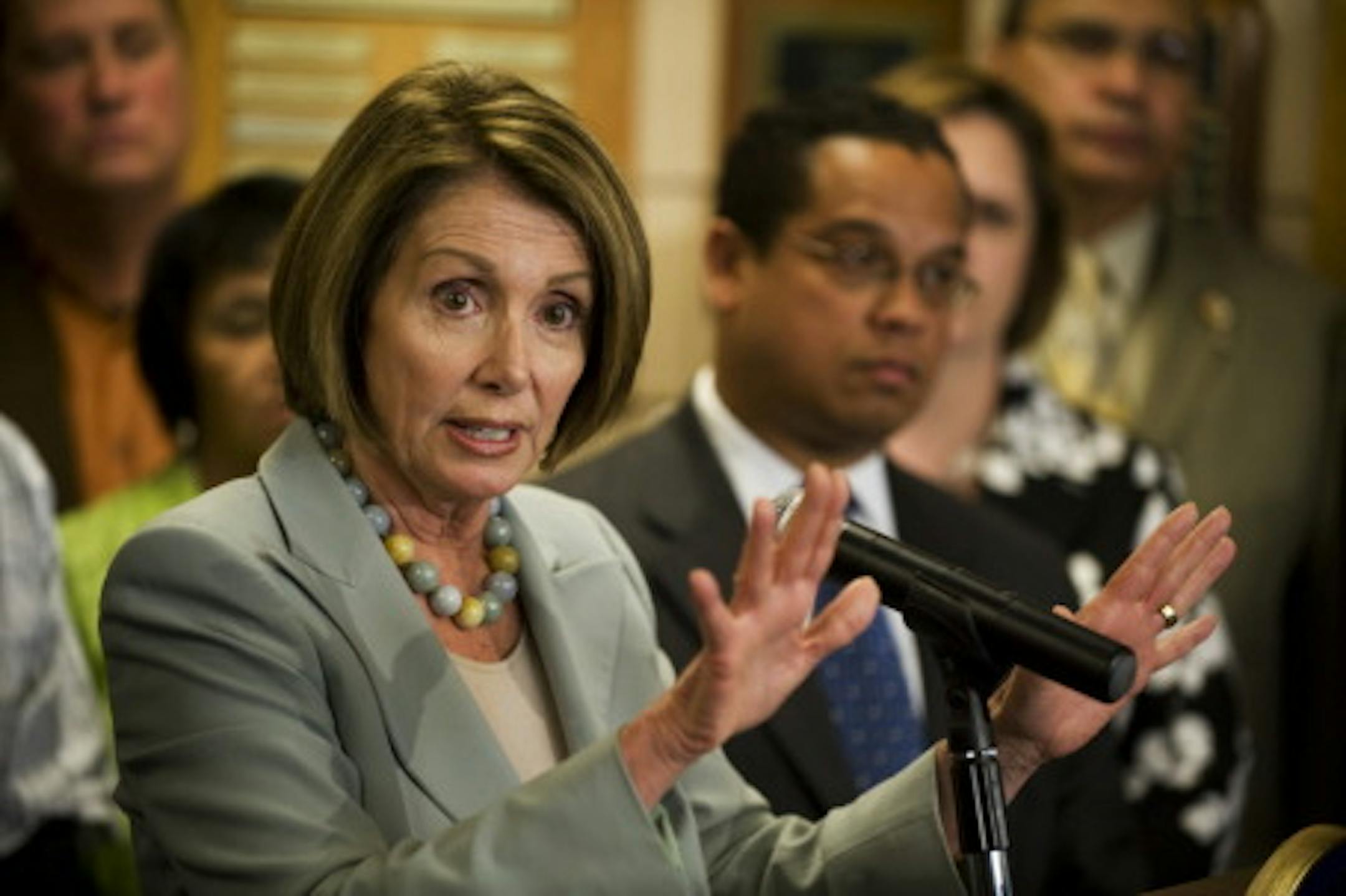
House Speaker Nancy Pelosi is proving to be the Republicans' favorite election-year villain -- and a nightmare for some centrist Democrats who are struggling to survive politically.The GOP's "Fire Pelosi 2010 Bus Tour" is in its third week of roaming the country, stopping for rallies in key congressional districts. Republican-inspired ads in closely contested congressional districts paint Pelosi as a stone-faced, Republican-hating promoter of big government and big liberalism. Some moderate Democrats are running ads distancing themselves from her and are openly questioning whether she should lead them next year.
"She's such an easy target," said Brad Coker, the managing director at Mason-Dixon Polling & Research, which surveys states nationwide.
It's hardly unusual in nonpresidential years for one party to demonize the other side's congressional leaders: Republicans mocked House Speaker Tip O'Neill, D-Mass., in 1982, and Democrats tried the same tactic in 1998 with House Speaker Newt Gingrich, R-Ga.
However, they were the most visible, powerful figures in their parties in election years when the president was from the rival party. This year, President Obama and Pelosi are both Democrats, as is Senate Majority Leader Harry Reid of Nevada.
So why is Pelosi the Republican target of choice?
Because "she has become the face of what everybody doesn't like about Congress," said Scott Jennings, the deputy political director for President George W. Bush and now a Louisville, Ky., GOP strategist.
Pelosi, who's been the speaker of the House since 2007, has employed some highly visible hardball partisan tactics to get controversial measures approved. In the past 21 months, she's muscled through bills that overhauled the nation's health care system, provided $814 billion in economic stimulus, revamped the financial regulatory system and attempted to restrain global warming.
The very qualities that make her a strong speaker -- decisiveness, hardball partisanship and her willingness to impose tough discipline on her members -- often don't play well during election campaigns, when voters want more empathy and civility.


