The noise rattled Curt Benson's home like thunder.
"I heard an explosion, loud enough that I could hear it inside my house with the radio on, and I knew it couldn't be good," said Benson, a retired Washington state sheriff who had returned to his hometown of Heimdal, N.D., for some peace and quiet.
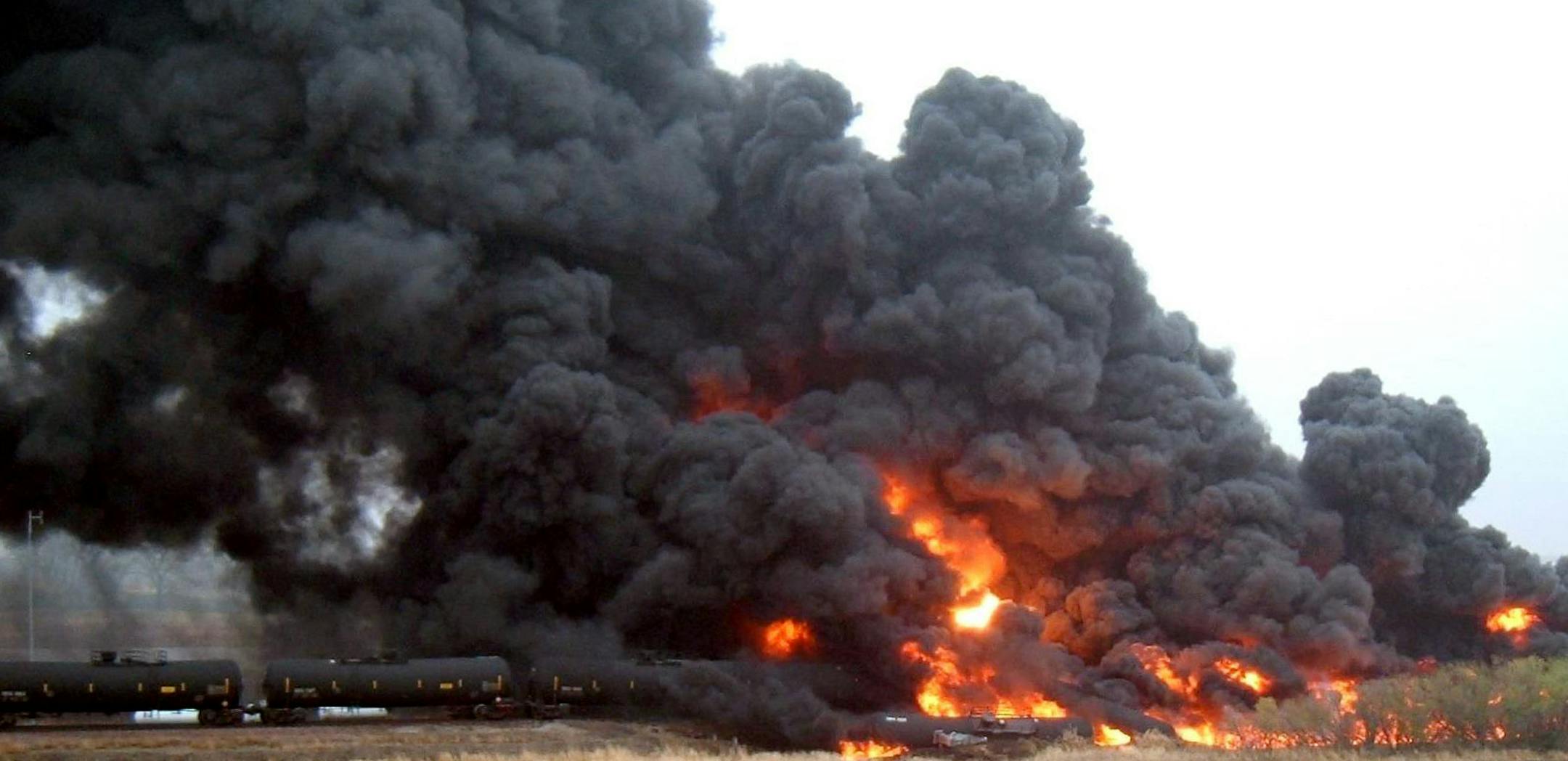
He was shaving at 7:30 a.m. Wednesday when a BNSF Railway train hauling 107 tank cars full of crude oil went off the rails a quarter of a mile from his house. "I looked out my window, and I saw a large cloud of black smoke."
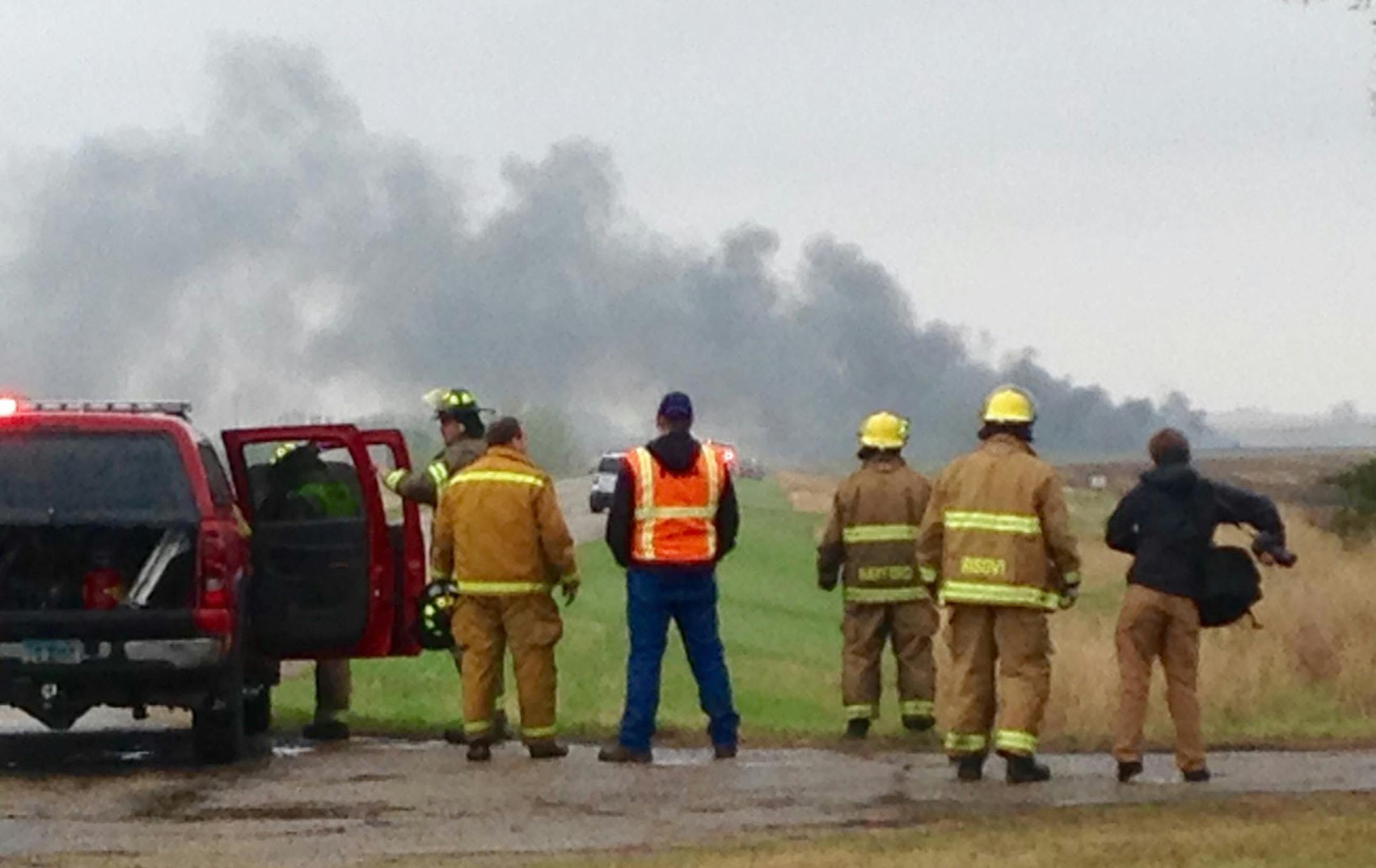
Benson and 30 of his neighbors — the entire population of Heimdal and several nearby farms — were evacuated while emergency workers cordoned off the wreck site to let the six blazing tank cars burn themselves out. Amazingly, no one was hurt.
"They are letting it burn," state Emergency Services spokeswoman Cecily Fong said. "These fires are very hot."
It was the 24th U.S. oil train derailment since the July 2013 disaster in Lac-Mégantic, Quebec, that killed 47 people. Nine subsequent U.S. oil train wrecks released crude oil, producing spectacular fires, but no deaths, in places like Casselton, N.D.; Lynchburg, W.V., and Galena, Ill.
BNSF said all but the six damaged cars at the Heimdal derailment were pulled back to safety. By midafternoon, state officials said, the fire and smoke diminished.
"I cannot speculate on how long the fire could burn," BNSF spokesman Michael Trevino said by e-mail. "In previous incidents, we have seen local fire officials decide that allowing the fire to burn is the best course."