

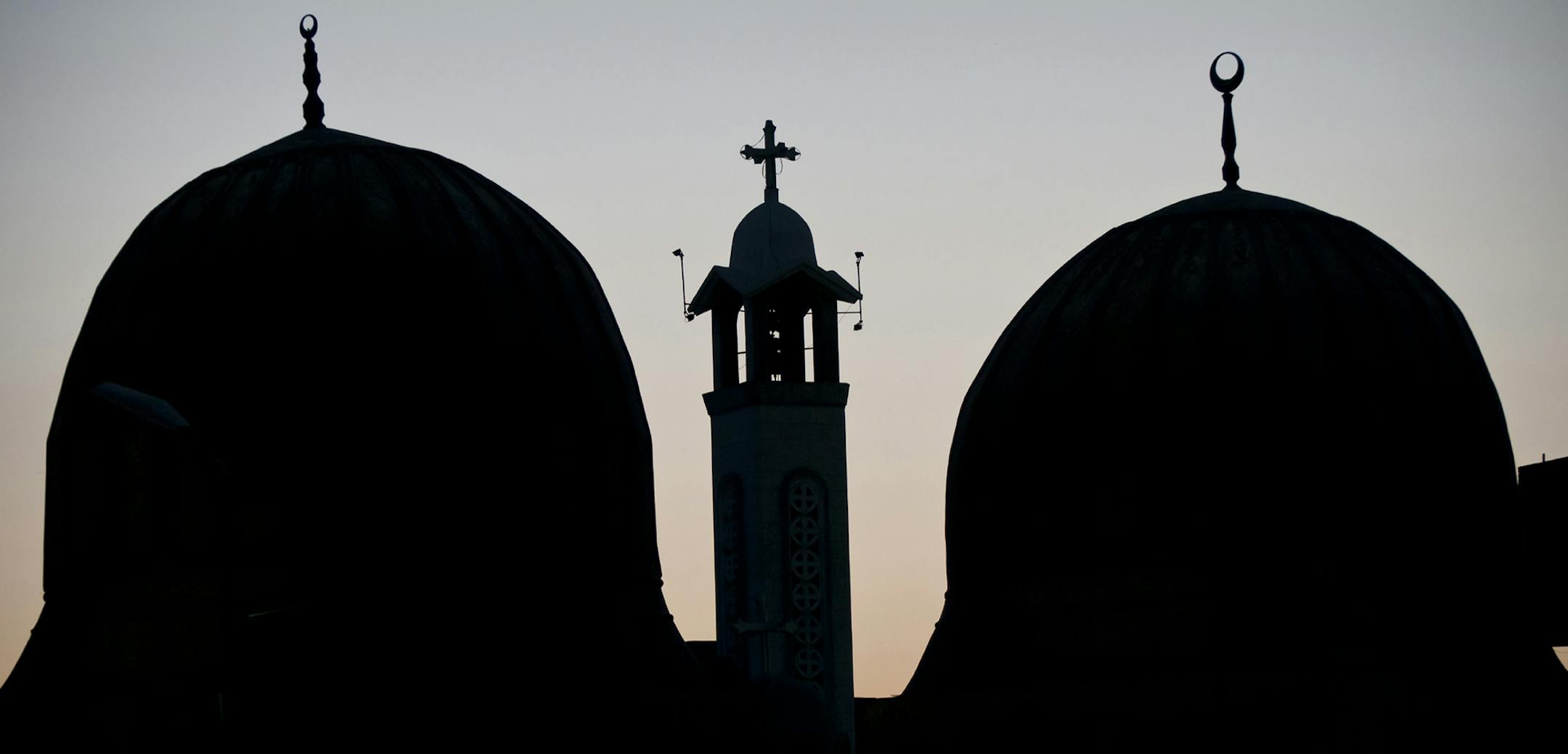
Not long ago, standing with a few hundred Muslims at the Garden of Eden Islamic Cemetery located in a remote corner of a Christian cemetery in Burnsville, we mourned the death of one of our friends.
Reverence was shown not just by the Muslims who came to pay their respects, but by the staff at the Christian cemetery. Everyone reflected the gravity of the situation. Cemetery workers dug the grave, carried the coffin, lowered it into the grave and stepped away to wait quietly until the end of burial; then they cleaned up and walked away.
I thought: "Wow! What a contrast." Muslims in the United States, in this post-9/11 era, are constantly exposed to all sorts of bigotry and discrimination — demonized in the media, attacked, racially profiled at airports, spied upon in schools and mosques, and young Muslims are entrapped by the FBI for show-and-tell news conferences.
But when they die, Muslims are welcomed and given the utmost respect at a Christian cemetery in unmarked graves not far from dead Christians.
I never understood the proximity rules between dead Muslims and Christians. Even if no amount of interfaith dialogue could bring Muslims and Christians together, death can.
As a hyphenated Muslim-American, I couldn't help but remember and wonder about the one Christian family that lived in my village when I was growing up in Egypt 50 years ago. What became of them? What trace had they left, if any? I decided to make a trip back to Egypt and into that history to find out more about this Christian family and why my village was immune to the rift between faiths.
My village, as I remember it, was a small, unassuming place in the Nile delta. Many people's lifestyles hadn't changed much since the time of the pharaohs, and local demographers couldn't find any dramatic census changes for a long time. Before CNN and Al Jazeera, villagers lived the simple life of a farming community, and their interest in the outside world extended only as far as the edge of their fields.
The men left with their animals for work at dawn and came back at dusk. Their wives stayed home, busy preparing hearty meals and raising kids to work on the farm as soon as they mastered their first step.


