1:36
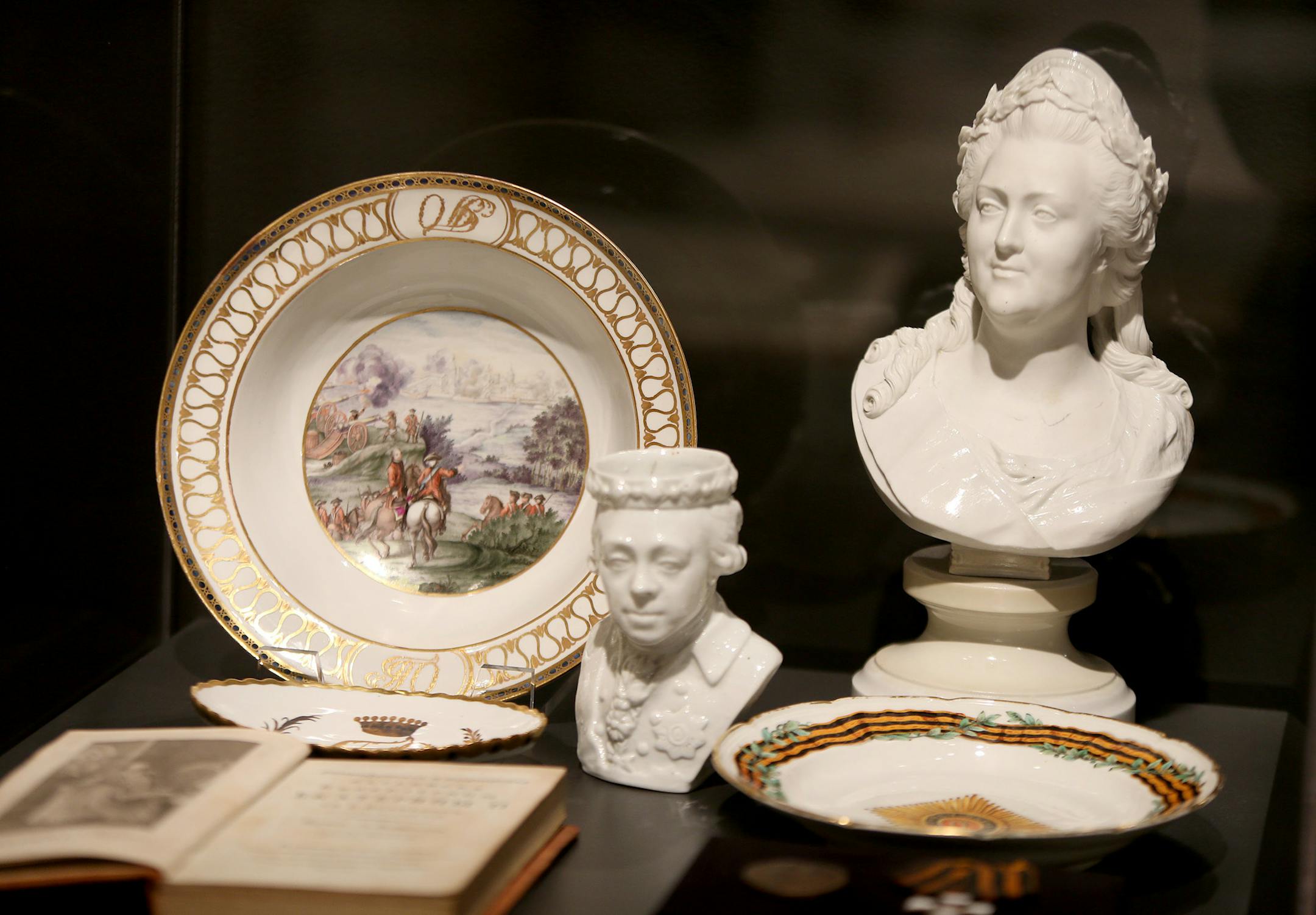
1:36Amid all the dazzling memorabilia — maps, letters, coronation menus, photos, paintings, china and even bejeweled Fabergé buttons — in "The Romanovs: Legacy of an Empire Lost," it's a humble petticoat that most haunts the mind after leaving the Museum of Russian Art in south Minneapolis.
Made of white batiste linen so fine it's almost translucent, Anastasia's half-slip and someone else's pretty blouse now adorn a tall mannequin in a little side room. Her floor-length petticoat is simple, unembellished aside from embroidery at the hem and two initials stitched in red at the back of the narrow waistband: A.N. for Anastasia Nicolaevna, daughter of Nicholas II, the last czar of Russia.
Anastasia wasn't wearing that slip when she died sometime after midnight July 17, 1918, in a basement in Ekaterinburg in the Ural Mountains. She and 10 others were murdered there — her parents, three sisters, a brother, their doctor, maid, valet and cook.
Afterward reports were sent to Moscow, things were packed and shipped. The civil war dragged on between the "Red" Bolshevik revolutionaries and the "White" Russians loyal to the czar. The Romanov dynasty, which ruled Russia for three centuries, faded into history and legend. But Romanov things survived and found their way into the outside world, cherished by monarchists, sold by the Soviet government, sought by collectors, preserved by museums.
"Legacy" gathers more than 200 Romanov artifacts and historic documents from 25 institutions and private collections, including souvenirs from the 1896 coronation of Nicholas II brought home by a pair of pretty Minnesota girls who were among the 15 American "Strangers of Distinction" invited to the Kremlin festivities.
Beautifully designed and installed, as always at TMORA, the show offers a transporting experience of Russia's tragic past.
'They became close to me'
It's important to remember that "everything in this exhibition is authentic; it's the real stuff," said curator Masha Zavialova, who tracked down the material with help from a team of consultants.
A substantial portion is on loan from the Foundation of Russian History at Holy Trinity Seminary, a Russian Orthodox repository in Jordanville, N.Y.