
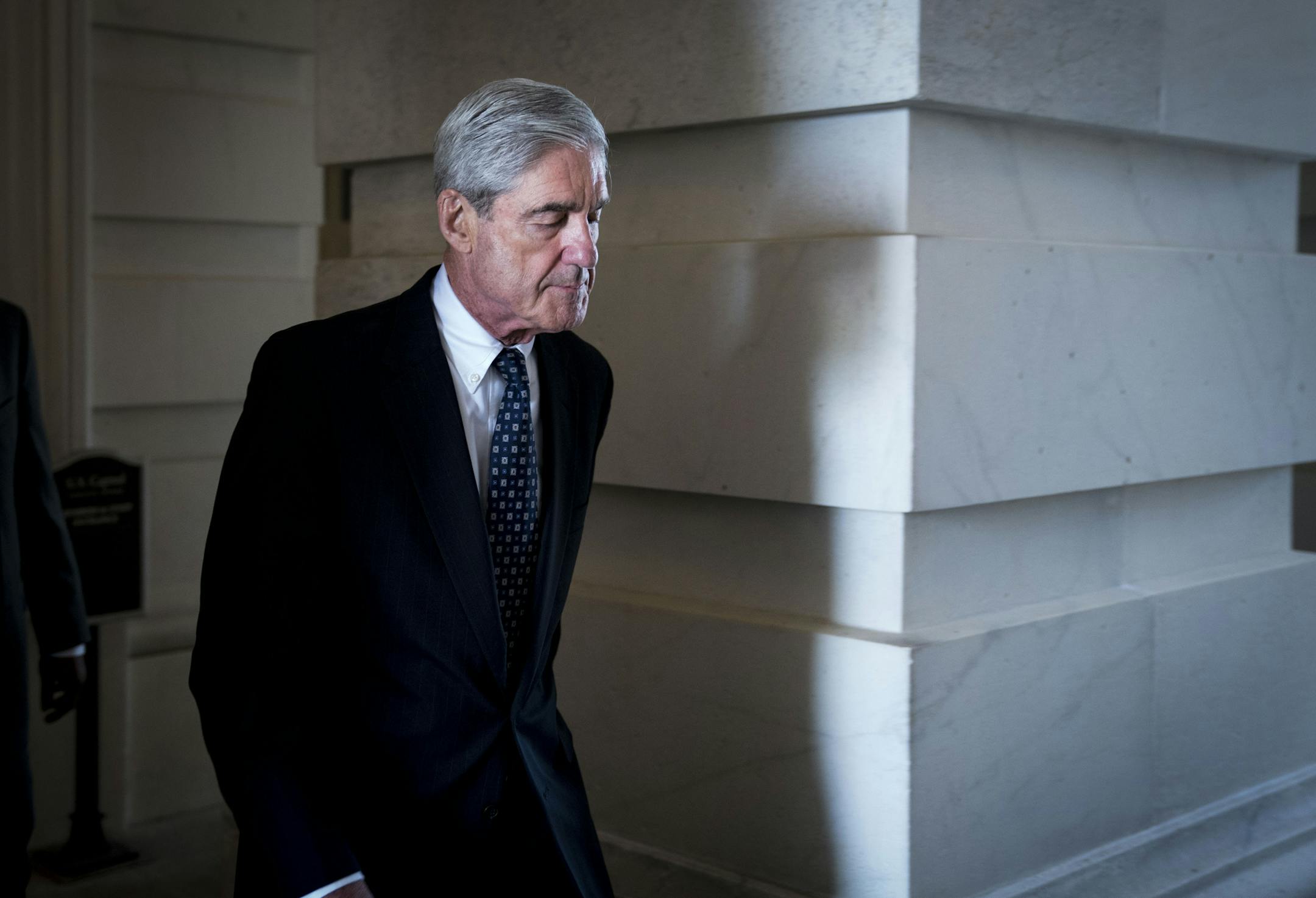
Mueller examining Trump's tweets in wide-ranging obstruction inquiry

Attacks on Sessions, Comey eyed in obstruction probe.

The New York Times
July 27, 2018 at 4:25AM
FILE-- Robert Mueller, the special counsel leading the Russia investigation, leaves the Capitol in Washington, June 21, 2017. Mueller is scrutinizing tweets and negative statements from the president about Attorney General Jeff Sessions and the former FBI director James Comey, according to three people briefed on the matter in 2018. (Doug Mills/The New York Times)
Robert Mueller, the special counsel leading the Russia investigation, leaves the Capitol in Washington. Mueller is scrutinizing tweets and negative statements from the president about Attorney General Jeff Sessions and the former FBI director James Comey, according to three people briefed on the matter. (The Minnesota Star Tribune)

WASHINGTON – For years, President Donald Trump has used Twitter as his go-to public relations weapon, mounting a barrage of attacks on celebrities and then political rivals even after advisers warned he could be creating legal problems for himself.

Those concerns now turn out to be well-founded. The special counsel, Robert Mueller, is scrutinizing tweets and negative statements from the president about Attorney General Jeff Sessions and former FBI Director James Comey, according to three people briefed on the matter.

Several of the remarks came as Trump was also privately pressuring the men — both key witnesses in the inquiry — about the investigation, and Mueller is examining whether the actions add up to attempts to obstruct the investigation by both intimidating witnesses and pressuring senior law enforcement officials to tamp down the inquiry.

Mueller wants to question the president about the tweets. His interest in them is the latest addition to a range of presidential actions he is investigating as a possible obstruction case: private interactions with Comey, Sessions and other senior administration officials about the Russia inquiry; misleading White House statements; public attacks; and possible pardon offers to potential witnesses.

None of what Mueller has homed in on constitutes obstruction, Trump's lawyers said. They argued that most of the presidential acts under scrutiny, including the firing of Comey, fall under Trump's authority as the head of the executive branch and insisted that he should not even have to answer Mueller's questions about obstruction.

But privately, some of the lawyers have expressed concern that Mueller will stitch together several episodes, encounters and pieces of evidence, like the tweets, to build a case that the president embarked on a broad effort to interfere with the investigation. Prosecutors who lack one slam-dunk piece of evidence in obstruction cases often search for a larger pattern of behavior, legal experts said.

The special counsel's investigators have told Trump's lawyers they are examining the tweets under a wide-ranging obstruction-of-justice law beefed up after the Enron accounting scandal, according to the three people. The investigators did not explicitly say they were examining possible witness tampering, but the nature of the questions they want to ask the president, and the fact that they are scrutinizing his actions under a section of the United States Code titled "Tampering With a Witness, Victim, or an Informant," raised concerns for his lawyers about Trump's exposure in the investigation.

A spokesman for Mueller's office declined to comment.
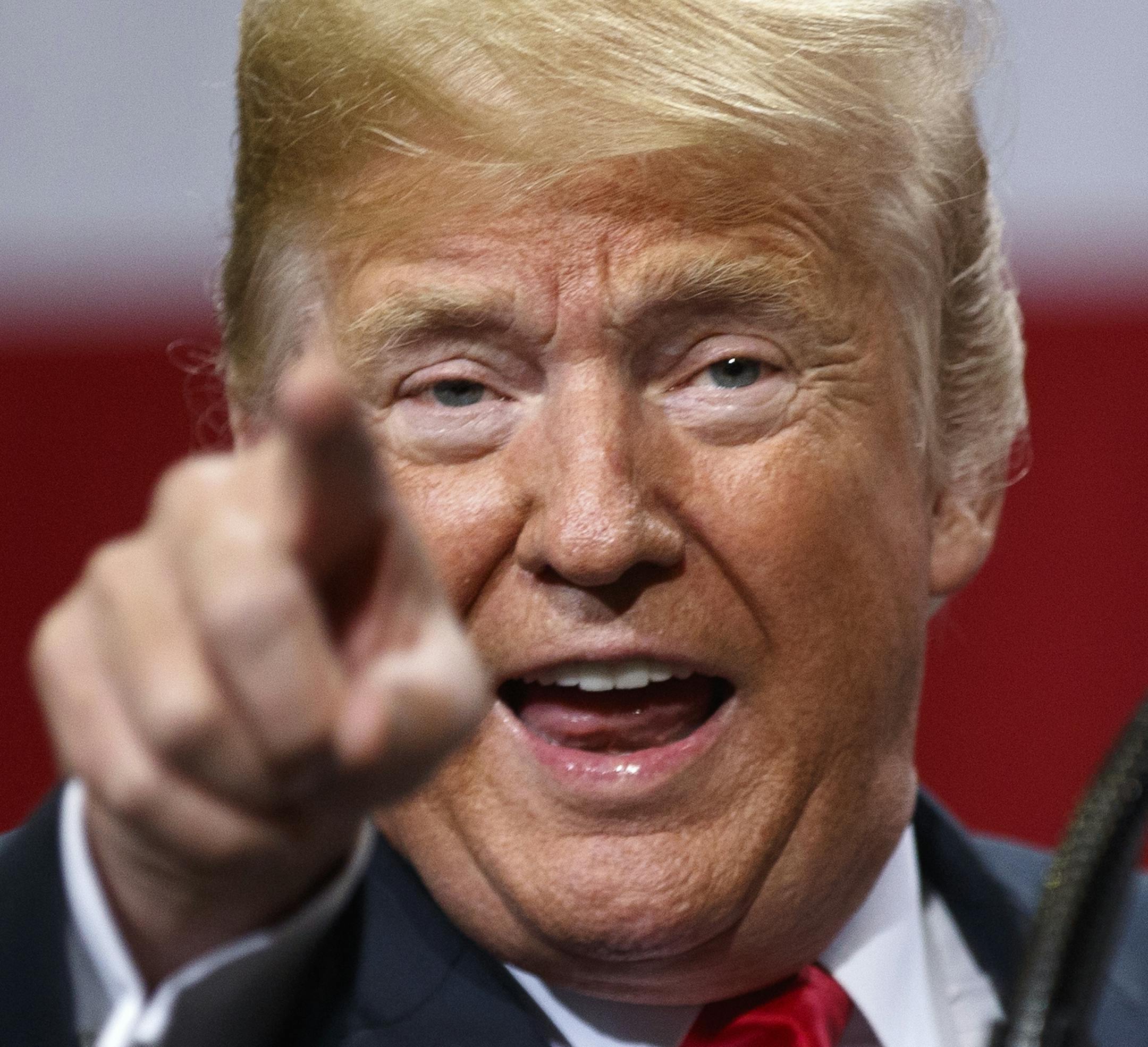
Trump's lead lawyer in the case, Rudy Giuliani, dismissed Mueller's interest in the tweets as part of a desperate quest to sink the president.

"If you're going to obstruct justice, you do it quietly and secretly, not in public," Giuliani said.

Giuliani was referring to more typical obstruction cases, where prosecutors focus on measures taken in private, like bribing witnesses, destroying evidence or lying under oath. While some of Trump's private acts are under scrutiny, such as asking Comey for loyalty, his public conduct is as well. That sets this investigation apart, even from those of other presidents; Richard Nixon and Bill Clinton were accused of privately trying to influence witness testimony.

But as in those cases, federal investigators are seeking to determine whether Trump was trying to use his power to punish anyone who did not go along with his attempts to curtail the investigation.

If Mueller opts to tailor a narrative that the president tried to obstruct the Russia investigation, he would have to clear several hurdles to make a strong case. He would need credible witnesses (Comey and Sessions have been the target of concerted attacks by Trump and allies, undercutting their standing) and evidence that Trump had criminal intent (the special counsel has told the president's lawyers he needs to question him to determine this).

"There's rarely evidence that someone sits down and says, 'I intend to commit a crime,' so any type of investigation hangs on using additional evidence to build a narrative arc that hangs together," said Samuel Buell, a professor of law at Duke University and former senior federal prosecutor. "That's why a prosecutor wants more pieces of evidence. You need to lock down the argument."

It is not clear what Mueller will do if he concludes he has enough evidence to prove that Trump committed a crime. He has told the president's lawyers that he will follow Nixon- and Clinton-era Justice Department memos that concluded that a sitting president cannot be indicted, Giuliani has said. If Mueller does not plan to make a case in court, a report of his findings could be sent to Congress, leaving it to lawmakers to decide whether to begin impeachment proceedings.

President Donald Trump delivers remarks on trade policy at U.S. Steel’s Granite City Works, in Granite City, Ill., July 26, 2018. Earlier, Trump visited a community college in Iowa. (Tom Brenner/The New York Times)
President Donald Trump spoke about trade Thursday at an Illinois steel mill. (The Minnesota Star Tribune)
about the writers

about the writers

Michael S. Schmidt

Maggie Haberman

More from Minnesota Star Tribune

See More
card image
J. SCOTT APPLEWHITE, ASSOCIATED PRESS/The Minnesota Star Tribune

The "winners" have all been Turkeys, no matter the honor's name.

In this photo taken Monday, March 6, 2017, in San Francisco, released confidential files by The University of California of a sexual misconduct case, like this one against UC Santa Cruz Latin Studies professor Hector Perla is shown. Perla was accused of raping a student during a wine-tasting outing in June 2015. Some of the files are so heavily redacted that on many pages no words are visible. Perla is one of 113 UC employees found to have violated the system's sexual misconduct policies in rece