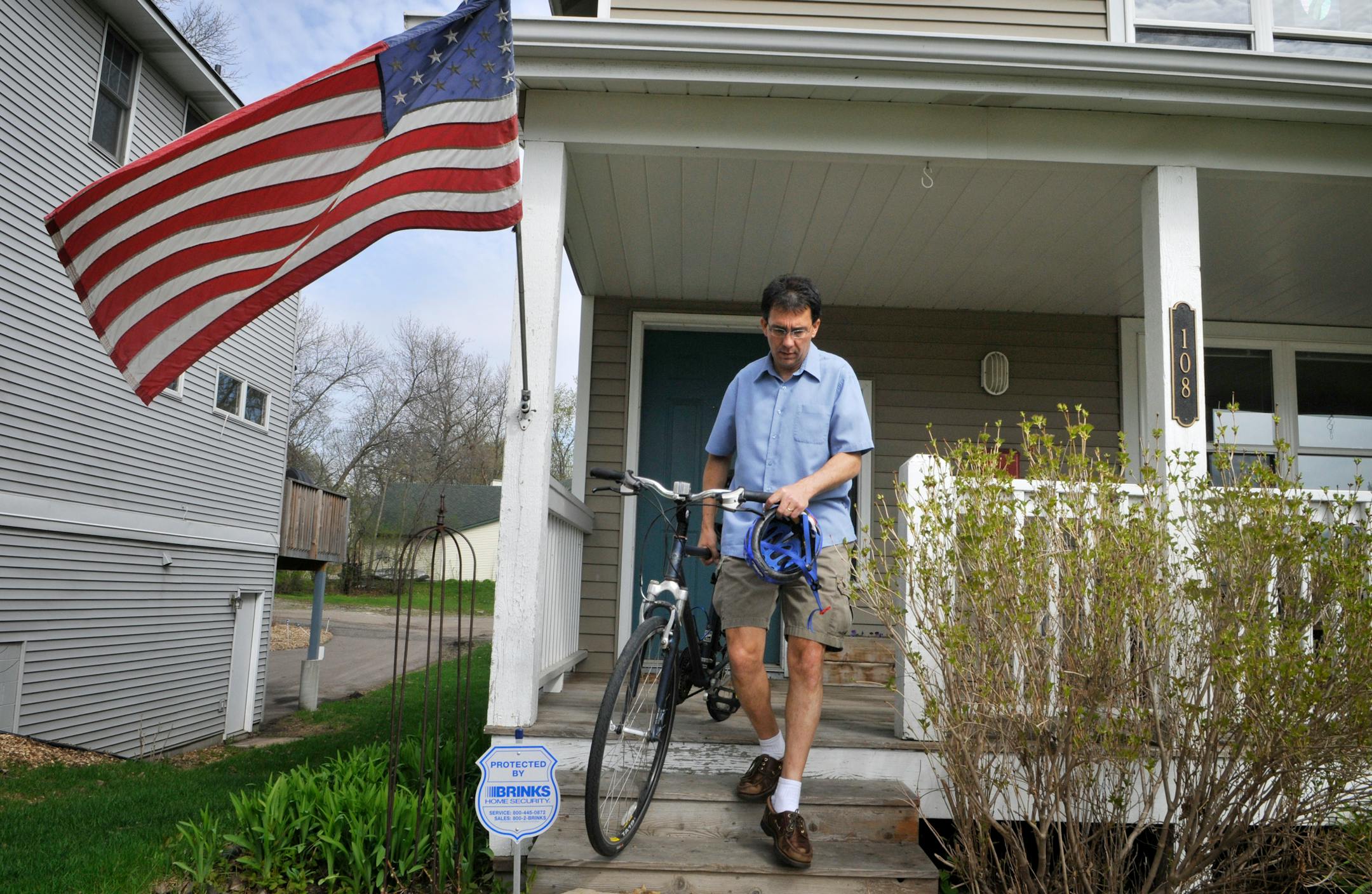
As a low-key, behind-the-scenes architect who has been at the forefront of the movement to reduce the environmental impact of thousands of houses, apartments and other buildings in the state, Rick Carter has superhero status in my world and the green building community.
By helping to reduce consumption of energy and materials, as well as improving the indoor air quality in those spaces, he has touched many Minnesotans with his work, but few know his name. Nonetheless, after 22 years with LHB Inc., an architecture and engineering firm in Minneapolis, Carter was recently appointed marketing director of the company and has been a tireless advocate and catalyst for sustainable design in Minnesota.
He is a member of the Governor's Minnesota Climate Change Advisory Group, which is charged with helping determine how the state can reach its goal of reducing greenhouse gas emissions by 80 percent by the year 2050, from 2005 levels.
In fact, several of the group's proposals are working their way through the current legislative session. For example, one bill proposes that all state-funded buildings be required to produce at least 2 percent of their energy on-site with wind or solar.
I recently visited with Carter in hopes of learning more about what motivates him to make Minnesota houses and buildings among the nation's most energy-efficient and sustainable.
Q How did you get interested in sustainable design?
A In the early '90s we [at LHB] were brainstorming about what direction we should take and we decided we should pursue our projects in a more environmentally sound way. We started by calling it Healthy Building Design, with the tagline of "healthy for you, the planet and your pocketbook."
We were almost immediately hired to design a house for a woman with multiple chemical sensitivity and have been hired to do these kinds of very special projects ever since.