

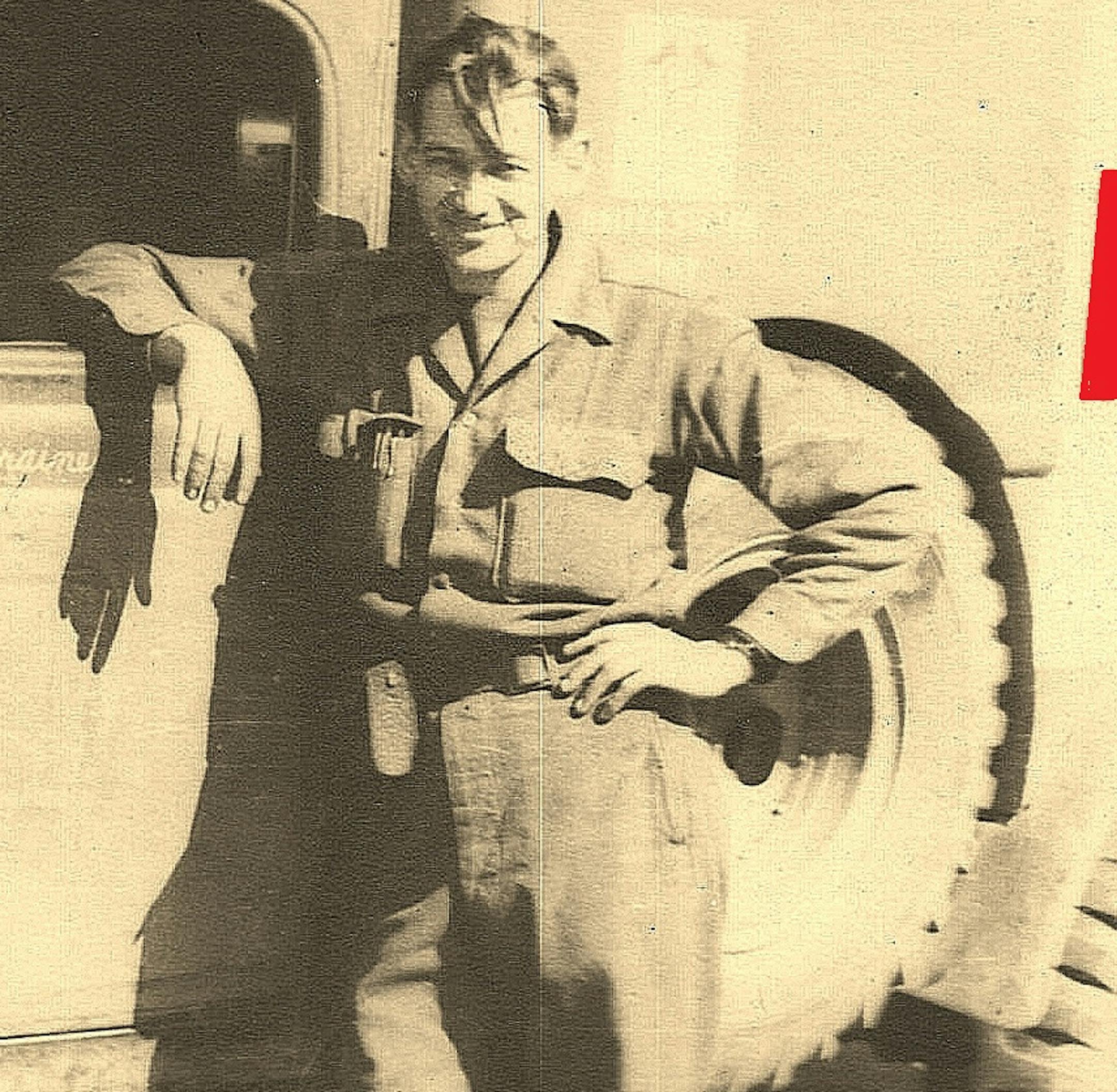
Before World War II, Bayer Ross worked as a tailor in his father's dry-cleaning shop in the southwestern Minnesota town of Mountain Lake. After the war, he met his future wife when she dropped off some dirty laundry at the shop.
He didn't like to talk about the years in between when he served as an Army medic from 1942 to 1945. Like so many World War II veterans, Ross was reluctant to relive what he saw in North Africa, Sicily or during the D-Day invasion and an ensuing inspection of a German concentration camp.
"It's just that when I go back to that time I think about the fellows who died in my arms," he said. "God knows I closed too many eyes."
He counted 47 soldiers he personally declared killed in action. But he kept most of the awful memories to himself, stitching alterations and greeting customers in Mountain Lake — then a town of 1,700 with a lake but no mountain.
When he married Lois in 1950, her 4-year-old brother, Paul Arneson, served as a ring bearer. By 1968, Arneson began his own military career — climbing to U.S. Air Force colonel when he retired.
"Bayer must have sensed my genuine interest in his story and slowly began opening up to me," Arneson writes in the introduction of his new book, "I Closed Too Many Eyes, A World War II Medic Finally Talks," (www.paularneson.com).
Arneson will discuss the book Oct. 10 at the American Swedish Institute in Minneapolis at 1 p.m. He combed through Ross' letters and journal entries to stitch together a compelling account.
"Because his source … is so very personal the reader is taken deep into the trenches of WWII in a very intimate way," said Ralph Peluso, literary editor of the Zebra, a monthly newspaper in Arlington, Va. "Bayer's recollections are so detailed I felt as though I was alongside soldiers."


