

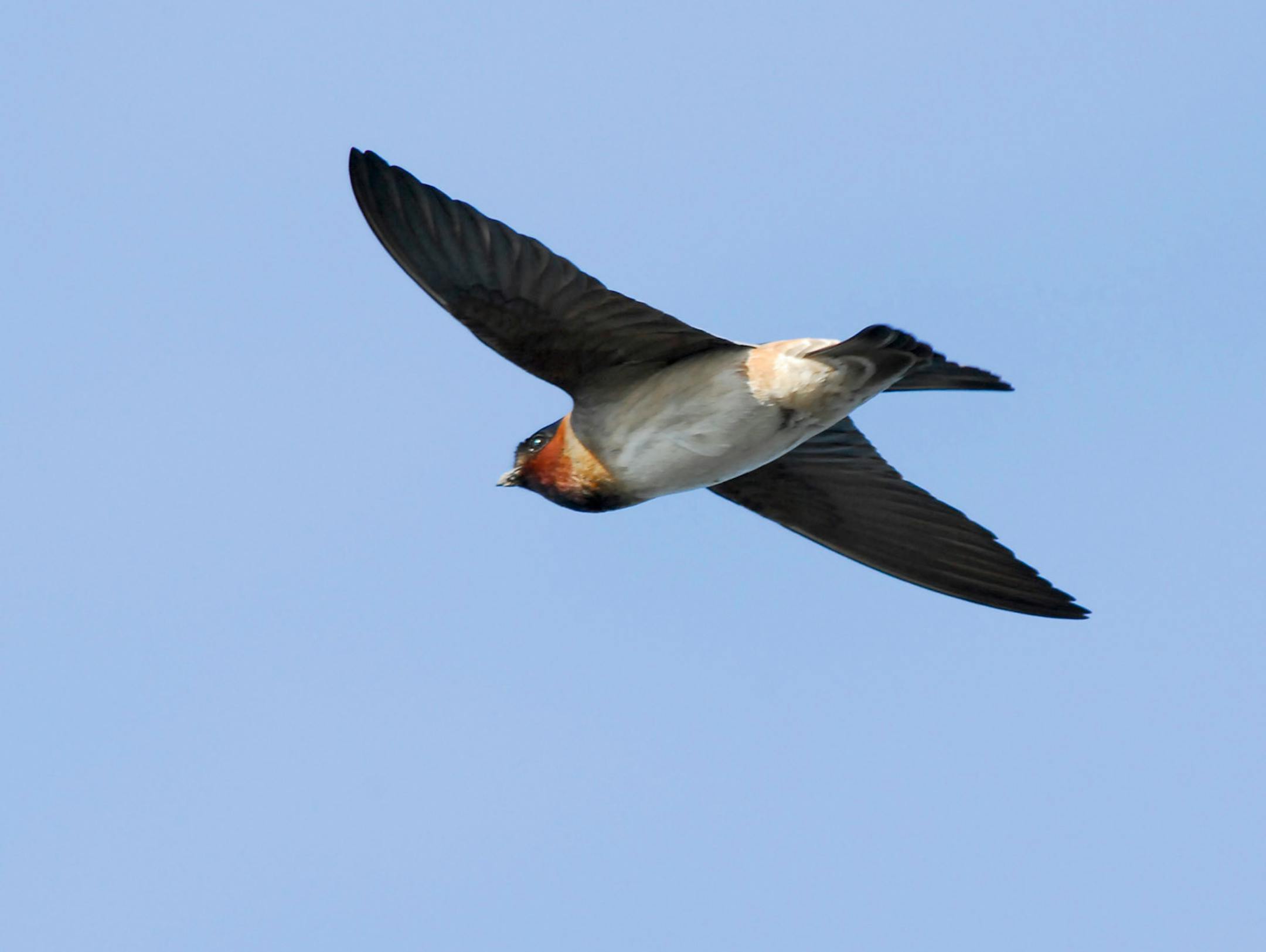
If birds held their own summer Olympics, medals for aerial artistry would go to swallows and swifts.
These birds chase flying insects on the wing, ranging continuously through the air on the long days of summer. Their superb flying skills allow them to swoop and dive, bank and circle, swiftly changing direction in pursuit of a meal.
At this time of year, insects make up a large part of the diet of most birds. But each species has its own foraging style. Stolid robins drop heavily to the ground to listen for worms, bluebirds perch patiently while waiting for a tasty beetle to stroll by. Though they're good at getting dinner, these birds lack the sheer showmanship of swallows and swifts, whose natural element is the sky.
Mosquito myth
There's a persistent myth that swallows and swifts (including purple martins, our largest swallow) help control mosquitoes. No matter how often martin house manufacturers tout this, studies show that mosquitoes make up an insignificant portion of their diets.
Unlike nighthawks, swifts and swallows don't simply open their beaks and vacuum up swarms of insects. They make a meal one insect at a time. Instead of going after mosquitoes, they focus on larger prey such as dragonflies, butterflies, moths, beetles, bees, wasps and flies.
If you buy a purple martin house as a way to keep mosquitoes under control, you'll be disappointed. But if your goal is to provide a place for avian athletes, you'll be pleased.
Ban bug zappers


