

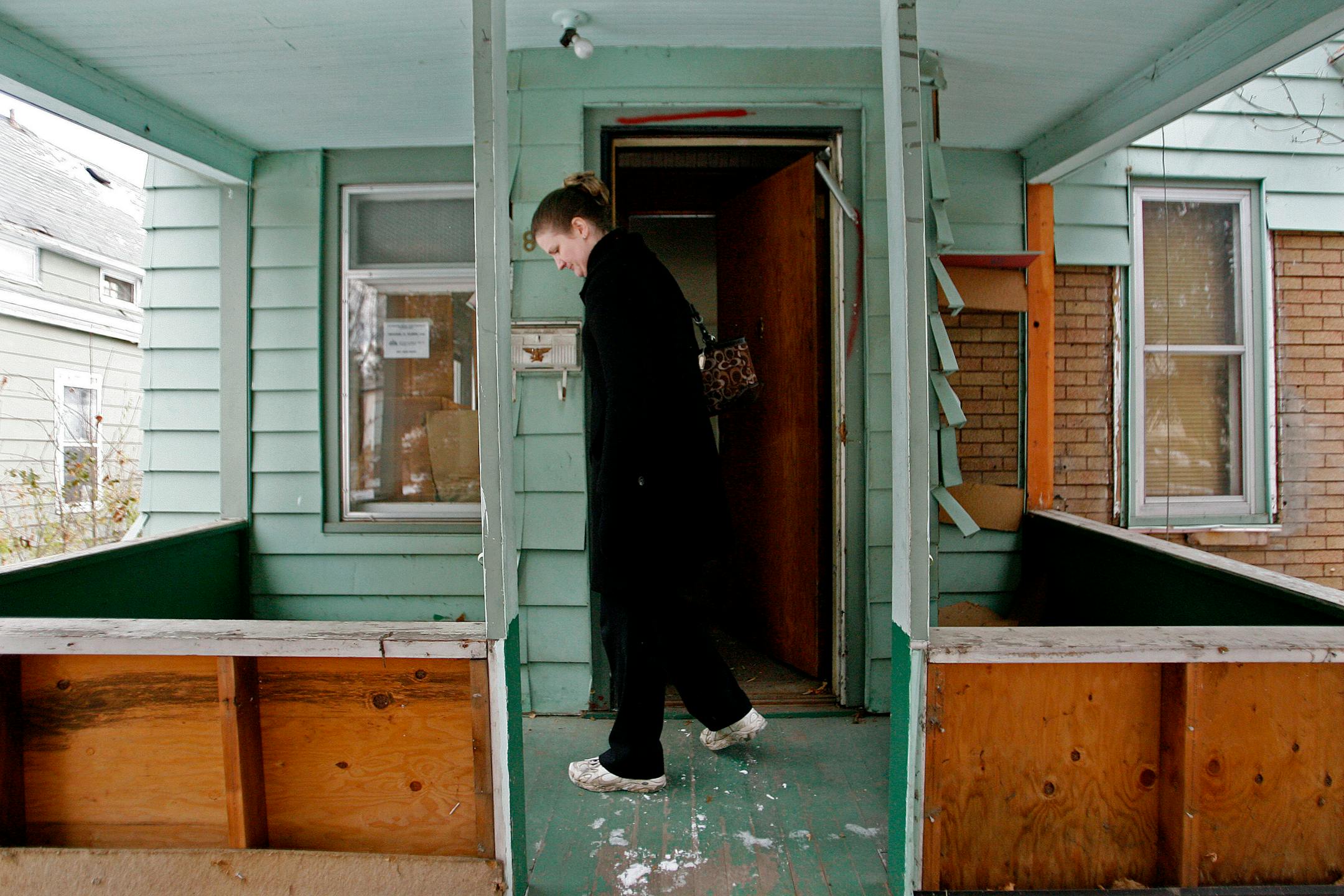
Stephanie Gruver has entered more foreclosed north Minneapolis houses than a ring of copper thieves.
Gruver's eye is critical to determining whether an empty house has a future. She has scrutinized close to 400 foreclosed houses.
Her bias is toward preserving the North Side's housing stock. But close to one-third of the houses she examines fall short.
"There are houses that definitely need to be saved," she said. "But unfortunately, there are houses that are so far gone -- and they weren't extraordinary houses to begin with -- so it doesn't make any sense that they should continue."
Gruver was hired 16 months ago by the Greater Metropolitan Housing Corp. (GMHC) as the housing nonprofit began to use millions of state and local dollars intended to get foreclosed houses market-ready. That's recently been augmented by millions more in federal housing recovery dollars. The nonprofit is the main agent for city foreclosure recovery efforts. It also gets the right of first refusal to buy foreclosed homes owned by several national lenders.
The North Side has been the epicenter of close to 8,000 foreclosures in the city since the start of 2006, with a foreclosure rate several times the city average. Blocks are dotted with boarded houses with unkempt yards or unshoveled walks and trash that drive down property values.
Joined by a real estate agent, Gruver tries to detect the character flaws that doom a house, such as flawed structural underpinnings or functional obsolescence. She brainstorms in others how to reconfigure them for more appeal.
If a house looks salvageable, as most do, construction managers from the housing corporation work up a detailed estimate to compare against the expected sales price.


