

Big premium increases for next year are pushing more MNsure shoppers toward health plans with large deductibles.
It's potentially a worrisome trend, since people who wind up getting sick and needing expensive health care could face thousands of dollars in extra out-of-pocket costs. That, in turn, could add up to more unpaid bills at hospitals and clinics.
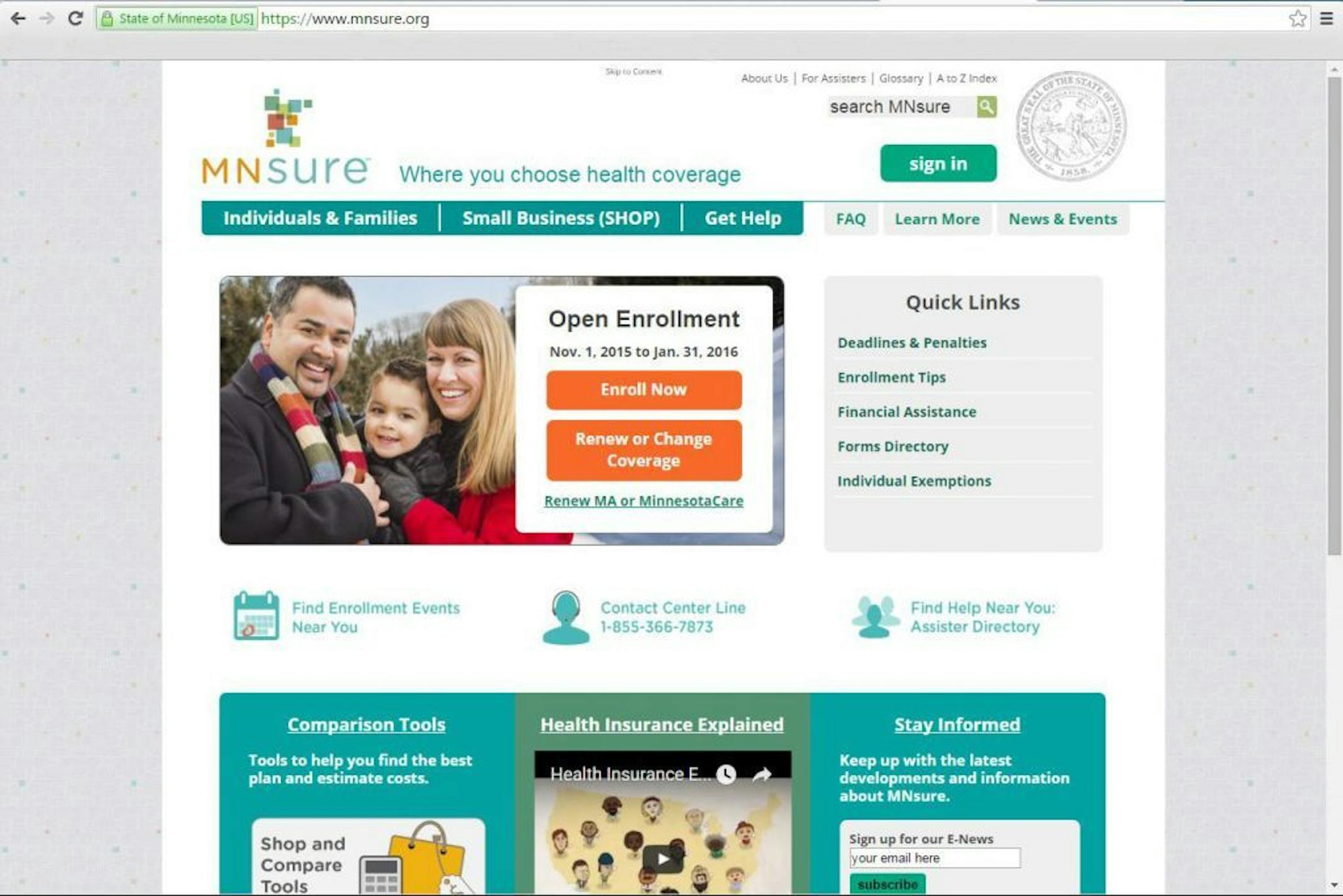
But as MNsure approaches its first key enrollment deadline Monday, it's not clear whether the early preference for what are known as "bronze" health plans is a lasting problem.
For some people the policies work out well — particularly if they're in good financial and physical health. Plus, the early bronze shift might not last with deadline surges in enrollment expected this month and in January.
"It's too early to make predictions," said Eileen Smith, spokeswoman for the Minnesota Council of Health Plans, a trade group for health insurers. "We expect to see more people buying on MNsure, but we still don't know how many people that will be, and what they will be buying."
MNsure is an option for individuals and families who buy health insurance on their own, rather than having coverage from an employer or the government. Currently, about 300,000 Minnesotans buy policies in the individual insurance market, with most buying directly from insurers.
The federal health law that created the health insurance exchange also stipulated that policies would be grouped into "metal levels" — platinum, gold, silver and bronze. Platinum policies have the richest benefits, while bronze plans cover the smallest share of an enrollee's costs.
During the first year of MNsure, premiums in the Twin Cities and other parts of the state were so low that platinum policies with very low deductibles were both affordable and popular. The popularity plunged with premiums jumps this year, and insurers next year won't even sell platinum policies through the exchange.


