

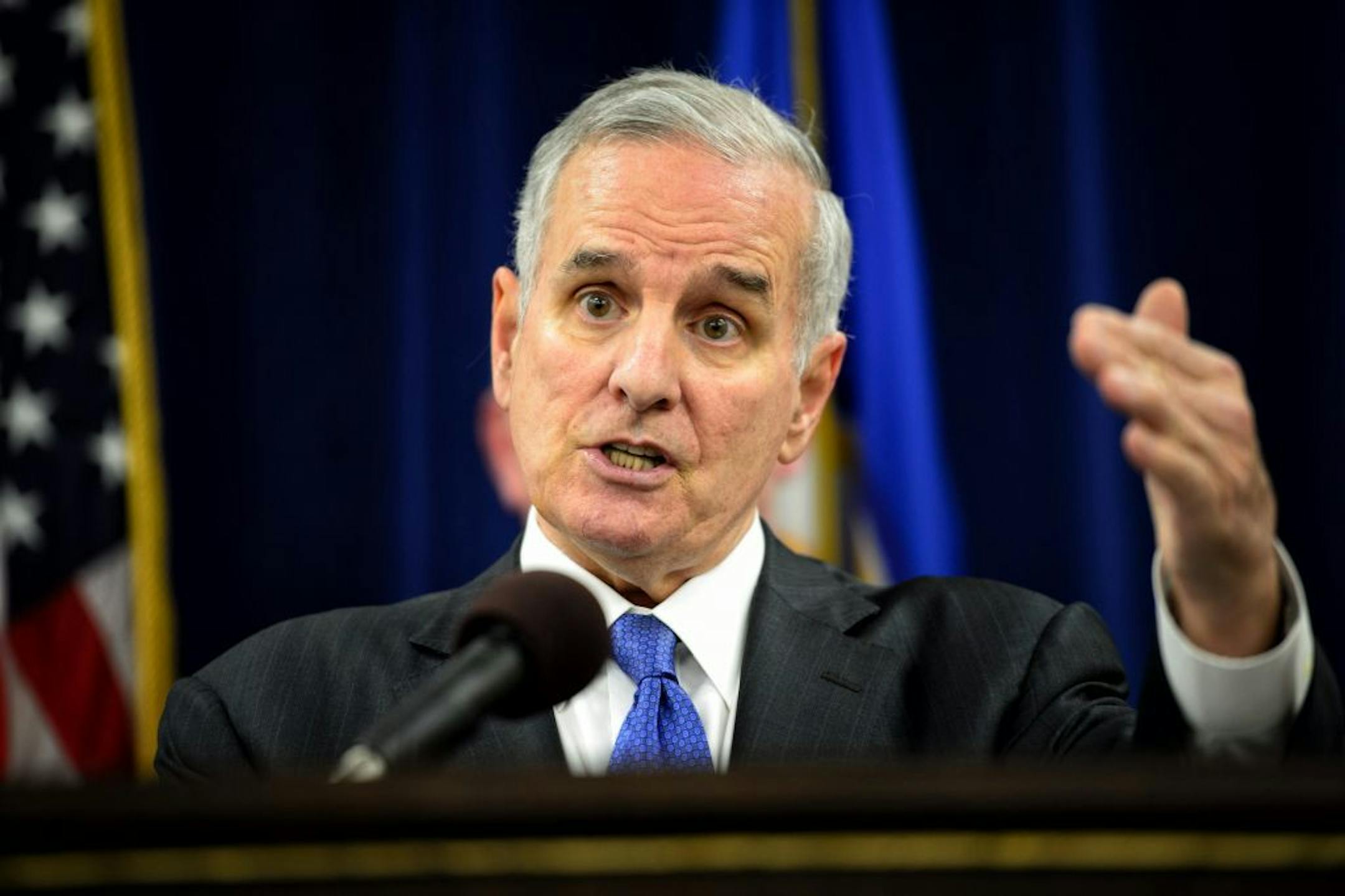
Minnesota's district courts have seen an unprecedented turnover in judges since Gov. Mark Dayton took office in 2011.
Because of a large number of vacancies from mandatory retirement at 70, or judges' desire to leave the bench earlier, the DFL governor has been able to appoint 76 judges. That's more than 25 percent of the 289 judges serving in the state's 10 judicial districts.
The new batch of judges, including those Dayton appointed to the Court of Appeals and Supreme Court, appears to be far younger and more diverse than previous governors' selections. Statewide, Dayton says, he's increased racial diversity among judges by 53 percent and the number of female judges by 18 percent.
His unusual opportunity to put his stamp on the judiciary will continue over his next four-year term. By the time it's done, he is likely to have appointed more than 50 percent of the state's district court judges and the majority of the seven state Supreme Court justices.
"The number of appointments the governor had to make would have been on the very high end of historic numbers," said Lee Sheehy, chair of the state's Commission on Judicial Selection.
The landscape has benefits and drawbacks, some say.
"The good news is the new judges are very energetic, hardworking and excited to do the job. Such a large group makes them feel they are all in this together, and they bring different voices for a better formulation of justice overall," said Hennepin County District Chief Judge Peter Cahill. "On the other hand, we lost a lot of institutional history. If a new idea is suggested, they could tell you if it's been tried or failed before."
Why the vacancies?
There are several key reasons for the dramatic increase in judge appointments. When the selection commission was started in 1989, then-Gov. Rudy Perpich chose younger candidates. Those judges were vested more quickly in their pensions, giving them the option to retire before the mandatory age requirement.


