

Renovations open the door to new beginnings. One such opening is the dramatic, $310 million restoration of the Minnesota State Capitol to preserve the grand public building for future generations to enjoy. While the project includes much-needed physical repairs, it should also address cultural updates that are equally critical in their own way — and as overdue as South Carolina's removal of the Confederate flag from its Capitol grounds last summer.
The three-year State Capitol restoration in Minnesota offers a small window in time to remove offensive, prominently displayed artwork that both slurs Native Americans and inaccurately represents our rich history in the state, long before it became a state.
A total of 148 pieces of artwork are on permanent display in the Capitol. Discussions over the last few months between the art subcommittee of the Minnesota State Capitol Preservation Commission and the majority of the state's 11 Native tribes centered on whether a handful of particularly egregious pieces should be: removed from the Capitol, perhaps to the Minnesota Historical Society; moved to less-trafficked areas of the Capitol; updated with displays that put the art in context, or simply left in place with no changes.
Many of these historical works up for debate were commissioned and portrayed through a European lens. At their limited best, they ignore the perspective of Native people. At worst, they represent a racist, profoundly distorted view of state history.
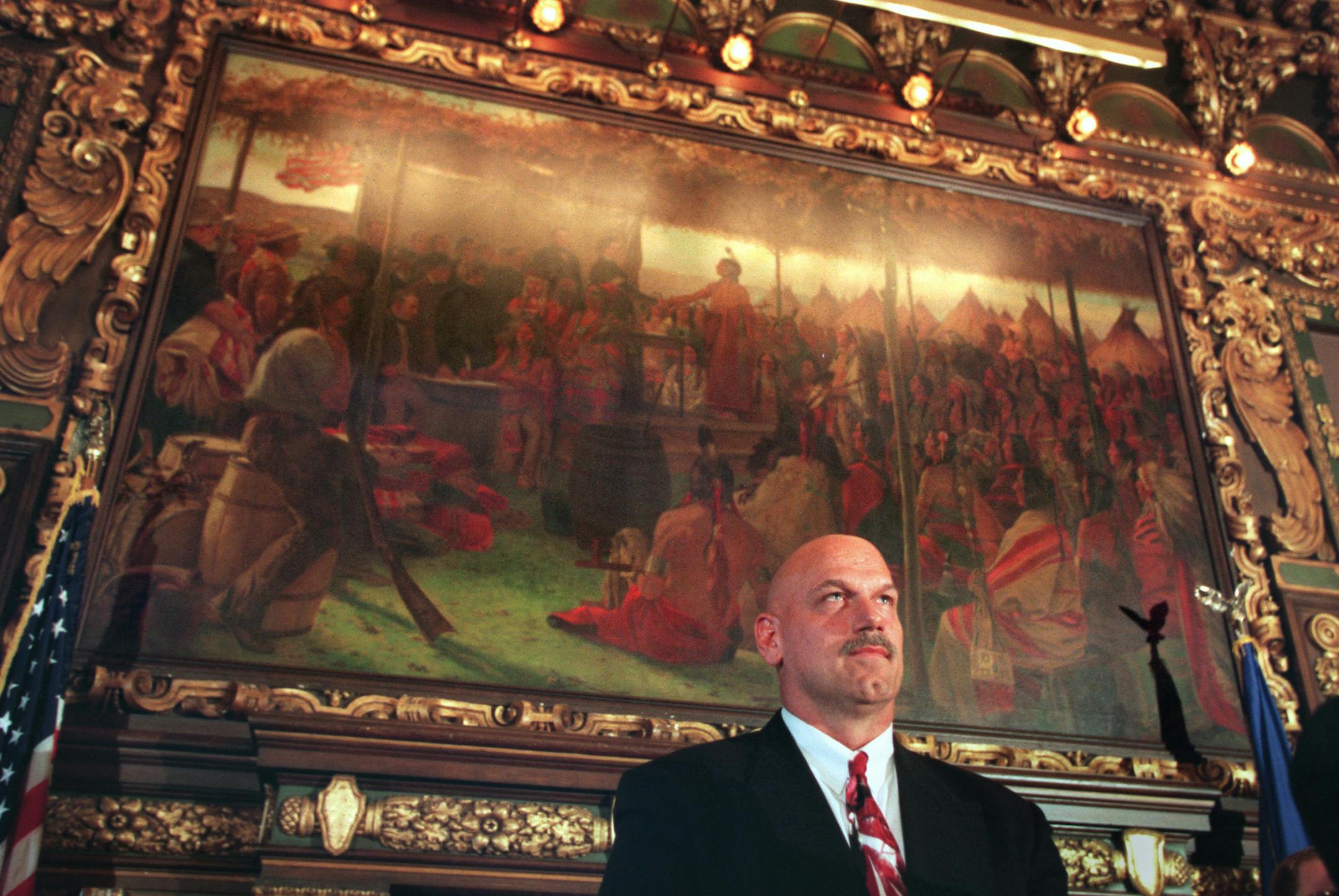
The subcommittee has released a preliminary recommendation to the commission sweeping aside the bulk of the tribes' concerns, calling for all of the controversial artwork to remain in the Capitol, albeit with added text commentary. They suggested moving the most offensive artwork — "Father Hennepin at the Falls of St. Anthony," by Stephen A. Douglas Volk, and "The Signing of the Treaty of Traverse des Sioux," by Francis Davis Millet — from the Governor's Reception Room — one of the most visible areas of the Capitol — to another undetermined location in the Capitol, with appropriate interpretation.
Simply moving these paintings to another wall in the Capitol will not do. The tribes urge the subcommittee to recommend removal of all offensive paintings in question. In addition, any added context or explanation of the portrayed events should be provided by the Dakota tribes.
Why? "Father Hennepin" not only profoundly distorts Hennepin's involvement with the Mdewakanton Band of Eastern Dakota, it also gratuitously depicts a bare-chested Native woman in the foreground — an extremely unlikely scenario. The painting, commissioned more than two centuries after the encounter, also portrays Hennepin as "discovering" the falls, perpetuating a myth for even more generations of schoolchildren to absorb on field trips to the Capitol.
The truth, of course, is that Native Americans spent thousands of years in what is now Minnesota before Hennepin or any other outsider appeared on the scene. During the late 1600s, when Father Hennepin was in the area, the Mdewakanton occupied the west bank of the Mississippi River from northern Iowa to St. Anthony Falls and already had villages on both the Mississippi and the Minnesota rivers.


