

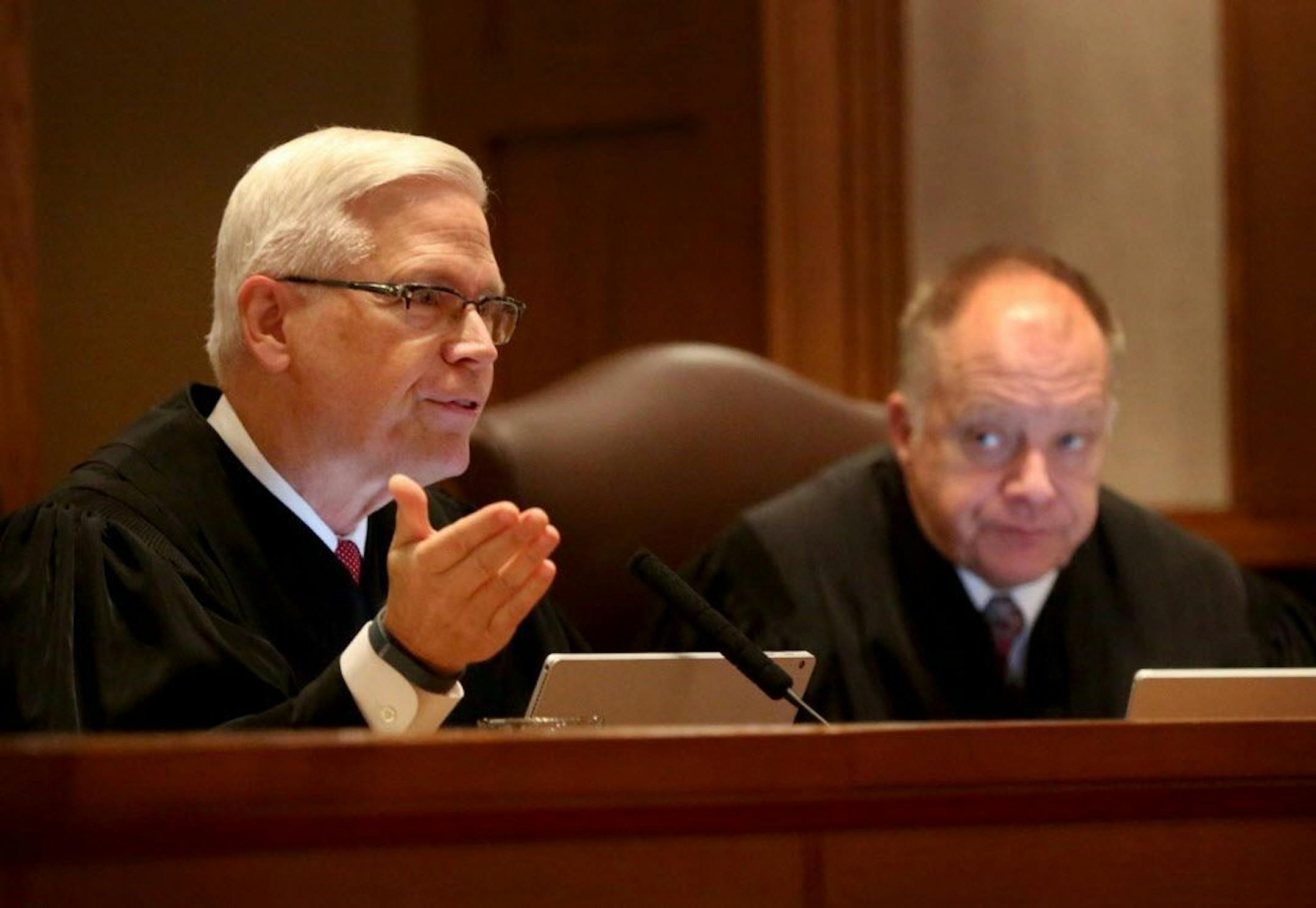
Next week's high-profile Minnesota Supreme Court hearing on Gov. Mark Dayton vs. the Legislature is likely to be viewed by more people than any case in the state's history, as the high court for the first time ever broadcasts its arguments live on the internet.
Starting with the Aug. 28 hearing involving the governor and state lawmakers, all oral arguments before the state's highest court will be streamed online — allowing real-time access for more than just those lucky enough to snag a seat in the historic Supreme Court chambers on the second floor of the State Capitol.
"Because it's going to be live and immediate, I think a lot more people are going to watch it than have ever watched a Supreme Court oral argument before," said Mark Anfinson, an attorney who has worked with media organizations in Minnesota to broaden access to the state's court system.
The Minnesota Supreme Court has previously allowed news organizations to set up cameras in the courtroom and posted video online after hearings are concluded, unlike more restrictive lower courts in the state. But on Wednesday, court officials announced they're opening up the livestreaming feature for the Dayton-Legislature case next week, and will continue providing live video for all of the matters considered by the court when it continues with its regular schedule in September.
In a statement, Chief Justice Lorie Skjerven Gildea said the court is "committed to maintaining the public's trust in our Court, and ensuring the openness and accessibility of our public proceedings."
"By livestreaming our oral arguments, we hope to give more Minnesotans the opportunity to see their highest Court in action, and to learn more about how our Court considers and decides the important legal matters that come before us," she said.
The move by Minnesota's high court follows similar shifts in courts around the country. State supreme courts in states ranging from California to Colorado, Kentucky and Michigan all offer live feeds of oral arguments. Around the country, media organizations and government transparency groups have long pushed for expanded access to courts on all levels.
In Minnesota, a 2015 state Supreme Court ruling allowed cameras in the state's criminal courts on a limited basis, though many restrictions still apply.


