

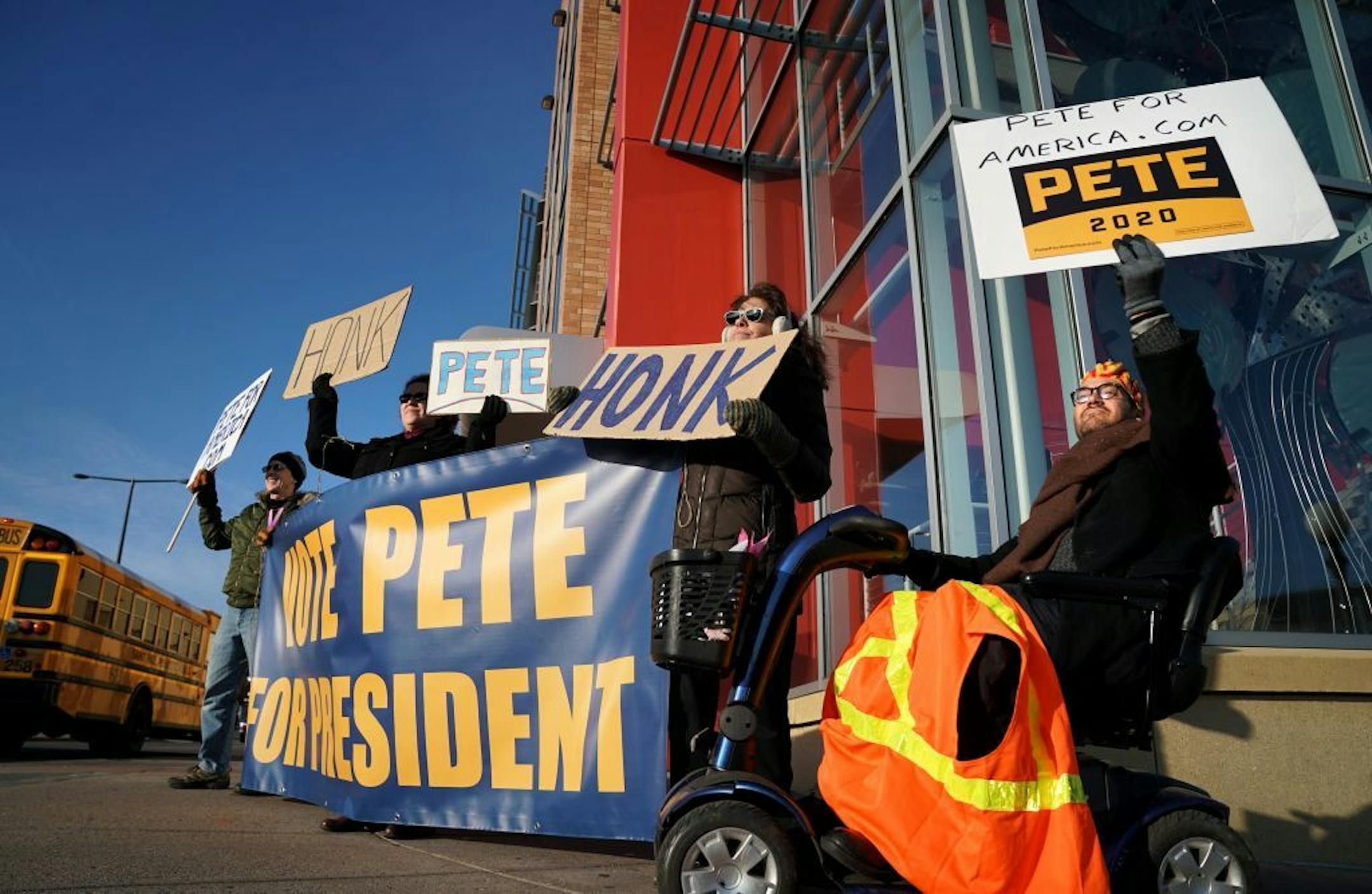
Iowa gets most of the early presidential buzz, but the 2020 presidential campaigns have come tumbling into Minnesota earlier than ever, a sign of the state's new status as a battleground in the making.
Less than a month after President Donald Trump vowed to carry the state at a Target Center rally in Minneapolis, Vermont Sen. Bernie Sanders is expected to fill up Williams Arena on Sunday night. In August, Massachusetts Sen. Elizabeth Warren packed a town hall meeting at Macalester College.
It's been decades since the state got this kind of attention a year ahead of a presidential election, and not only because of a crowded field of Democratic challengers that includes Minnesota Sen. Amy Klobuchar.
As the Democrats battle to hold a state that hasn't gone to a Republican presidential contender since 1972, they will also be looking for momentum in a frenetic primary season. It comes to a head on March 3, when voters in Minnesota and 15 other states and territories go to the polls in the traditional "Super Tuesday" showdown.
Minnesota's primary on Super Tuesday — exactly a month after the first-in-the-nation Iowa caucuses — ends a caucus system frequently dominated by insiders and party activists, often with limited attention from national campaigns.
Sanders, looking to stage a repeat of his 2016 win in Minnesota's presidential caucus, is once again courting the party's liberal base in the primary. He'll be joined Sunday by U.S. Rep. Ilhan Omar of Minneapolis, who endorsed him in October.
Both Sanders and Warren, his rival on the left side of the Democratic field, now have paid campaign staff in Minnesota working to mobilize volunteers and build get-out-the-vote operations. South Bend, Ind., Mayor Pete Buttigieg and former Texas U.S. Rep. Beto O'Rourke (who dropped out of the race Friday) have also turned up in Minnesota. Vice President Joe Biden hasn't yet, nor has he made any Minnesota hires, but his campaign says that's coming. Klobuchar, still a dark horse nationally, faces high expectations and stiff competition in a home state win — if she's still in the race by March 3.
"I think you're going to see a lot of these candidates visiting Minnesota in December and January," said Ken Martin, chairman of the Minnesota Democratic-Farmer-Labor Party.


