

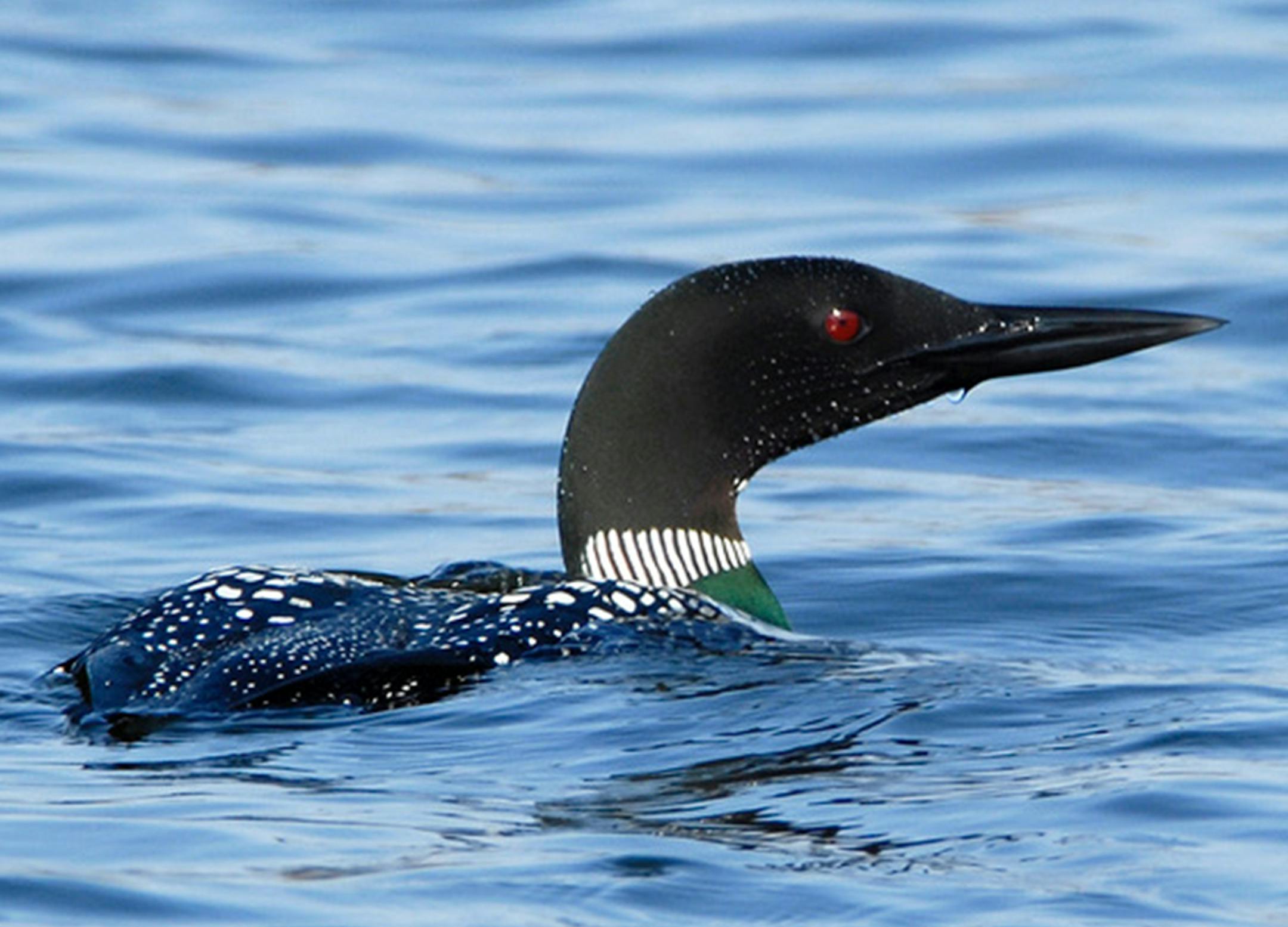
Loons are iconic birds, a part of our summer memories.
Is there a better way to sharpen climate awareness than to say it could drive loons from Minnesota's lakes?
The front-page story in Saturday's Star Tribune revealed that the climate may become so warm that our loons may be forced to move north, seeking a cooler, better world.
The common loon, our state bird, is a large black-and-white waterbird that breeds on lakes in northern states, throughout Canada, in Greenland and parts of Scandinavia.
Englishmen, who see loons occasionally, call the bird the great northern diver. I think that's a much better name. It's a perfect fit.
Loons are one of the things we remember about being at the lake, in a hammock, in a canoe. Their calls hold us for a moment — and we listen. They yodel, hoot, wail and sing tremolos, best heard at night. Darkness adds to the mystery of their often haunting calls.
The name loon likely derives from the Old English word lumme, meaning lummox or awkward person, or the Scandinavian word lum, meaning lame or clumsy.
And it's true that loons are awkward on shore. Their legs are set so far back on their bodies that movement on land is difficult. Swimming, though, propelled as if by a motor at the stern of a boat, defines their place in the world.


