

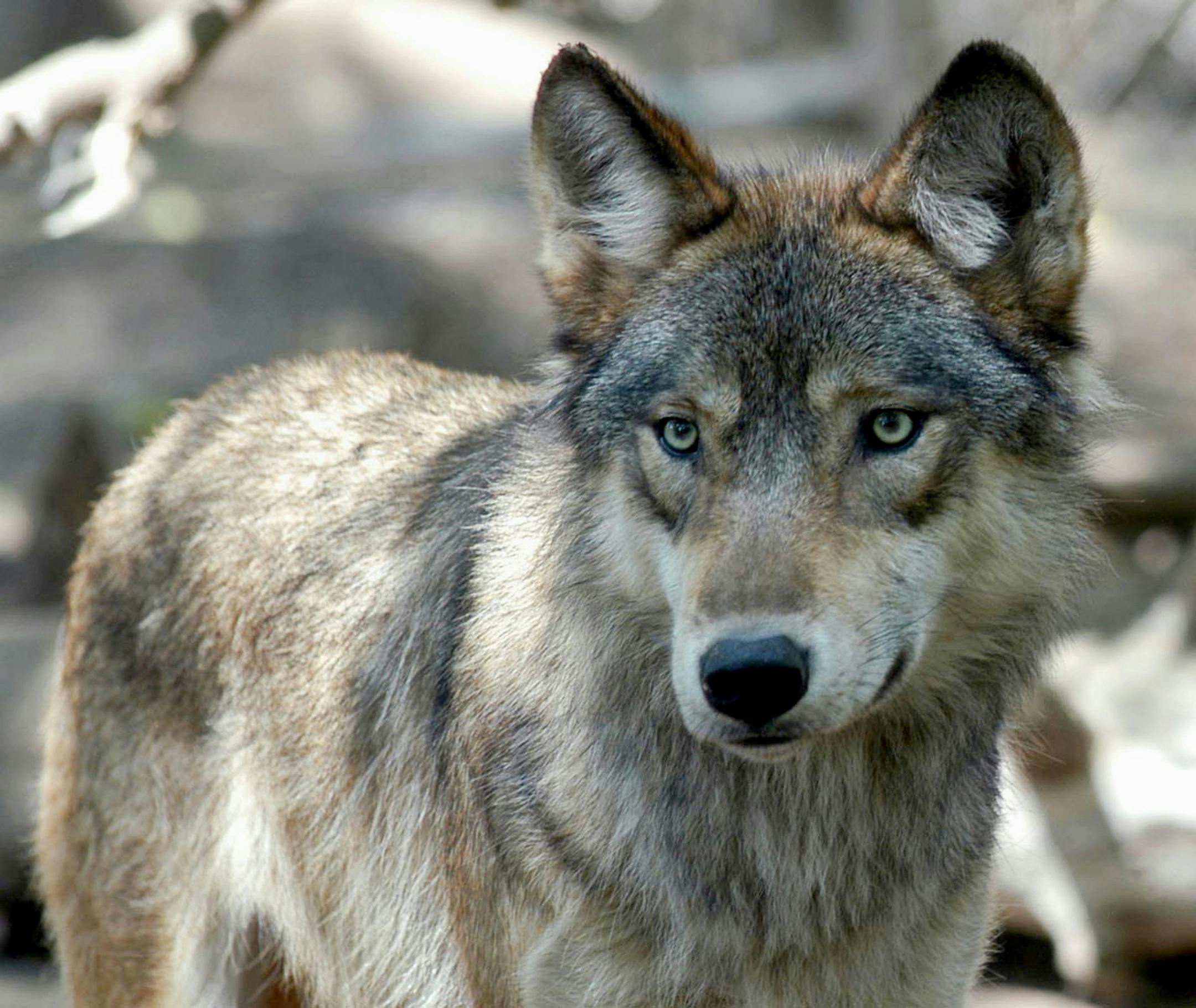
The woods of Minnesota have become wondrous and wild places since gray wolves started making their comeback. But some of our elected officials are trying to scrap the very protections that allowed wolves to rebound in the one state where they never completely disappeared.
If you're a Minnesotan like me, you'll likely be surprised to hear that U.S. Rep. Collin Peterson, a Democrat, is joining Republican ranks by sponsoring legislation to strip our state's gray wolves of Endangered Species Act protections.
Rep. Peterson's bill (H.R. 424) would reinstate a 2011 U.S. Fish and Wildlife Service decision that removed endangered species protections from wolves in the western Great Lakes states.
In 2014, a federal judge realized that there were grave scientific and legal issues with the Fish and Wildlife Service's decision and overturned it, restoring protections for gray wolves. This decision was reaffirmed by the U.S. Court of Appeals for the D.C. Circuit — the nation's second-highest court. That ruling stopped wolf hunts and highlighted that more must be done before wolves can be considered fully recovered.
As a lifelong state resident who works to protect endangered wildlife, I am deeply troubled by Peterson's dangerous legislation. Congress should not meddle in what should be a purely scientific decision about protection of an endangered species.
If left alone to work, the Endangered Species Act is the world's most effective environmental law for saving animals from going extinct. It has saved more than 99 percent of all species it protects and has put hundreds more on the road to recovery. Under the act's protections, Great Lakes wolves have made immense progress, growing from fewer than 1,000 wolves in a small corner of northeastern Minnesota to more than 4,000 wolves across Minnesota, Michigan and Wisconsin.
And the law's success is not limited to wolves. In a study by the Center for Biological Diversity, where I work, we found that, for endangered birds, 85 percent of species in the continental U.S. increased or stabilized while protected under the act.
Despite success, the job of recovering gray wolves is far from complete. In the Lower 48 states, they occupy less than 10 percent of their historical range and are still missing in many places that offer excellent wolf habitat, including the southern Rocky Mountains, the Adirondacks and the Dakotas.


