

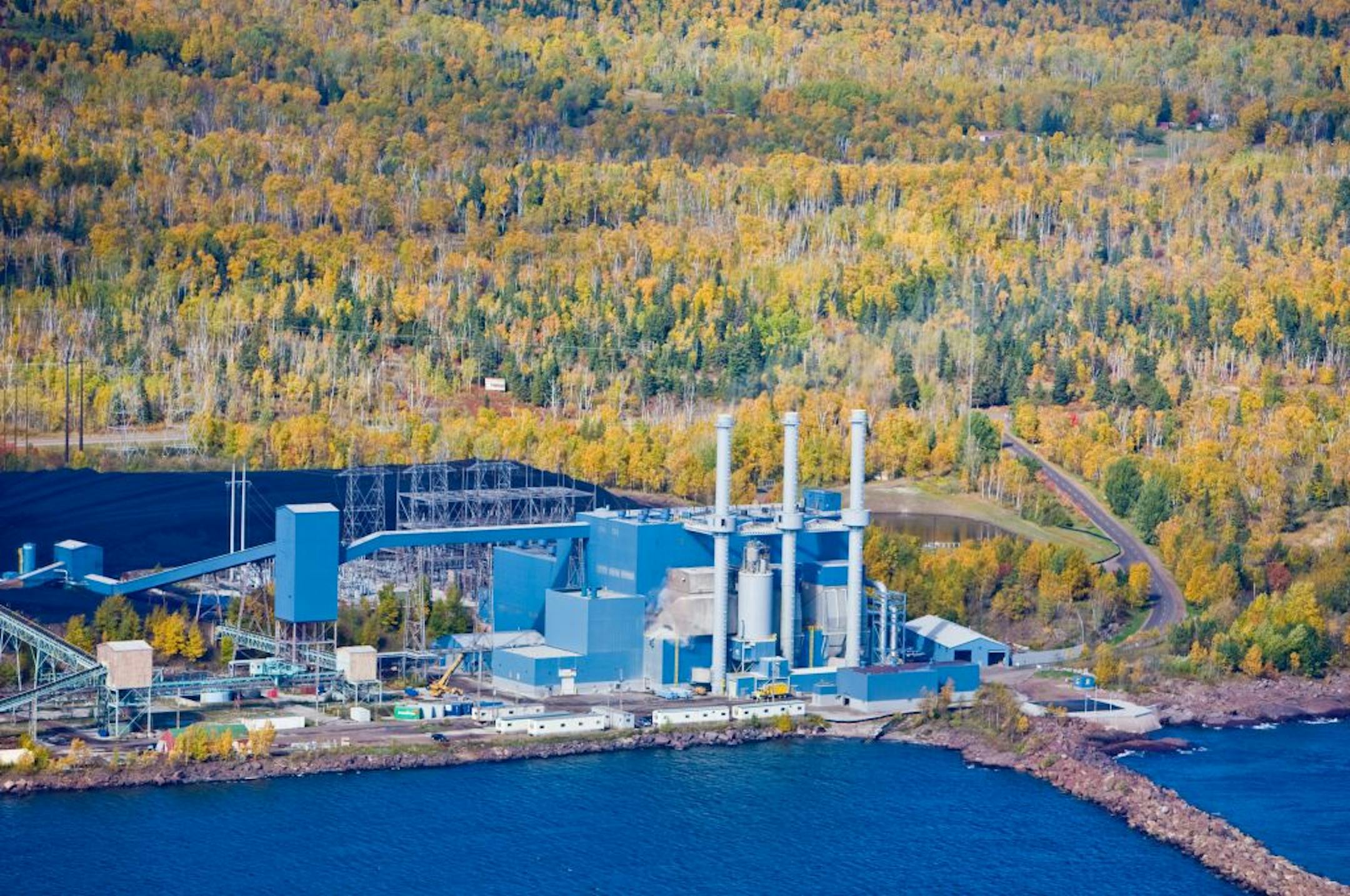
Minnesota Power, long the state's most coal-dependent electric utility, said Thursday that it will stop burning the fuel next year at a large power plant on Lake Superior's North Shore.
The utility, whose 144,000 northern Minnesota customers include power-hungry iron ore plants, said idling and eventually retiring the Taconite Harbor power plant in Schroeder, Minn., will save money and help meet a goal of reducing greenhouse gas emissions.
One of the three generating units at the plant already has stopped burning coal, and the remaining two will be idled in 2016, probably in the fall, the company said. To replace the plant's power, the company said it intends to purchase electricity off the Midcontinent power grid, where favorable wholesale prices make it a good time to buy.
"The decisions we are making here are in the best interest of customers," Al Rudeck, vice president of strategy and planning for the Duluth-based utility, said in an interview. "This is being done for economic reasons because of the wholesale market prices."
Rudeck said the decision to idle the Taconite Harbor plant is not related to cutbacks in the taconite industry, its largest power user. The 42 power plant employees will be offered other utility jobs next fall, though plant won't be retired until 2020, he said.
The utility, a unit of Duluth-based Allete Co., also said it plans to boost its energy efficiency efforts, add 33 megawatts of solar power and build up to 300 megawatts of natural gas-fired generation by 2030. A megawatt is 1 million watts.
These steps are part of Minnesota Power's plan called Energy Forward announced in 2013. The goal is to get one third of the utility's electricity from renewable sources, one third from natural gas and one third from coal. The utility, which once got nearly all its power from burning coal, now relies on it for about 75 percent of its energy.
"This is a critical step for Minnesota. As renewable energy like wind and solar continue to undercut the costs of new natural gas, they can provide a lower-cost, cleaner option than natural gas for new electricity," said J. Drake Hamilton, science policy director at Fresh Energy, a St. Paul nonprofit that advocates for cleaner energy. "Those renewable resources, together with vastly improved energy efficiency, will allow Minnesota Power to shut down dirty, inefficient coal plants …."


