

How strange Mahler's First Symphony must have sounded at its 1889 premiere in Budapest.
The hazy, visionary opening, the squawking woodwinds and yelping brass, the elements of mawkish parody — they must have been thoroughly discombobulating to an audience still acclimating to the lushly blended romantic palette of Brahms and Wagner.
The shock of the new in Mahler's First Symphony was strongly communicated during the Minnesota Orchestra's performance Thursday morning at Orchestra Hall.
It was there in the sharp cuckoo calls of the clarinet at the beginning of the first movement, there again in the clean, staccato jabs of principal trumpet Manny Laureano.
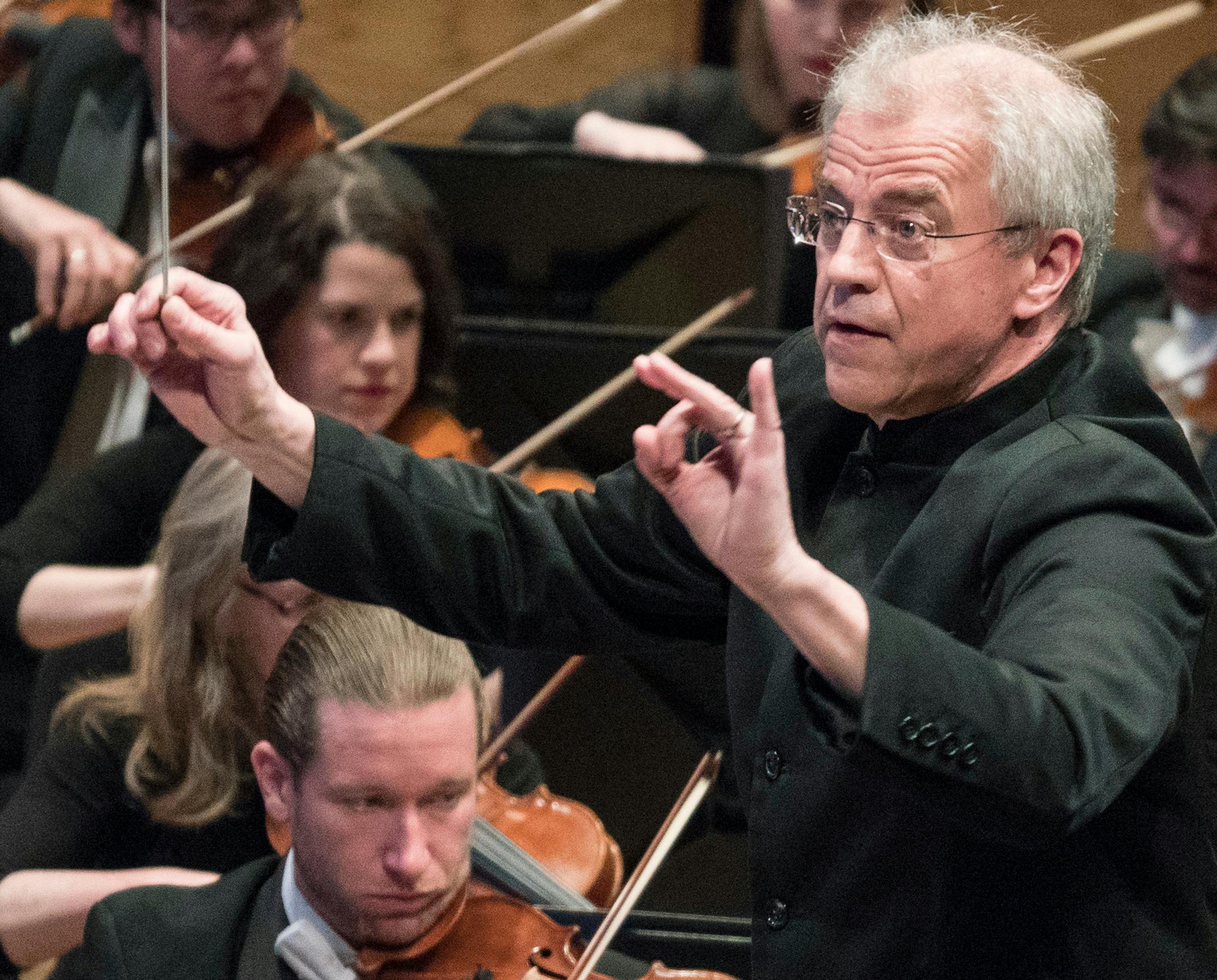
Conductor Osmo Vänskä balanced the layered textures of the opening paragraphs with crystal clarity. You could almost reach out and touch the pristine summer morning Mahler imagined when writing this music.
Vänskä gave a bracing rasp and swagger to the rustic dance rhythms of the second movement. The strings dug lustily into the opening theme. Later, the horns — no fewer than eight — swung the bells of their instruments skyward for extra brightness, just as Mahler requested.
The third movement, a funereal march inspired by a wood engraving of forest animals bearing away the corpse of a dead hunter, was perhaps the most remarkable part of Thursday's performance. Vänskä's unhurried yet inexorable tempo seemed just right; the klezmer influences had tang without being over-seasoned; and the violins conjured a gossamer magic in the dreamlike music of the central section.
In the maelstrom of the finale, Vänskä's decision to seat the orchestra's cellos and double basses at the left of the platform, with the second violins and violas to the right greatly clarified Mahler's complicated instrumentation.


