![Passengers departed from Delta flight 170 from Seoul South Korea, second to last flight from Korea. (Delta is suspending direct flights from Seoul for a few weeks while coronavirus is raging. Here, Vlia Thao (right) waits, with her son, for her father Thai who was on the flight from Seoul. Most passengers coming off the flight were wearing masks.]
brian.peterson@startribune.com
Minneapolis, MN Friday, February 28, 2020](https://arc.stimg.co/startribunemedia/AAA65ZVYPNTJUMJAEHMWAPRJ2E.jpg?&w=1080)
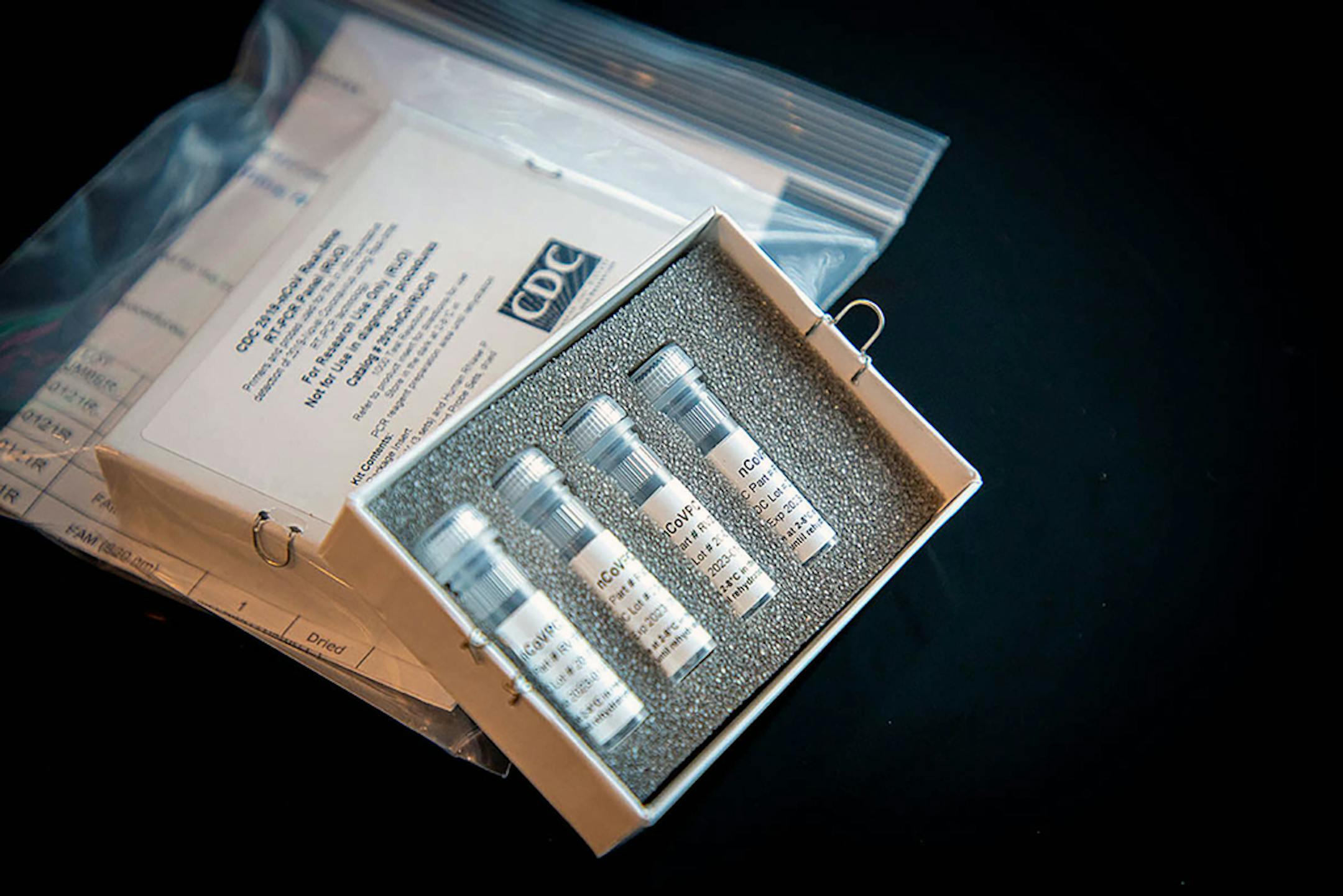
Minnesota's public health lab will be able to test for the virus causing the global COVID-2019 outbreak by next week — using the same kit that had been deemed faulty earlier this month.
While local testing hasn't been urgently needed so far in Minnesota, where doctors have encountered only four patients whose illnesses and travels to Southeast Asia made them infection risks, state health officials said that the capability will be important if the novel coronavirus spreads in the U.S. as expected.
"We need to have the ability to assess additional people who may be infected but are not known to be at high risk," said Joanne Bartkus, director of the state public health lab. "This will enable us to figure out if the virus is spreading silently and to be able to isolate infected persons to help us prevent transmission."
Health officials in several states found problems with test kits they received this month from the U.S. Centers for Disease Control and Prevention (CDC). Two components of the kit appeared to work properly, but a third did not.
Further federal testing proved that the two functional components were enough to accurately determine whether someone was infected with the novel coronavirus, which emerged in Wuhan, China, in December and has spread worldwide since then, said the CDC's Dr. Nancy Messonnier.
"The third component … can be excluded from testing without affecting accuracy," she said Friday.
Delays in designing and validating the test have caused frustration in places where cases have already been detected or where officials believe testing is appropriate.
Until Thursday, only 15 cases had been detected by testing in the U.S. so far — and all but one involved people who had recently traveled to China or had close contact with those travelers, according to the latest CDC data. But that one case was troubling, because it involved a woman in northern California with no known contact with anyone who traveled to China — meaning that the virus could be spreading from person to person in the U.S. now. And then Friday, California officials reported a second such case and Oregon reported its own first case involving a teacher without any known risk factors.