

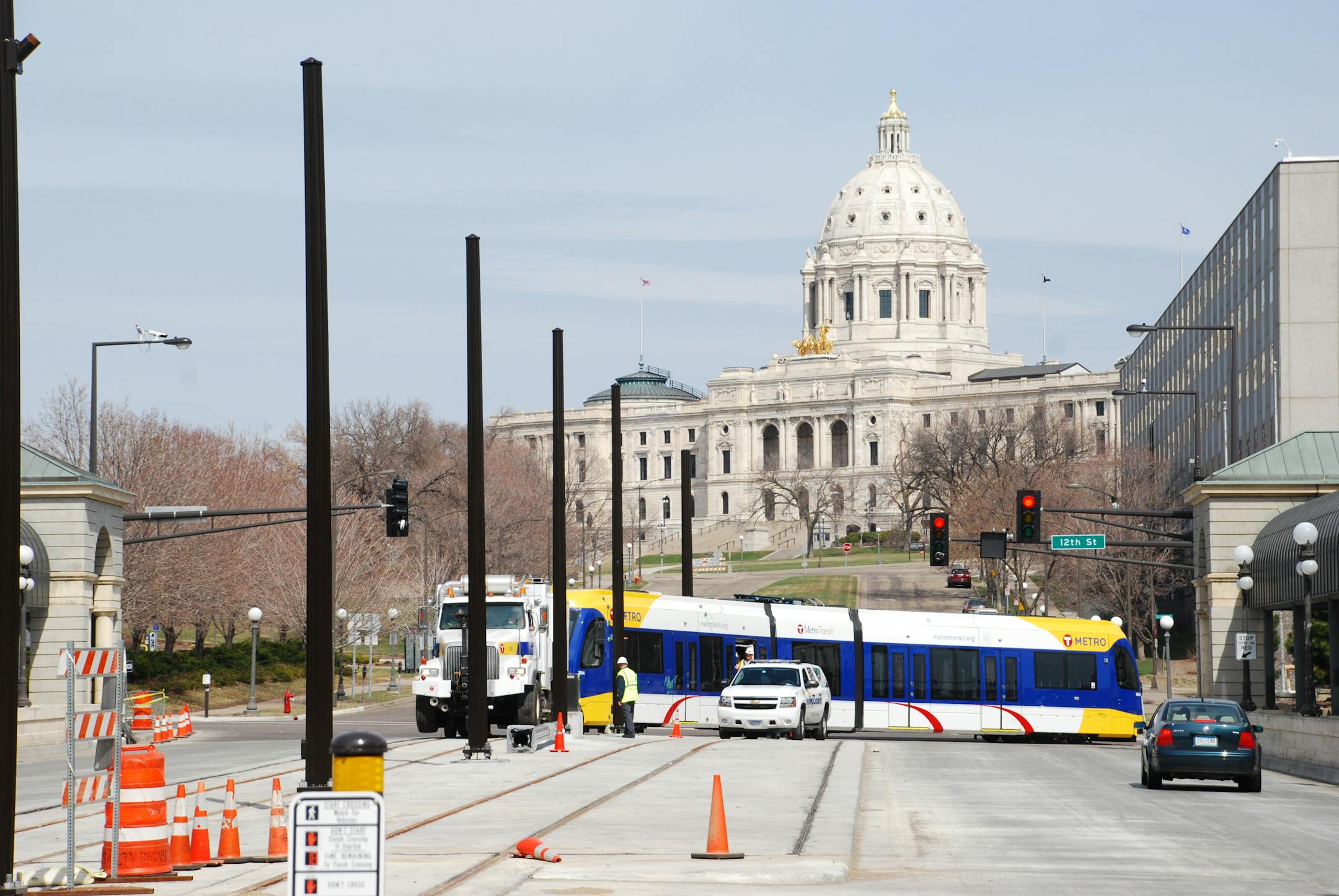
The 2013 Legislature wrapped up its session last week. The 2014 session begins next Feb. 25. So it's time to begin the campaign.
No, not the electoral campaign — that will come soon enough (probably too soon). Rather, what's needed now is a statewide push to build citizen and political consensus for investment in transportation funding.
The 2013 legislative session failed to get the job done. Sure, there was some last-minute success, including $37 million in general fund money toward the state's 10 percent share of the proposed Southwest Corridor light-rail line. (Added to previous commitments, $44 million has now been dedicated to the state's $125 million share. But $81 million is still needed to stay in the federal funding queue.) Additionally, the state shored up its share of transit operating costs.
But this was mostly a status quo session for transportation at a time when rival regions are all aboard with making strategic investments. What was accomplished falls far short of Gov. Mark Dayton's bold proposal to implement a 20-year program to build and maintain transit in the metro area, funded by a half-cent sales tax in seven metro counties (while keeping an existing quarter-cent sales tax in five metro counties).
Dayton's data-driven plan would have raised up to $318 million in new transit-dedicated revenue in the next biennium and up to $472.6 million in the 2016-17 biennium. The plan would have addressed shortfalls for current commitments, and it would have dramatically expanded the transit network, adding bus routes and hours of service and increasing frequency.
Over the next 20 years, a more-integrated system would have been built, including Southwest but also Bottineau light rail, the Interstate 35W South bus rapid transit (BRT) line, the east-metro Gateway line (either light rail or BRT), up to a dozen arterial BRT or streetcar corridors and up to five potential highway BRT corridors.
An estimated $6 billion to $10 billion return on investment would have been realized, based on reduced travel times, lower emissions, lower vehicle operating costs, lower shipping expenses and more.
But that did not come to pass. Political realities meant the plan could not be enacted in the House or Senate without commensurate investment in the state's roads and bridges.


