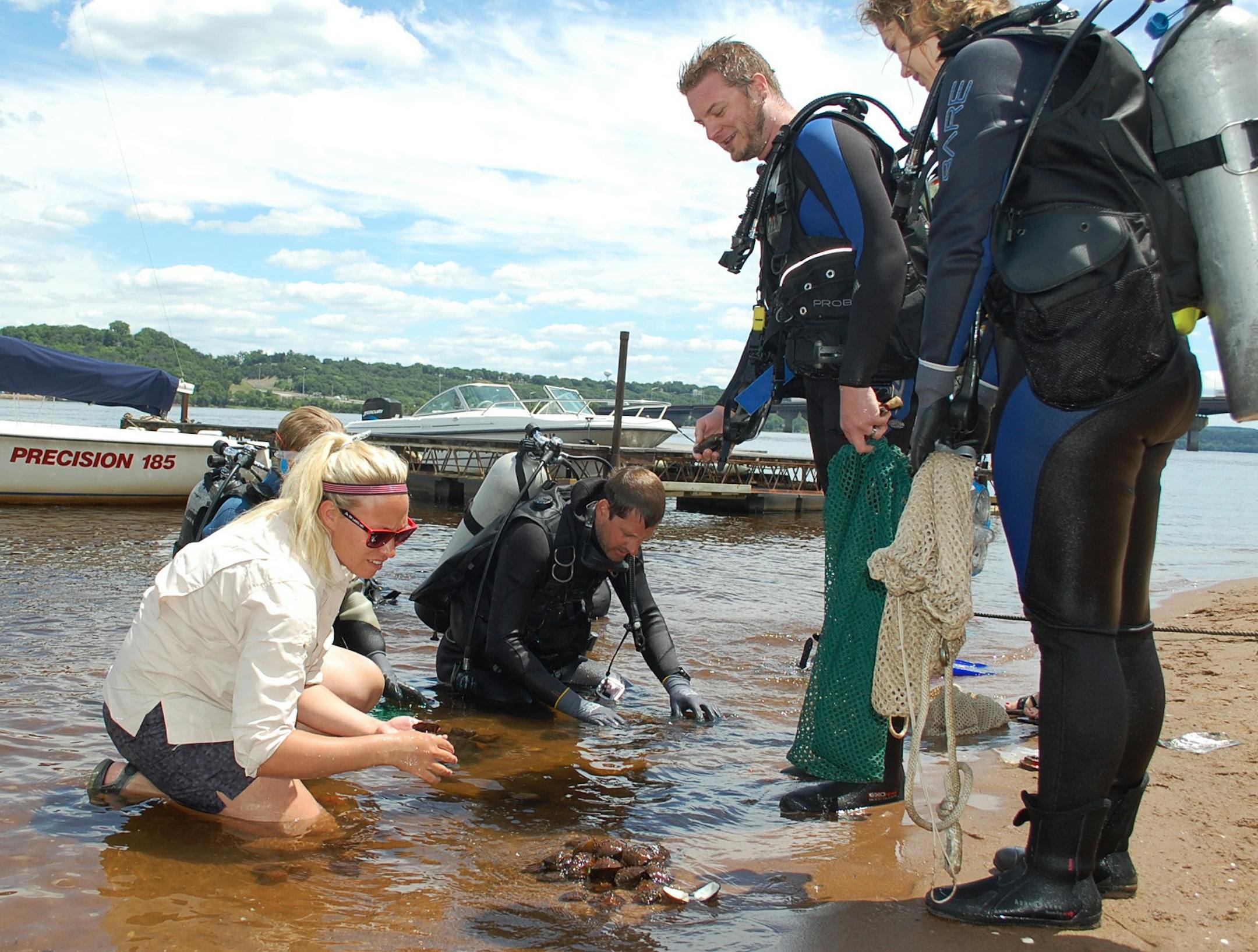
It was a summer morning to be on the water on the St. Croix River, with pleasure boats, anglers and the occasional barge drifting past. But it was a morning to be under the water, too, for a group of people committed to the waterway's lesser-seen inhabitants.
Nearly 30 people were part of an interagency gathering June 29 on a slice of sandy shoreline across from Hudson, Wis., with a sole focus: the livelihood of a native mussel called the winged mapleleaf that is on the federal and state endangered lists.
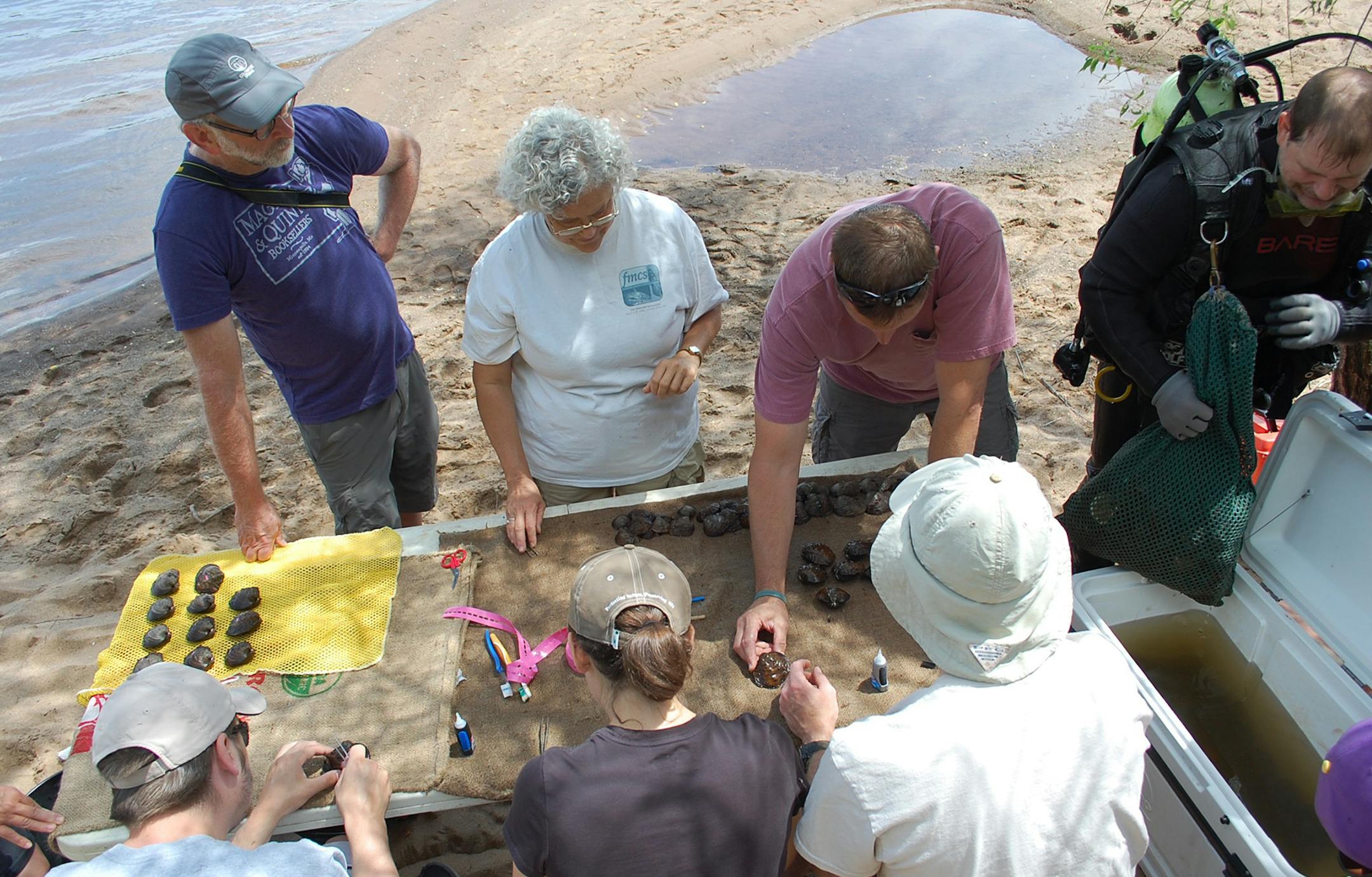
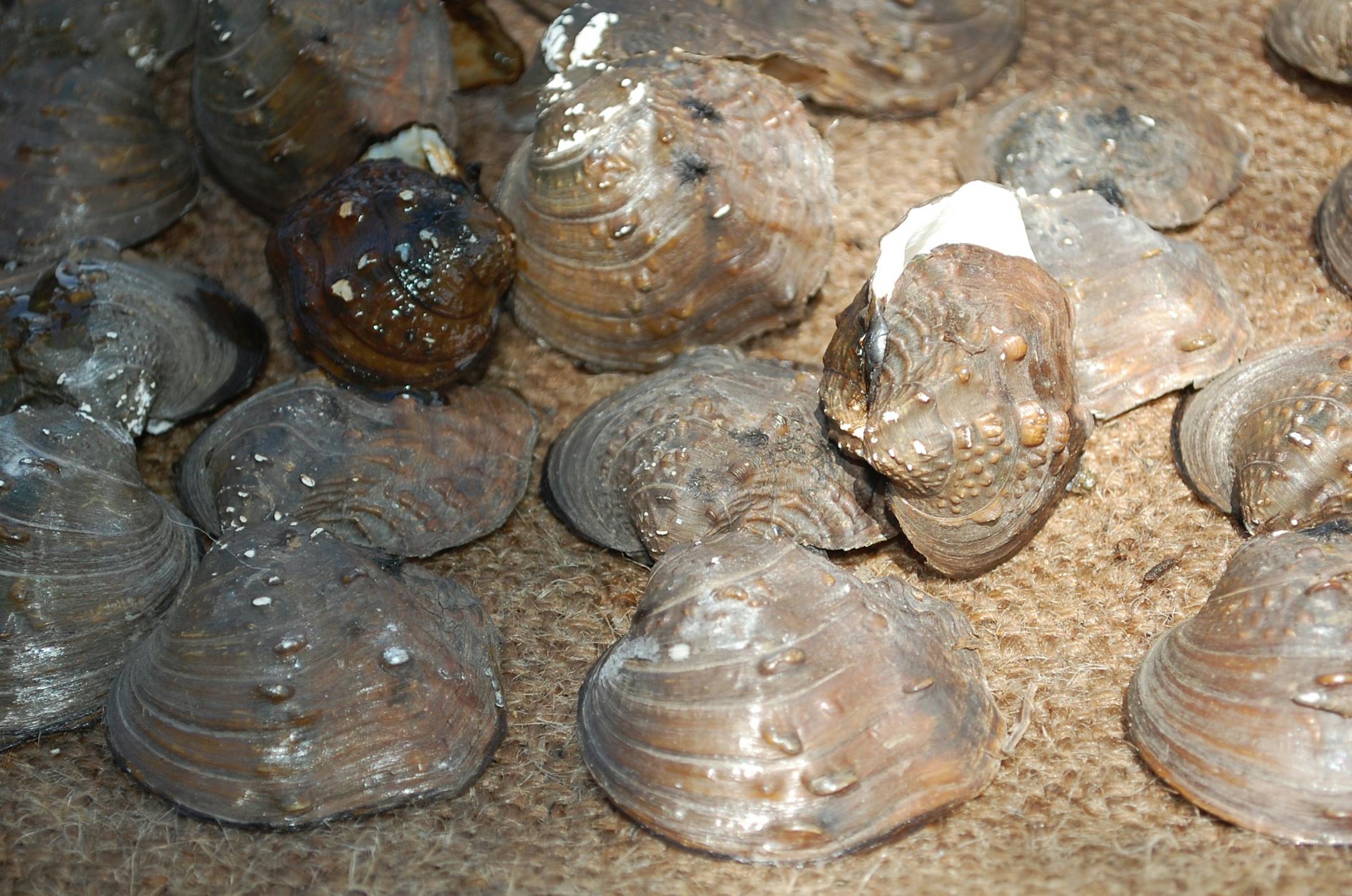
Thick-shelled and bumpy, mapleleafs were brought up from the floor of the St. Croix by divers from the Minnesota Department of Natural Resources, Minnesota Zoo and other groups again and again over several hours. More than 600 of the mussels were singled out and moved to a makeshift table for data-taking and tagging. Later, a third or so were relocated in the Mississippi River at a pool near Hidden Falls. Some also will go into a stretch of the Chippewa River near Durand, Wis., with the hope of repopulating areas where the mussel is hurting.
The collaborative effort, which includes the Minnesota and Wisconsin DNRs, can be traced to the 1980s when mussel surveys of Minnesota rivers began in earnest. To date, with legislative funding, more than 3,500 sites have been sampled. Even dead, mussels had answers, the remaining hard shells helping researchers reconstruct which species lived in which watersheds and, thus, target sites for reintroduction. In Minnesota, 27 of the 48 remaining species are endangered or threatened.
Threats to the health and vitality of the state's mussels proved broader than pollution and dredging. Zebra mussels began showing up in the 1990s and attaching to and killing natives such as the Higgins eye mussel — also endangered — in the Mississippi River below Lake Pepin and in the lake. It was a critical moment that launched the involvement of the U.S. Army Corps of Engineers and the U.S. Fish and Wildlife Service. Knowing it was towboats bringing zebras up and causing them to colonize in the Mississippi River, the Army Corps started a project in 2001 to attempt to propagate the Higgins eye in the safety of the St. Croix. Larvae from female mussels were attached to needed hosts — in this case largemouth bass — and contained in cages, where they spent two to three weeks before falling to live on the river floor. Researchers came back late in the year to find hundreds of Higgins eyes. The effort helped lay the foundation for today's work on the St. Croix.
"That really launched the program, and the effort accelerated over the next 10 years," said Mike Davis, who specializes in mussel ecology for the Minnesota DNR and is working with the Army Corps, National Park Service and others.
A role for the St. Croix
Overall, more than 40,000 Higgins eye mussels have been relocated at various sites around the Midwest, many of them in the Mississippi River.
What was learned is that St. Croix River is a mussel safe haven of sorts, said Davis, who runs the DNR's Center for Aquatic Mollusks Program in Lake City, Minn. He has been at the forefront of the DNR's effort to protect and rebuild the state's mussel population.