

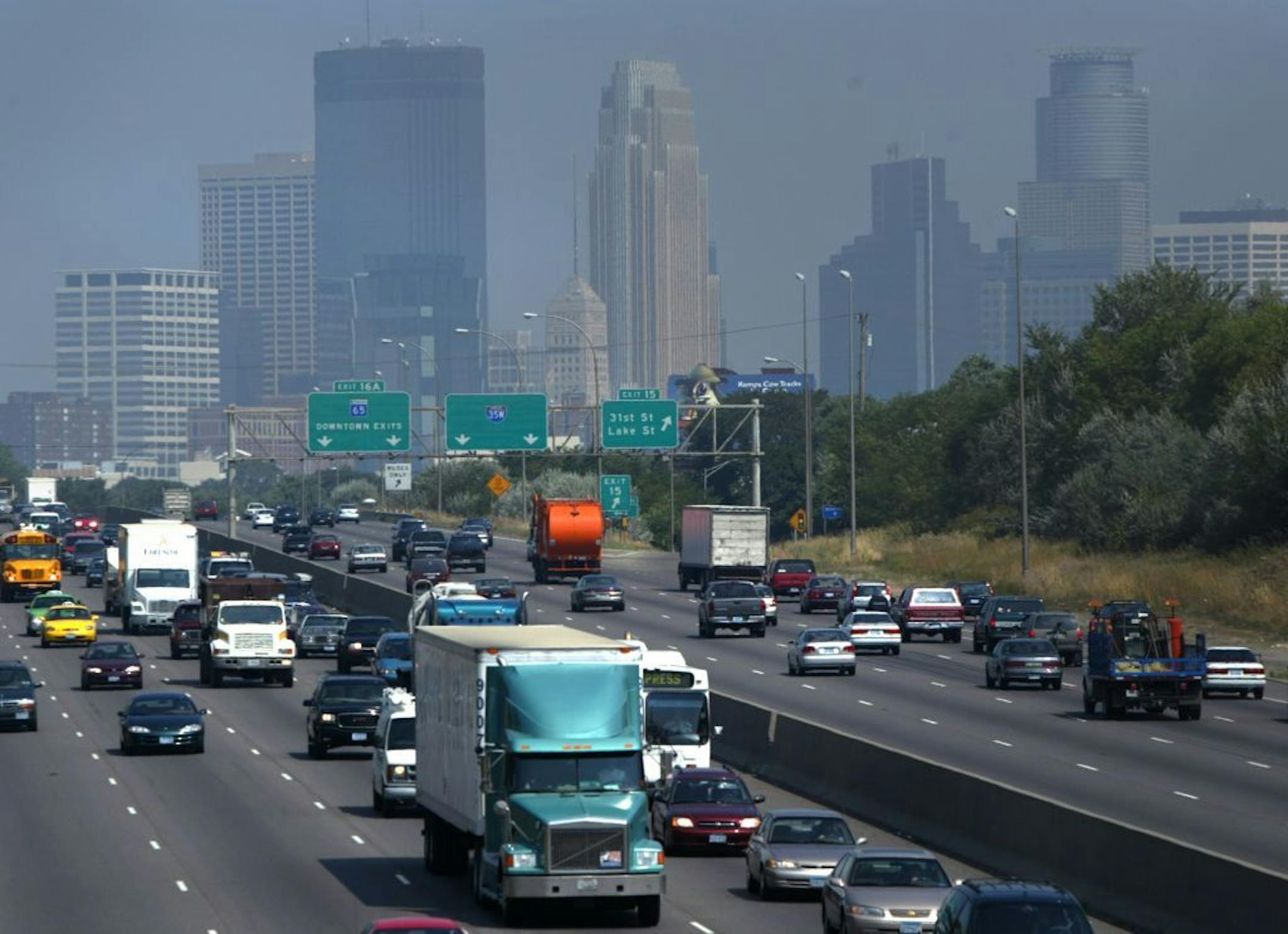
Minnesotans could face tighter emission limits on their vehicles or tougher air-permitting standards for businesses under new ozone rules proposed Wednesday by federal regulators, state officials said.
"For Minnesota it is critically important,'' said Frank Kohlasch, manager of the Air Assessment Section at the Minnesota Pollution Control Agency.
The U.S. Environmental Protection Agency proposed tougher limits on smog-producing ozone, standards that would be among the costliest ever issued by the agency but could reduce childhood asthma and other illnesses.
The EPA offered to tighten the levels to 65-70 parts per billion, from the current 75 parts per billion for any measured eight-hour period. That change could prevent almost 1 million asthma attacks and an equivalent number of missed school days, the agency said.
If the EPA chooses 70 parts per billion as the new standard, Minnesota would likely remain in good standing with the federal ozone standard, Kohlasch said. Currently, the state's highest ozone reading is 67 from a monitor located in the Twin Cities, he said.
But if the new limit is set at or near 65 parts per billion, the state could find itself in "nonattainment status'' and would have to propose a plan to move back into compliance, Kohlasch said.
In that case, the state's options would include tailpipe inspections on cars, trucks, buses and other motorized equipment. In addition, the state might consider tightening emission standards on companies seeking new pollution permits. Kohlasch emphasized that those decisions won't be made until after a new federal ozone standard is set late next year. "We continue to be at risk because our numbers are close to 65 [parts per billion],'' he said.
Kohlasch said any new restrictions would be applied geographically. For instance, if the Twin Cities falls into nonattainment status, communities in outstate Minnesota wouldn't necessarily face new restrictions, he said.


