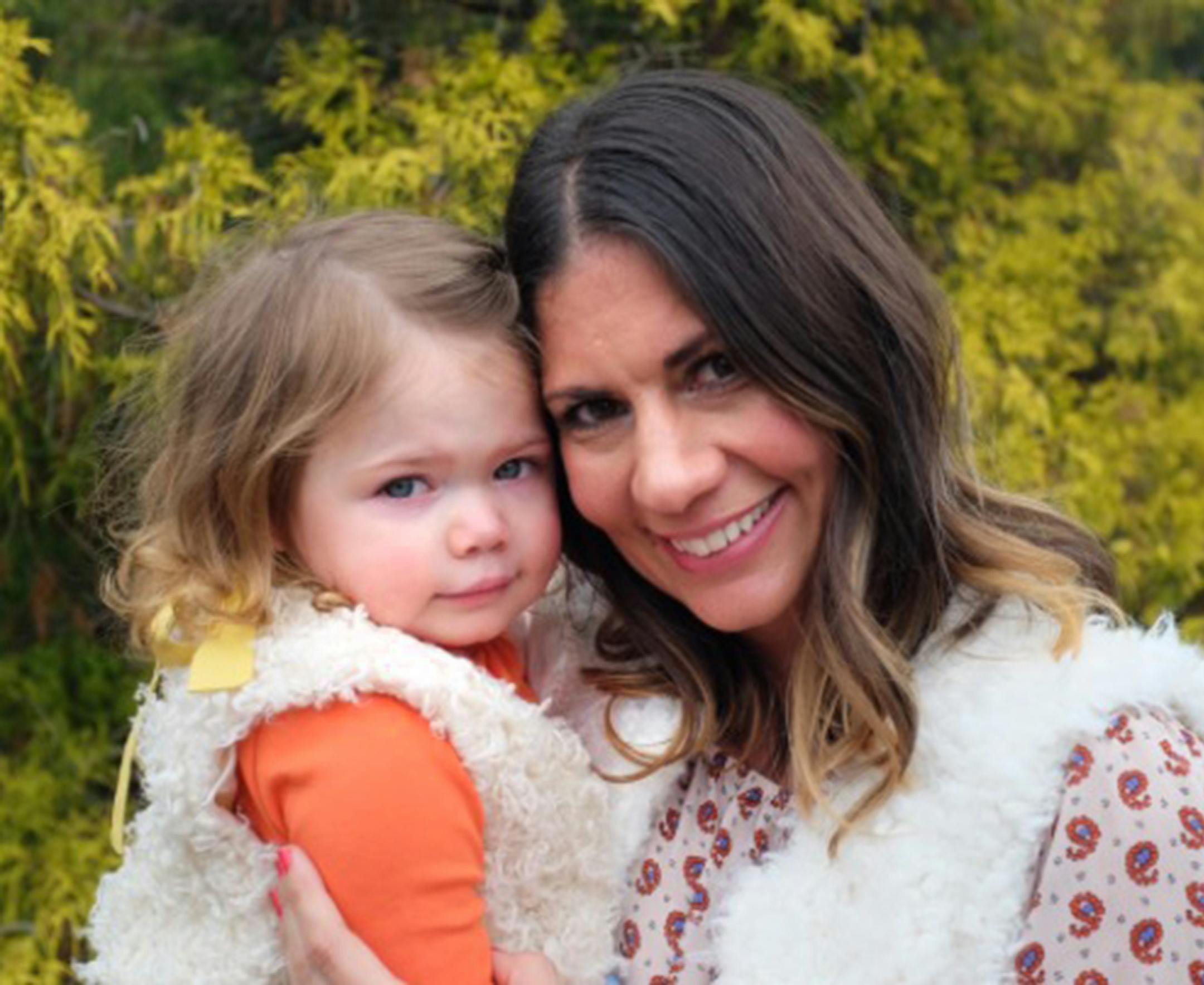
A year ago this weekend, little Harlow Hundley took her first dose of medical marijuana.
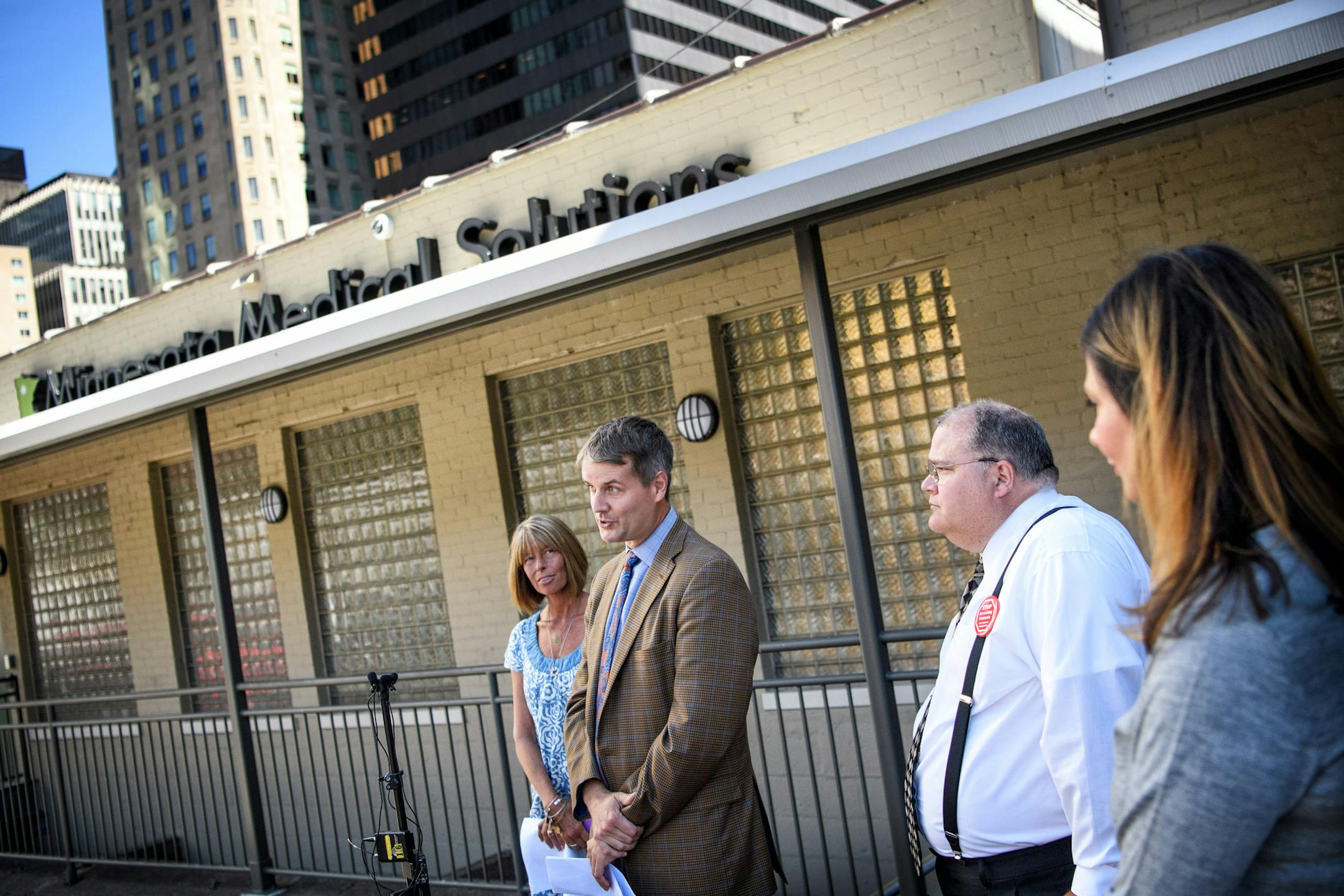
By the time her family gathered for their Fourth of July picnic, the little girl, then 3 years old and wracked by seizures that damaged her brain and endangered her life, was giggling and playing with her cousins "like she'd never done before," her mother told reporters Friday as she wiped away tears outside a downtown Minneapolis clinic.
It wasn't a cure, but Harlow's life is better now than it was a year ago. She suffers half as many seizures, even as they weaned her off the harshest medications she was taking. She plays with toys and interacts with people. She communicates with an adaptive iPad.
"It's meant so much to our family, because we've literally been able to see our daughter emerge before our eyes," Beth Hundley said, scrolling through a phone full of pictures of a sweet-faced little girl with soft brown curls, smiling for the camera.
The first year of legal medical marijuana in Minnesota has been marked by small miracles and deep frustrations. It's one of the smallest, most tightly regulated programs in the nation and has struggled with high prices, wary doctors and patients who have labored to get into the program and to find a nearby clinic once they do.
But enrollment has been inching upward, and the 1,588 patients now in the program could be joined next month by a wave of pain patients as the program expands to include intractable pain as a qualifying condition.
The state limits the conditions that qualify for medical marijuana — just nine right now — as well as the number of companies that can grow and sell the crop — two — and the number of clinics that can sell it — eight, scattered across a state of 5.4 million people. The Legislature also limited cannabis sales to pills and liquids, and smoking the plant remains illegal. Since doctors and medical groups can opt out of the program, some patients have struggled to find health care providers willing to confirm to the state that they have a qualifying condition like cancer, epilepsy or a terminal illness.
But for those who manage to make it into the program, medical marijuana seems to be helping. A June survey by the Minnesota Health Department found that 90 percent of patients said they benefited from the medicine, and half of those surveyed reported substantial relief of their symptoms.