

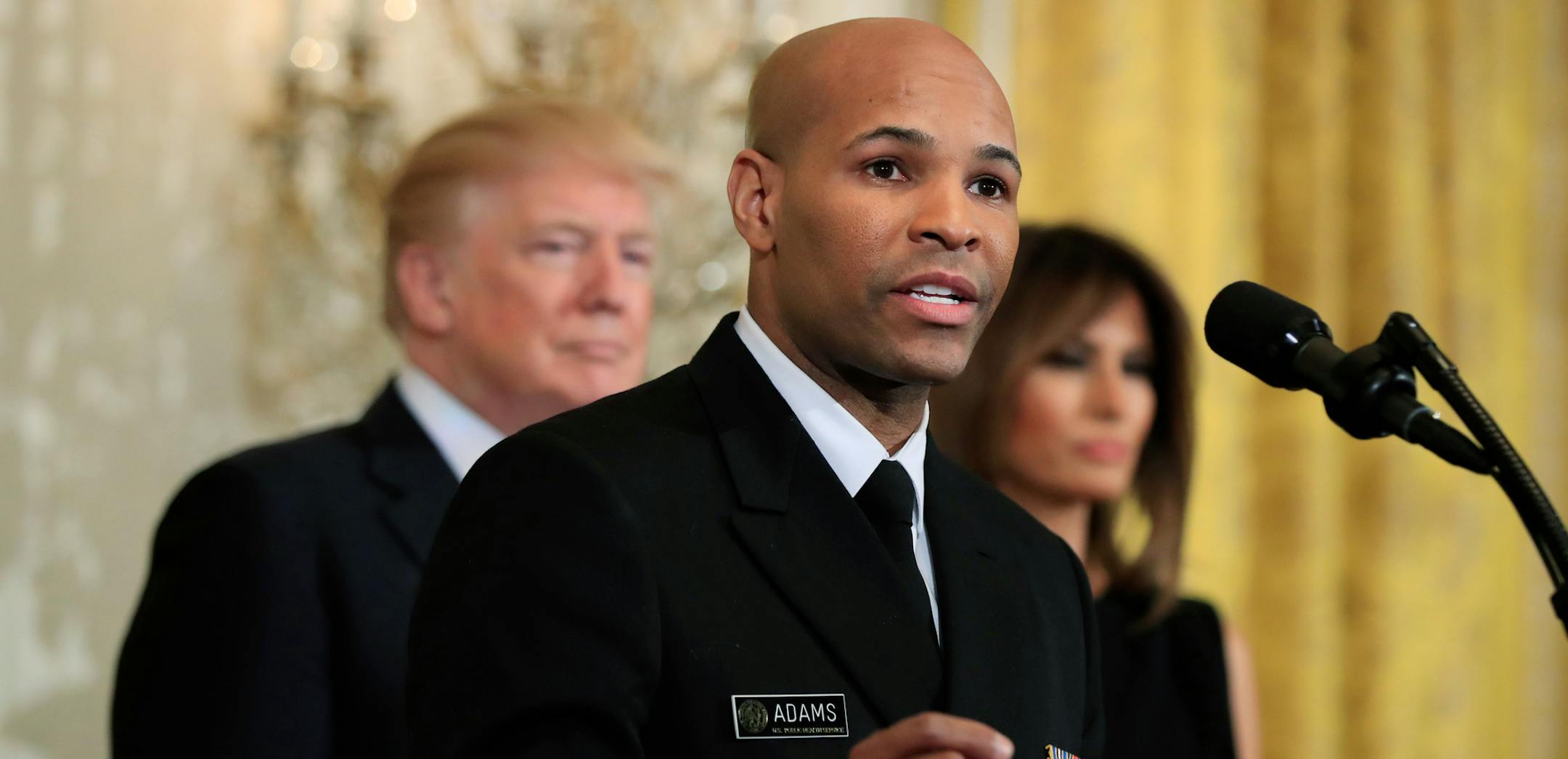
George W. Bush was president the last time the U.S. surgeon general issued a public health advisory. On Thursday, the widespread abuse of opioid painkillers spurred the current surgeon general, Dr. Jerome Adams, to take this uncommon action again, advising Americans to personally carry a medication to reverse overdoses if a loved one is at risk.
"What makes this one of those rare moments is we're facing an unprecedented drug epidemic," Adams said in a follow-up interview with STAT, a health care news site.
Adams, a Trump administration appointee, merits praise for using his office to spotlight opioid abuse's devastating toll and advocate for extraordinary individual preparedness. With more than 42,000 Americans fatally overdosing on these drugs in 2016, including about 400 Minnesotans, this is a public health crisis. Having naloxone nearby isn't enough. This will also require time, leadership and resources for treatment and prevention.
It is only fair that those who profited from these drugs' abuse contribute toward the broader solutions that struggling families and communities desperately need. So it is frustrating to watch the Minnesota Legislature allow those who created the crisis — pharmaceutical manufacturers and distributors — to shrug off responsibility as state-specific remedies are crafted.
Right now, Minnesota taxpayers are largely footing the bill for addicts' health care and law enforcement interdiction as the epidemic rages across the state. At the beginning of the session, there was a welcome bipartisan push to change this and hold drugmakers financially accountable for the harm years of dubious marketing created.
This legislative approach, known as the "penny a pill" measure, would have levied a fee on each unit of an opioid drug sold in the state. Up to $20 million a year raised by this fee would have been dedicated to Minnesota-based treatment, prevention and law enforcement, and it had deservedly enjoyed bipartisan support.
Champions of the "stewardship fee" approach included state Rep. Dave Baker, R-Willmar, Sen. Chris Eaton, DFL-Brooklyn Center, Sen. Julie Rosen, R-Vernon Center, and DFL Gov. Mark Dayton. Baker's and Eaton's advocacy ought to be especially influential. Each has lost a child to a drug overdose. Minnesotans owe them a debt of gratitude for sharing their pain in hopes of sparing other parents.
Regrettably, drug company lobbyists threw their weight around at the Capitol, and it's working. The stewardship fee language was removed from Baker's House bill. Instead, extra dollars to fight opioids will come from the taxpayer-borne general fund.


