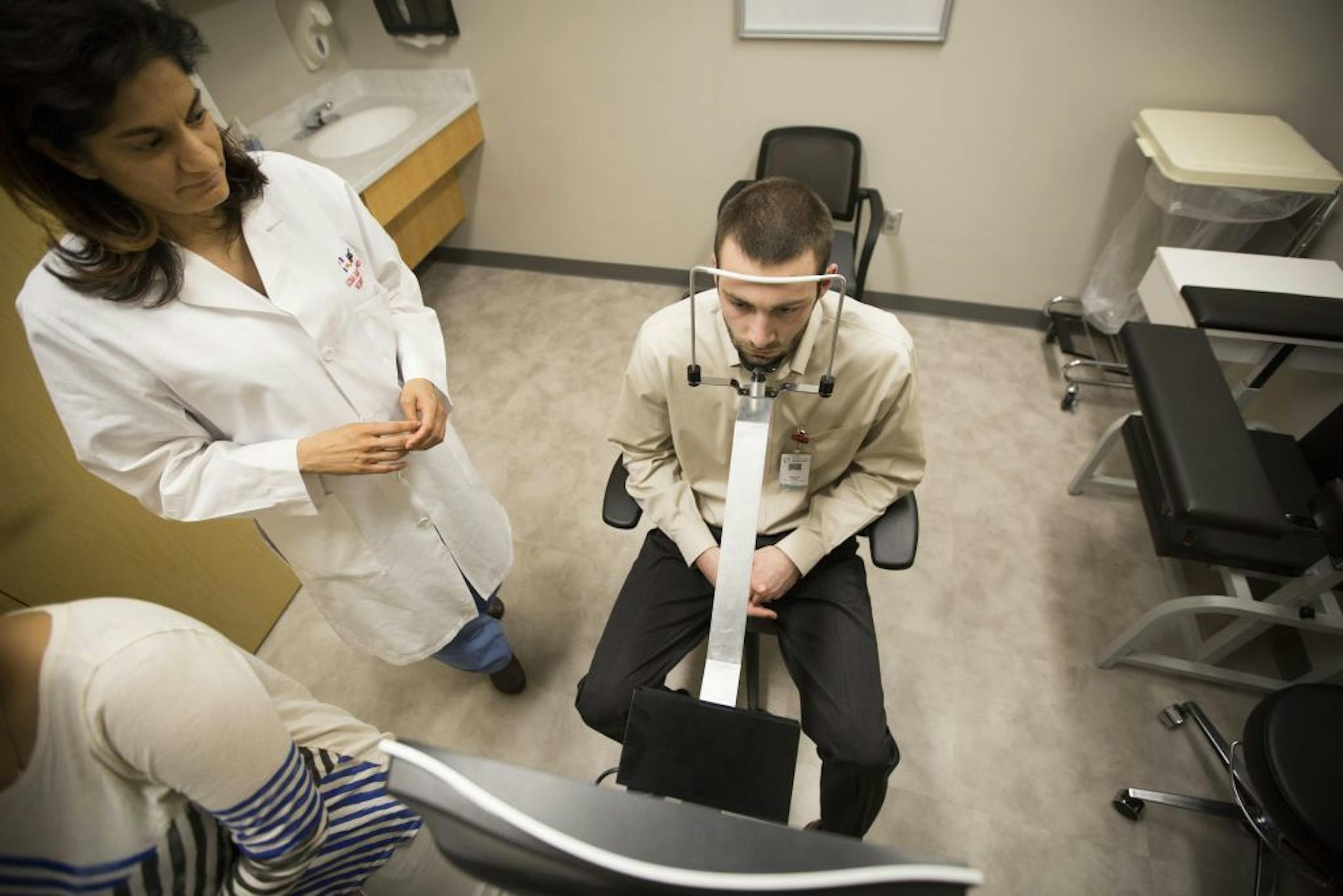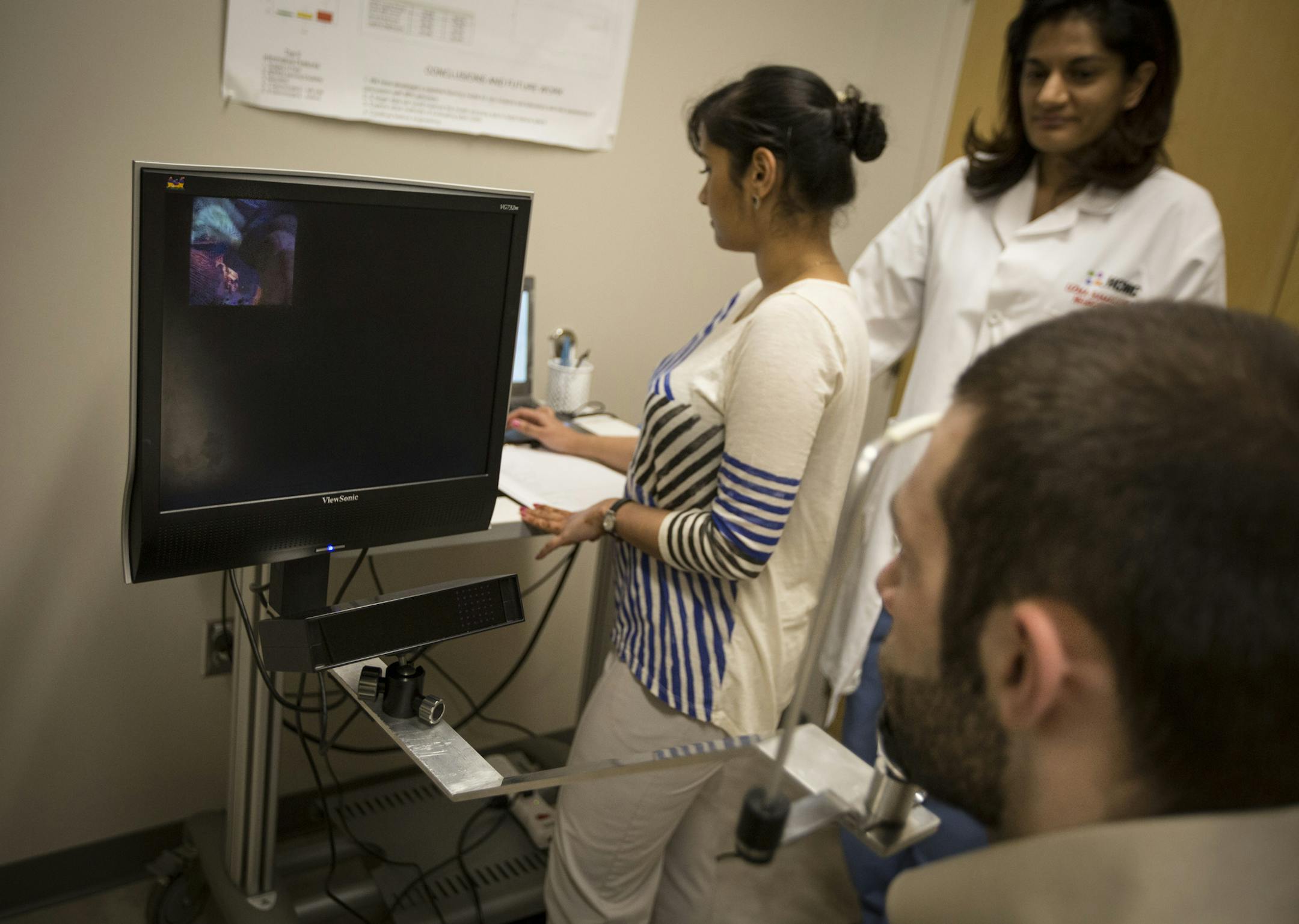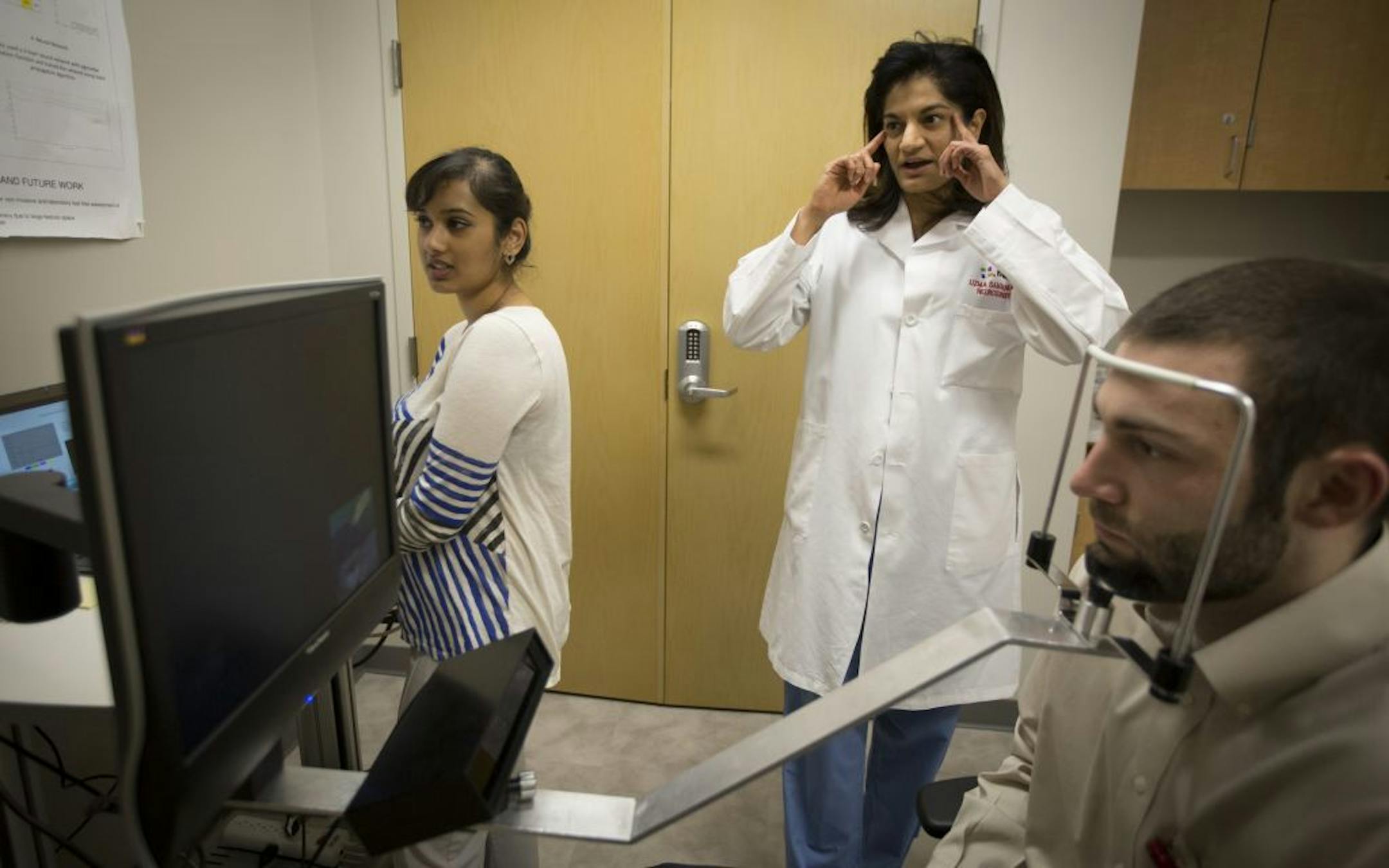
Hennepin County Medical Center and the University of Minnesota are launching what's billed as the nation's largest study of concussions and traumatic brain injuries, combining discoveries in brain imaging, blood analysis and eye tests to find a more accurate way to detect the injuries' severity and long-term ramifications.
The two Minnesota institutions are joining with Chicago-based Abbott, a pharmaceutical and device manufacturer, which has studied whether "biomarkers" in blood show up after people suffer head injuries.
The study, announced Wednesday, will involve screening 9,000 trauma patients at HCMC and enrolling at least 1,000 of them for testing and follow-up evaluations one year later.
Patients will range from those suffering mild concussions who never lose consciousness to people in comas to those whose injuries resulted in no head trauma at all.
The goal is to eliminate vague descriptions for head injuries — such as "mild, moderate or severe" concussions — and to create a sophisticated testing protocol that could pinpoint an injury's underlying causes and the precise treatments needed, said Dr. Uzma Samadani, a study leader and neurosurgeon at HCMC.
" 'Mild, moderate or severe' doesn't tell you anything about what's actually wrong or how you treat it or how the patient is going to do," she said.
Often undetected
Roughly 2.2 million Americans seek emergency department care each year for traumatic brain injuries, or TBIs, according to the U.S. Centers for Disease Control and Prevention. But Samadani said a substantial number of trauma patients have head injuries that go undetected, perhaps because they suffered blows to other parts of the body that didn't initially present risks to their brains. Then later they report headaches or seizures.
"They don't even necessarily attach it to the day they were injured because … they broke their leg and they hit their head and they got so focused on fixing their broken leg that they didn't think about the component of brain injury," she said.