

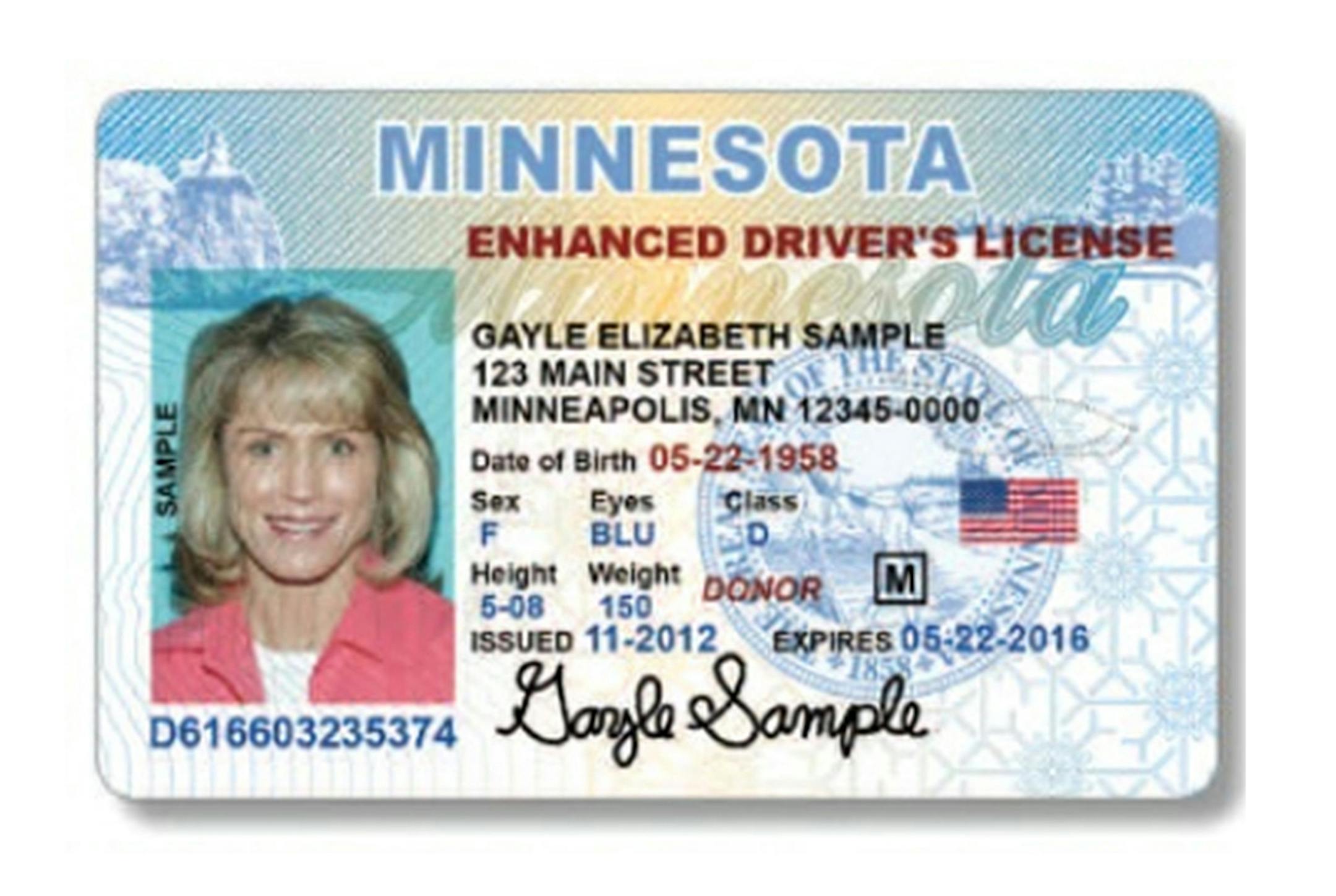
Minnesotans will have at least another year before they need a new driver's license to get through airport security, thanks to an extension granted Wednesday by the federal Department of Homeland Security.
The state now has until Oct. 10, 2018, to comply with the federal Real ID law, which aims to tighten security standards around driver's licenses and state-issued ID cards. The announcement comes a week after Minnesota was granted a much shorter "grace period" for real ID compliance, through January 2018.
"All Minnesotans should be assured that they can continue to board commercial airplanes and access federal facilities with their existing driver's licenses or birth certificates, as we work to fully implement Real ID and comply with federal requirements," said Gov. Mark Dayton, who urged federal officials to grant the longer extension.
Minnesota has lagged behind other states in implementing the Real ID Act, which Congress passed in 2005. After several failed attempts to pass a state Real ID measure, the Legislature voted earlier this year to bring Minnesota into compliance with the law.
Now, the state is preparing to add the Real ID option to its licensing system, a process expected to take until October 2018. That means Minnesota will need yet another extension to ensure residents have enough time to make the switch to Real ID licenses by October 1, 2020, the date by which the federal government says all air travelers will need a Real ID-compliant license — or a passport — to fly.
Justine Whelan, a spokeswoman for the Department of Homeland Security, said federal officials have been granting extensions on an "ongoing basis." There's no guarantee that Minnesota will get an additional extension, but she said her department has been willing to work with states making an effort to comply with the law.
"We understand that Rome wasn't built in a day," she said. "If a state is on its way to compliance, we're not going to unduly put people out."
Rep. Dennis Smith, R-Maple Grove, the author of the Legislature's Real ID bill, said the extension is particularly important for Minnesotans who need access to military bases and federal buildings.
![Gov. Mark Dayton speaks at a news conference at the Dar Al Farooq Islamic Center, on Sunday. ] COURTNEY PEDROZA • courtney.pedroza@startribune.com; Dar Al Farooq Islamic Center; Gov. Dayton visits on Sunday; Bloomington, MN; Aug. 6, 2017.](https://arc.stimg.co/startribunemedia/2E5NV5V6U4ICVGF7LHPPAXEU6Y.jpg?&w=1080)


