

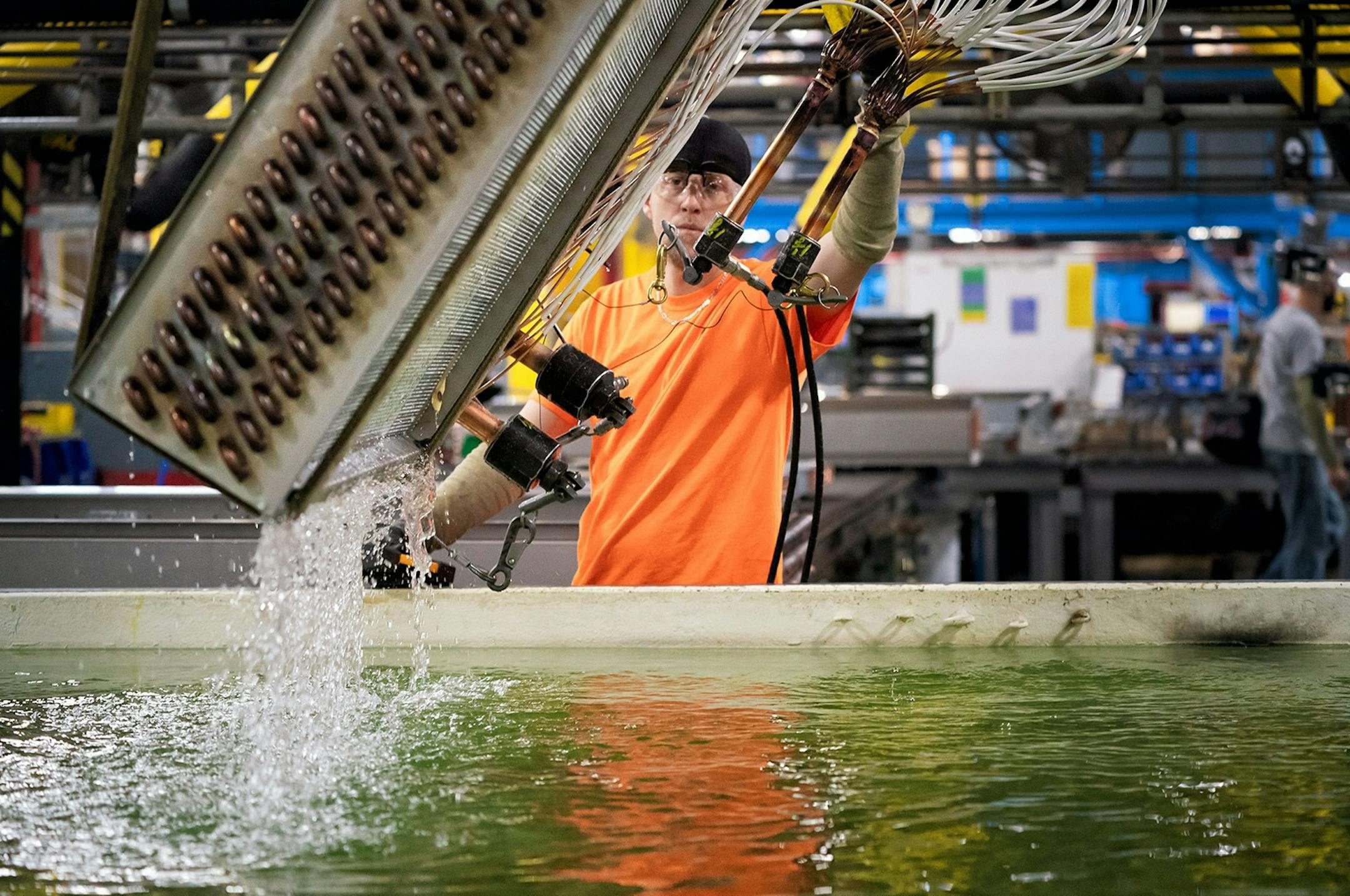
Minnesota's factories are adjusting to "anything but normal" conditions as the novel coronavirus changes how businesses function.
Last week, the Doosan Bobcat plant 65 miles northwest of Minneapolis in Litchfield banned all visitors from inside the 100-worker plant and staggered lunch breaks as a way to limit the number of workers in close quarters at any given time, said Bobcat spokeswoman Stacey Breuer.
"It's crazy," she said. "But our focus is on communication and protecting the health and safety of our employees. That is our biggest goal. We are trying to take care of all the people who interact with us on a daily basis."
Daikin Applied Americas and Graco also are changing the floor rules and trying to figure out how to integrate the work of nonproduction employees from home.
At the same time companies are trying to reconfigure operations, they are also identifying costs to cut that will adjust to sudden drops in demand. Polaris and Winnebago closed plants on Monday as a result, after automakers said last week they would cease vehicle production in the U.S.
"We all have a little bit of tightness in our stomach," said Bob Kill, CEO of the statewide manufacturing consulting firm Enterprise Minnesota. "There will be really sad stories of weak balance sheets. We know that already. We saw that in 2008."
Enterprise Minnesota has a peer council program where production and human resources professionals from factories across Minnesota talk once a week or quarter to hash out issues and best practices. Since the outbreak, CEOs have wanted virtual meetings twice a week, Kill said.
Discussions suddenly range from new HR policies that can help weather the crisis, to how to temporarily downsize a factory, how to protect employees and how to meet customer requests when supply disruptions occur.
![GLEN STUBBE ¥ gstubbe@startribune.com ÐÐÊWednesday, October 20, 2010 -- Minneapolis, MN -- ] Bob Kill, CEO of Enterprise Minnesota.](https://arc.stimg.co/startribunemedia/7JCIYE5HFHSAVWY6N4JVHK2KJI.jpg?&w=1080)


