

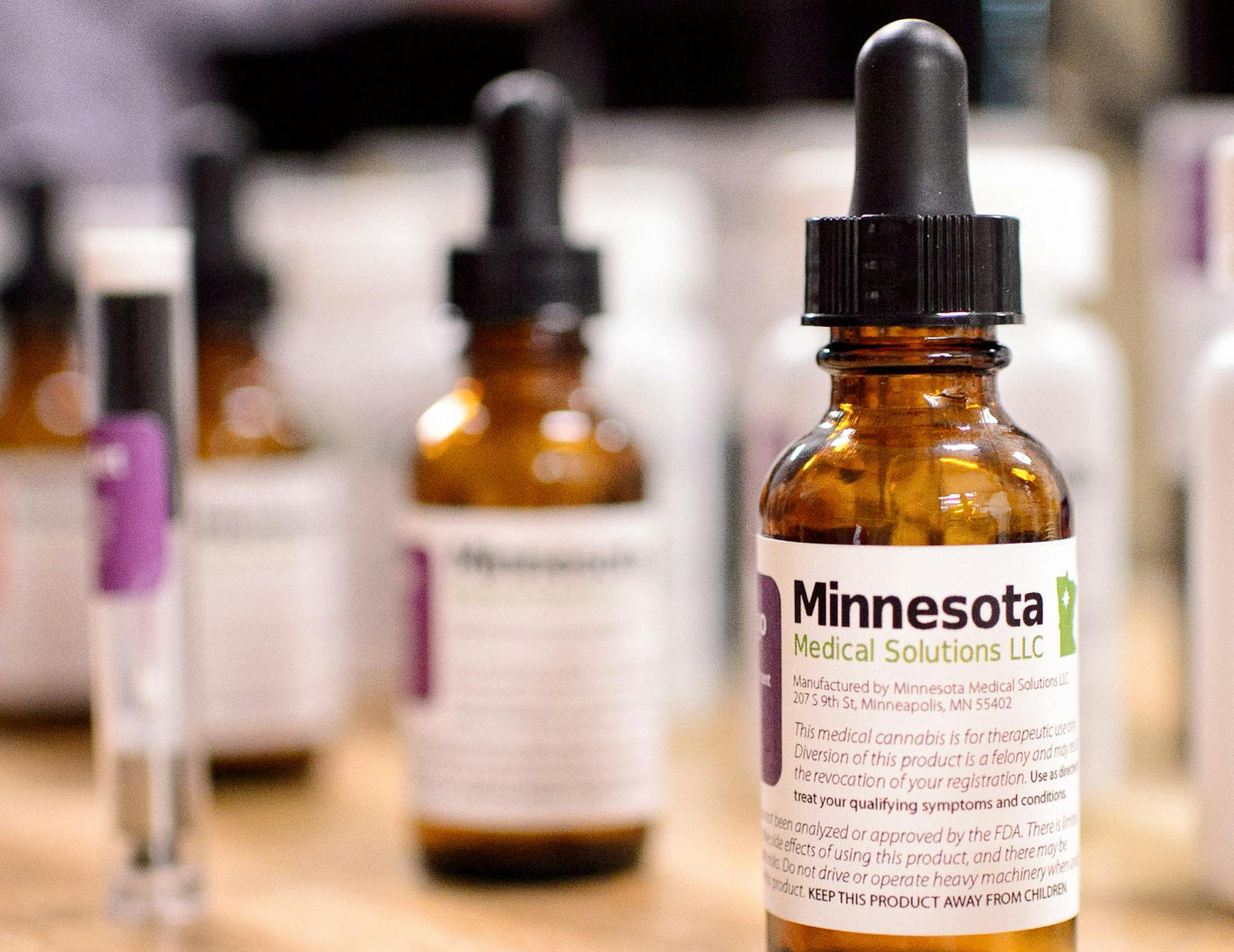
Minnesota doctors are counting down the weeks to the launch of the state's medical marijuana program with the same mix of hope, curiosity or concern as many of their patients.
Unlike their patients though, doctors will be watching from the sidelines this summer. They won't write the prescriptions or decide how strong a dose of cannabis a patient will receive. In Minnesota, a doctor's only role is to confirm that a patient has a qualifying condition — a yes or no answer on a Health Department form — before they send their sickest patients off to try their luck with the newly legalized drug.
"Then they're out of the picture," said Dr. Gregory Plotnikoff, an internal medicine specialist at Abbott Northwestern Hospital in Minneapolis. "Someone else is then actually prescribing and adjusting the dose, and it's not a physician with clinical experience. … It's literally a pharmacist following an algorithm."
While some doctors now are questioning that setup, when the Legislature was debating legalizing medical marijuana a year ago, that's what the majority of doctors wanted. The law was written to shield doctors from the possible legal consequences of prescribing a federally banned substance.
Although 24 states have legalized medical marijuana, the federal government still considers it a Schedule 1 controlled substance, with no recognized medical value. The federal ban has made it difficult for researchers in this country to gather hard scientific data about its medical uses and potential benefits.
"I think there's a lot of controversy on the drug for lots of different reasons," said Dr. David Thorson, a family practice physician in St. Paul and president-elect of the Minnesota Medical Association. Medical marijuana has "significant potential," he said, but right now "the science behind its benefit is not very strong; in most disease states, it's anecdotal at best."
The Minnesota Medical Association has scrambled to meet physician demand for information about medical cannabis, publishing papers, organizing forums and seminars and offering training to doctors and medical students that have attracted more than 100 participants in recent months. State law allows doctors to opt out of certifying a patient to participate in the program, and Thorson said his members seem to be divided between those who don't want to participate until they see hard evidence of the drug's effectiveness, those who think the drug has significant potential, and those who haven't yet made up their minds.
Even for skeptics, Thorson said, there is a keen awareness that the limited number of patients eligible to participate in Minnesota's program have debilitating, difficult-to-treat conditions, and some of the anecdotal evidence surrounding cannabis treatments has been encouraging.


