

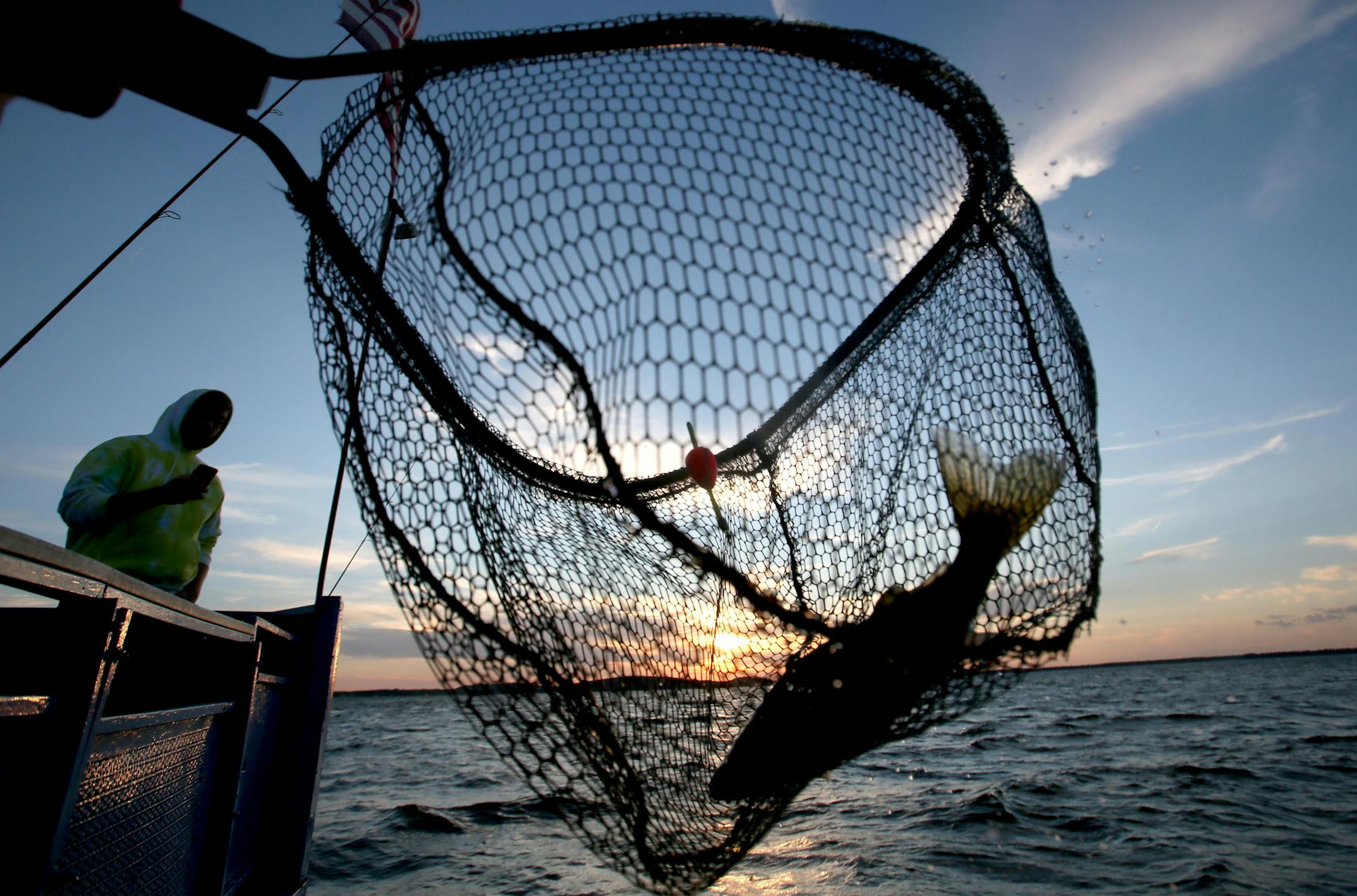
The state's top wildlife officials will adopt an array of new strategies for Lake Mille Lacs in an effort to solve the problems that forced an abrupt halt to walleye fishing there in July.
Next year, the Minnesota Department of Natural Resources will ask the Legislature for money to launch a pilot fish-stocking program and hatchery so it can be ready to boost the young walleye population if that's necessary down the road. It will ask the federal government for a permit to kill fish-eating cormorants to reduce pressure on small fish. And it will create a new advisory committee made up of 12 to 16 people from the Mille Lacs community, including business owners, guides and anglers, to help inform future management decisions.
Mille Lacs, the state's most popular walleye lake, will become the sole charge of a newly appointed project manager and a crew of DNR staff. Management of the lake will be based at DNR headquarters in St. Paul, rather than in Aitkin, where it is now, and a new office will open on the lake that will include educational programming, outreach staff and community meeting rooms.
"It's the only lake [in Minnesota] that will have this level of intensity," said DNR Commissioner Tom Landwehr. "It will be unique. But we have to put everything on the table to restore it."
The DNR abruptly called a halt to walleye fishing in July after anglers met the annual quota that was set between the state and the eight Chippewa bands that co-manage the lake with the state.
This year the harvest was set at 40,000 pounds — 11,400 for the tribes, and the rest for anglers — far less than the half-million pounds from just a few years ago. But because of warmer water, invasive species and other factors, the quota was met earlier than expected.
Landwehr said the agency is doing everything it can outside a special legislative session and without the legal authority to change its harvesting agreements with the bands. Gov. Mark Dayton had proposed a special session to provide financial support and perhaps property tax relief to the resorts and fishing businesses that have been hurt by the early shutdown of the walleye season, but lawmakers balked.
The state still has to share some of its ideas for management of the fishery with the Chippewa bands at meetings this winter that will be closed to the public.


