

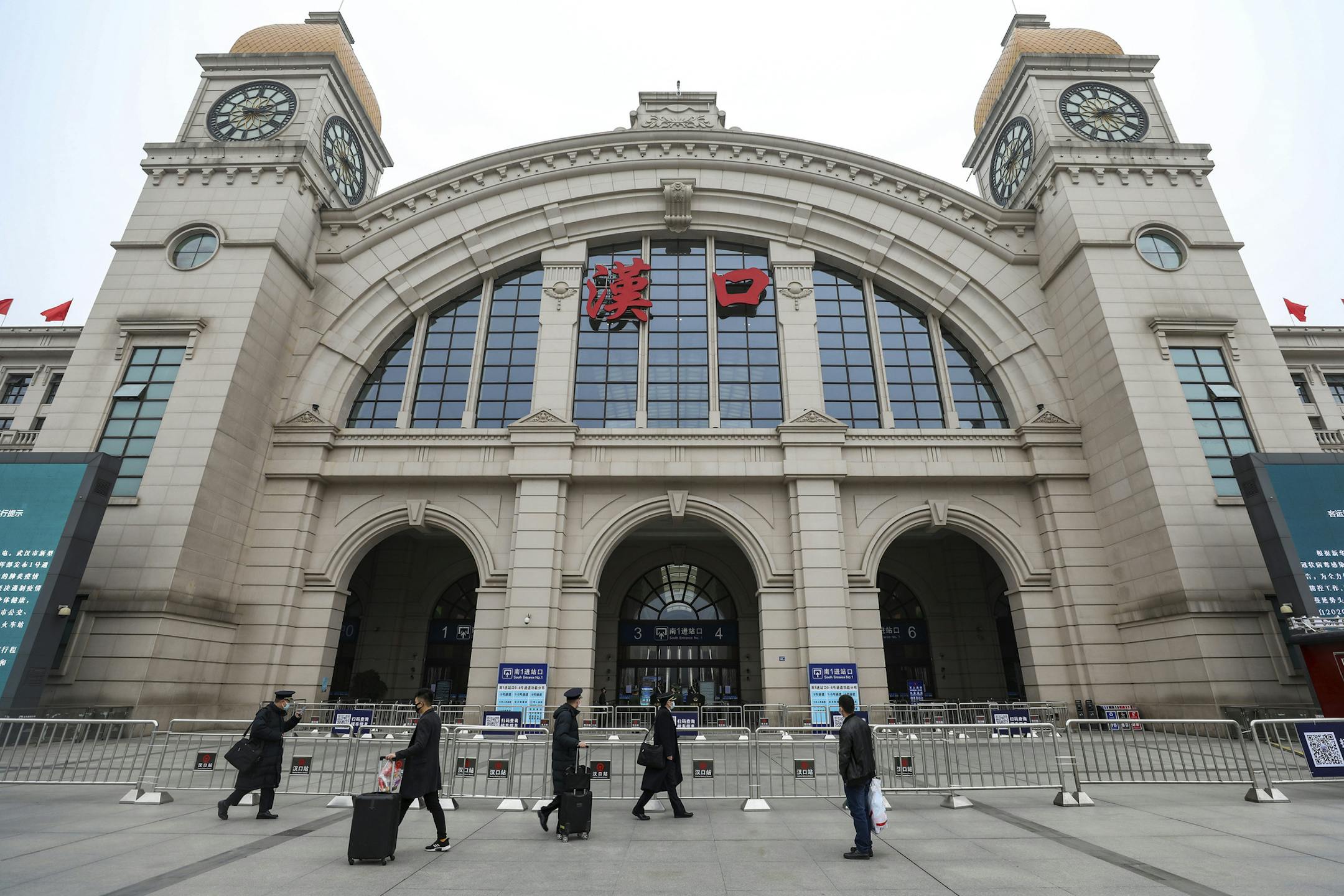
Companies in Minnesota and across the U.S. are starting to see disruptions caused by the fast-growing outbreak of a pneumonialike coronavirus that has shut down business in some of China's largest cities.
Minnesota companies such as 3M, Medtronic and Cargill said they have not yet had major issues, but they have adjusted their operations and are ready to pivot should the situation change. Polaris said on a conference call that shipments from its suppliers are still getting to the U.S., but the recreational vehicle maker is unable to send employees there to work out future deals.
Other U.S. companies are signaling more serious consequences. Ford and Toyota said they are idling some of their vast Chinese assembly plants for an extra week. Apple is rerouting supply chains, and Starbucks has closed more than half of its 4,292 stores in its second-biggest market and said it would take a quarterly and full-year financial hit.
On Wednesday, British Airways suspended all flights to mainland China, while United Airlines, American Airlines and Air Canada are joining the growing number of carriers reducing service.
The full extent of the hit to the broader business world is not yet clear. Most of China had already been shut down since at least Friday for the annual Lunar New Year holiday, a weeklong nationwide hiatus. But with the outbreak showing no signs of slowing, many companies are already preparing for a longer slowdown.
"Our members are dealing with varying degrees of disruption in their businesses, including supply chain issues, temporary closings of some retail outlets and factories, and other challenges," said Jake Parker, senior vice president of the US-China Business Council, which represents major companies. "If travel restrictions and quarantines are expanded or the holiday extended beyond Feb. 8, that will amplify these problems."
China has become an essential part of the modern global industrial machine. China alone accounts for roughly one-sixth of global economic output. It is the world's largest manufacturer and trader.
But China's importance goes beyond what it makes. Its consumers buy more cars and smartphones than anybody else. When they go abroad, Chinese tourists spend $258 billion a year, according to the World Tourism Organization, nearly twice what Americans spend.


