

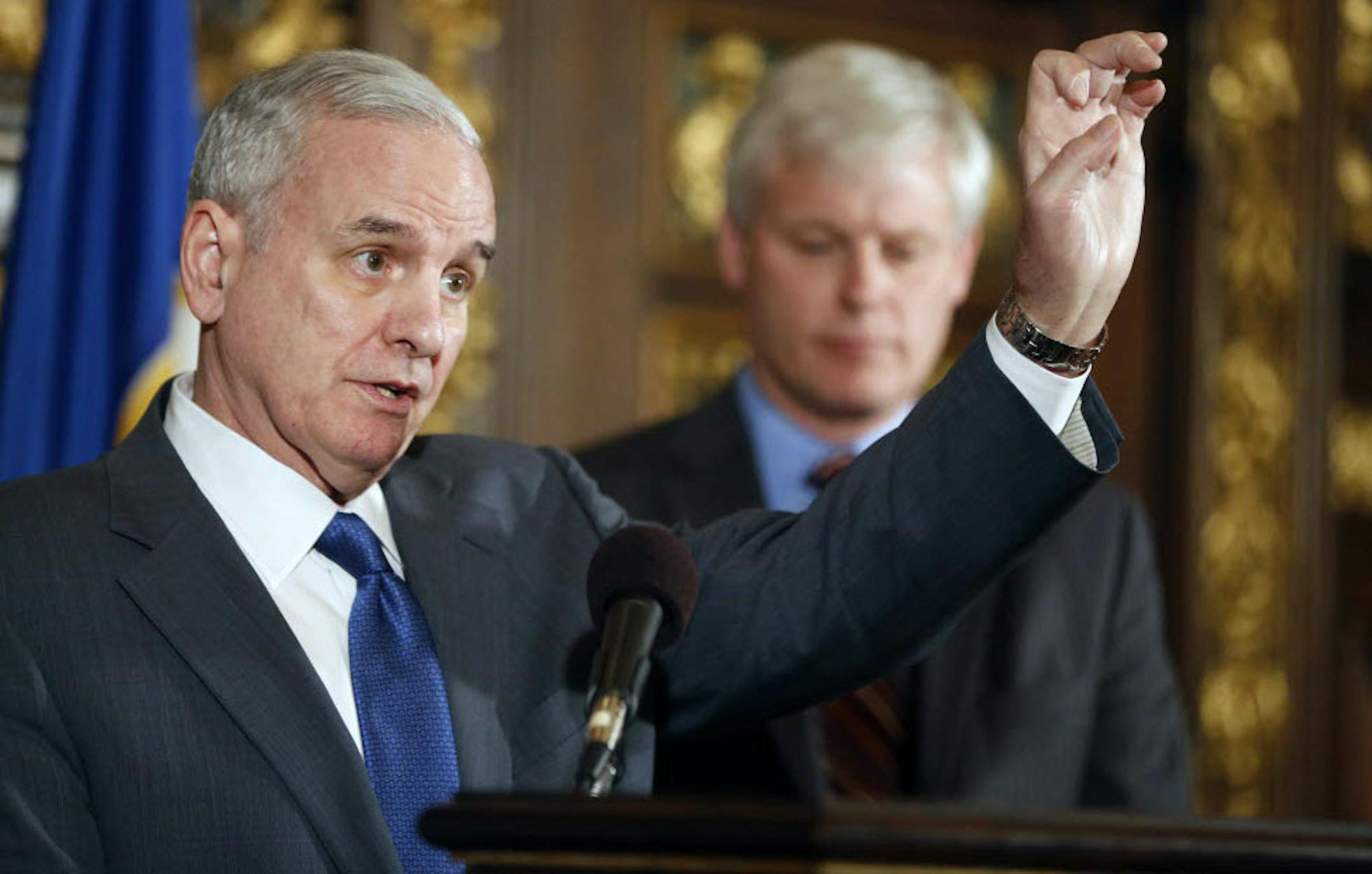
![In the governor's reception at the State Capitol, Governor Mark Dayton and legislative leaders announced a deal that would raise about $2B in new revenues, but includes $400 million in property tax breaks.]rtsong-taatarii@startribune.com ORG XMIT: MIN1305121636041227](https://arc.stimg.co/startribunemedia/EGOFMAB2HF5P2SBLBFIRFQ364I.jpg?&w=1080)
DFL Gov. Mark Dayton and Democratic legislative leaders reached a budget agreement Sunday that calls for $2 billion in new taxes and boosts spending for schools and property tax relief.
The Democrats are relying on a tobacco tax hike and the governor's long-sought income tax increase on high earners to pay for the new spending. The budget outline scraps a proposed sales tax on clothing, but lawmakers continue to consider resurrecting at least part of a heavily criticized plan to tax businesses services.
"It's a budget that is going to work for Minnesota. It's going to put Minnesota to work," Dayton said Sunday afternoon. "It's going to fulfill our promises to invest in education and infrastructure. We're going to see a better Minnesota as a result of this budget."
Legislators now have the framework of a budget deal to guide the closing week of the legislative session and knock down a projected $627 million budget deficit. The plan includes a temporary income tax surcharge on the state's wealthiest residents to repay the $860 million owed to public schools. The budget outline also boosts education spending by $725 million and gives Minnesotans $400 million in property tax breaks.
The surprise Mother's Day budget agreement angered Republicans who had little say in the plan.
"Disappointing news out of the DFL that their gift for every hardworking mother in the state of Minnesota is going to be more than a $2 billion tax increase," said House Minority Leader Kurt Daudt, R-Crown. "This is bad news today for Minnesota's economy."
This is the first budget outline since DFLers took control of the Legislature this year, giving them almost complete control to direct state spending and taxing as they see fit. The state has clawed its way out of the worst recession in decades, a downturn that forced state leaders to cut spending by more than $2 billion in recent years.
Breaking the deficit cycle
Dayton and Democratic leaders say now is the time to restructure the state budget for the long haul and break the cycle of back-to-back budget deficits.
![In the governor's reception at the State Capitol, Senate minority leader David Hann and House minority leader Kurt Daudt gave their skeptical response to Governor Mark Dayton's deal, announced Sunday afternoon, which includes $2 billion in new tax revenue, including a tobacco tax hike and the governor’s long-sought income tax increase on high earners.]rtsong-taatarii@startribune.com ORG XMIT: MIN1305121656101245](https://arc.stimg.co/startribunemedia/DTETTMZFT3TPX3OOSOZPCWRPFI.jpg?&w=1080)


