

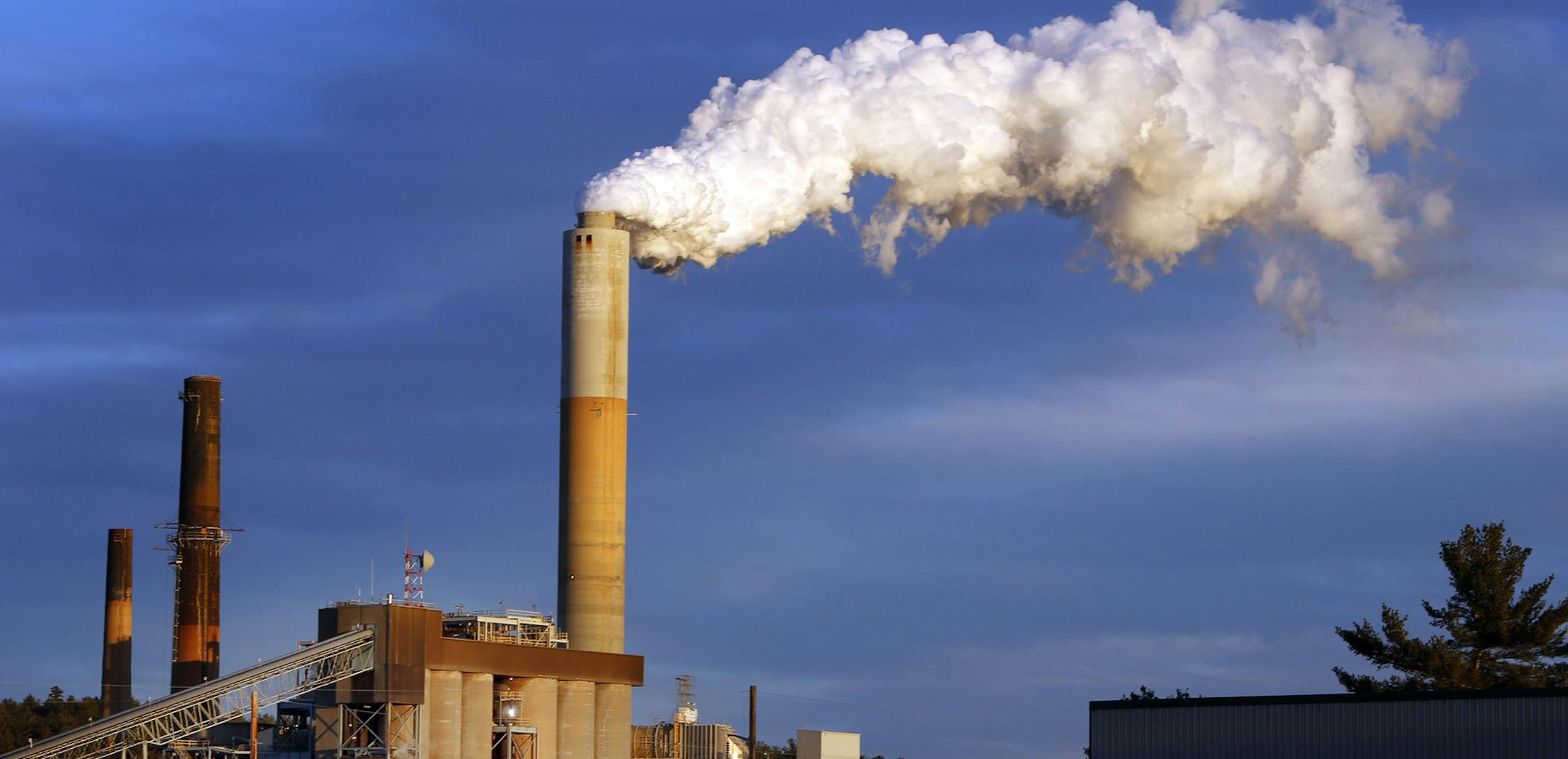
Minnesotans should be pleased that state Attorney General Lori Swanson has joined attorneys general in 17 other states to defend the Environmental Protection Agency's Clean Power Plan against those attempting to block limits on carbon pollution.
Swanson will no doubt face pushback from Republican legislators who disagree with this position, as well as others, such as the U.S. Chamber of Commerce and the American Coalition for Clean Coal Electricity, that are working to block or undermine the plan.
The Clean Power Plan represents a new front in the fight to slow climate change. The limits it would place on carbon-dioxide emissions will go a long way toward reducing one of the leading accelerants of climate change, while also measurably reducing air pollutants.
So far, the issue is dividing the country along predictable lines. Democratic-leaning states favor the EPA's attempts to limit emissions. That includes coastal states such as California, Oregon, New York and Virginia, as well as Minnesota, Iowa and Illinois in the Midwest. Some 26 states — much of the nation's red-leaning midsection, from Montana to Texas and Utah to West Virginia, along with most of the South — stand opposed, and 24 of those have a lawsuit in the U.S. District Court of Appeals to block the plan. Oklahoma and North Dakota have filed their own lawsuits. Six states are staying out of the fray for now.
Much of the tension boils down to what is becoming a very worn set of arguments. Frustrated by congressional inaction, the executive branch proposes an action. Republicans reliably rise up to declare said action an illegal power grab.
In a less-polarized world, the White House would not be stepping over the one body directly elected by the people to accomplish its aims. How much better would it be for congressional Republicans and Democrats to achieve a compromise that moves ahead, even fractionally, while acknowledging the other side's concerns.
But in the absence of that, how long must we wait while climate change accelerates and air quality deteriorates?
The Clean Power Plan proposes to reduce carbon emissions by nearly a third of what they were in 2005. It would take until 2030 to do so. This would be achieved largely by requiring states and utilities to use less coal and more alternative fuel sources, such as wind, power and natural gas. Remarkably, this would stand as the first national standard for dealing with carbon emissions by power plants, an obvious source of air pollutants.


