

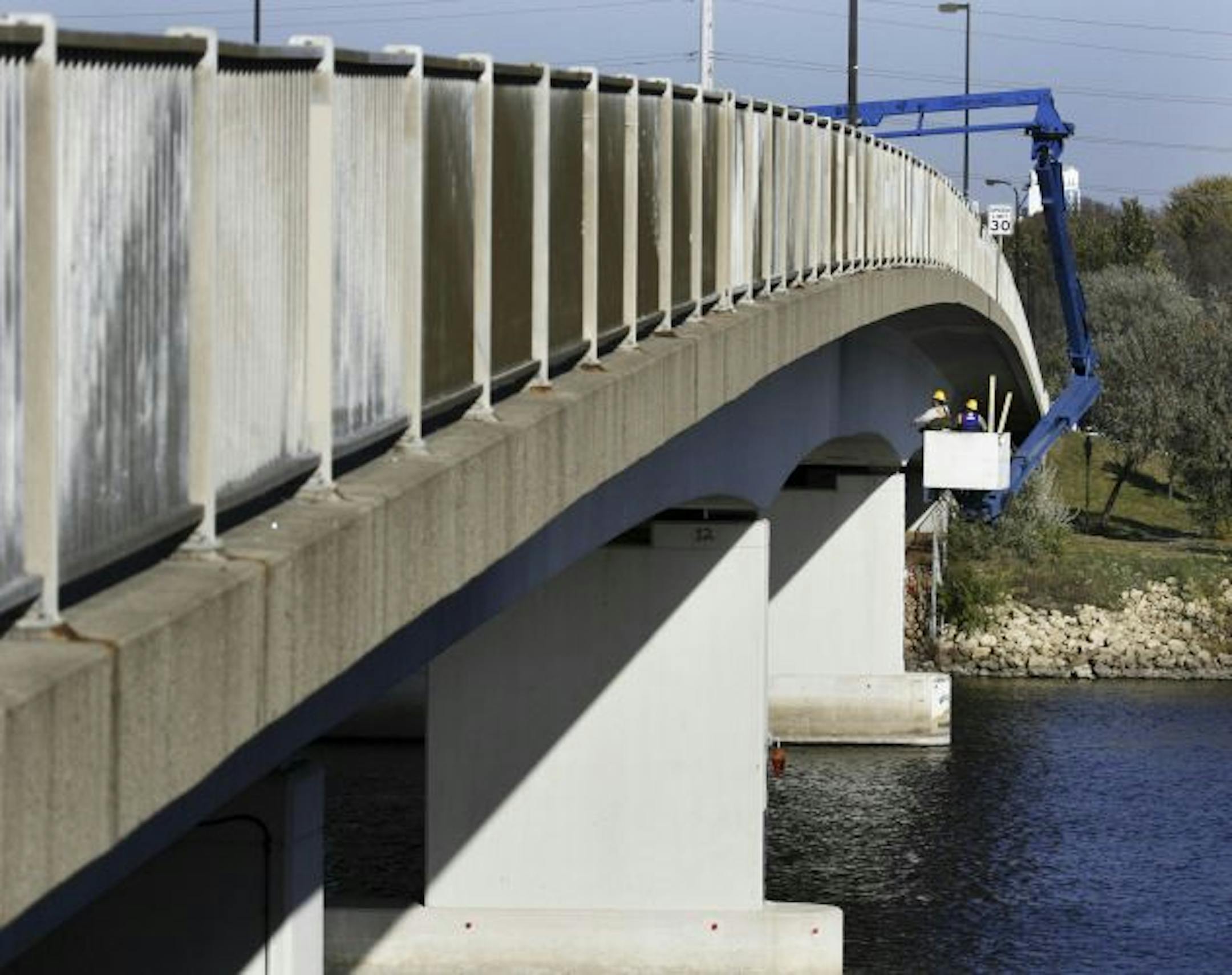
Without yet knowing specifically what ails the Plymouth Avenue Bridge, nor what the repair bill will be, Minneapolis officials Friday put their hands out for state help.
The City Council pushed the unforeseen need for emergency repairs to the bridge to the top of the city's 2011 bonding request to the state.
The city closed the bridge Oct. 22 when a routine inspection found corrosion in some of the cables that tie the bridge together. That disrupted about 14,000 trips daily. A consultant's report on the situation and the recommended repair is expected soon.
If the city succeeds in securing state bonds in a legislative session that might yield a small bonding bill, the city would need to match that with borrowing or some of its regular state road aid. Repairs could begin next summer and be finished in the fall, according to the city's bonding request.
The bridge is closed not only to motor vehicles, but also to bike and foot traffic. However, last weekend's storm added a snow load of more than 250,000 tons to the bridge without incident. City Engineer Steve Kotke said Friday that he'll reconsider the ban on foot traffic after reading the report.
The city retained Corven Engineering of Tallahassee, Fla., under a contract of up to $250,000 to evaluate the bridge. The firm specializes in post-tensioned bridges such as Plymouth, in which cables running along the long dimension of the bridge are tightened to hold its components in place. The Plymouth bridge was the first in the state to use the technique.
The bridge repair vaulted ahead of the previous highest priority for the city from state bonding. That was Granary Road, a proposed east-west roadway in a redeveloping railroad-industrial area.
State bonding for the road project was approved last session by the Legislature but vetoed by Gov. Tim Pawlenty. The city is also seeking state help in rehabbing the 10th Avenue Bridge, pitching it as a vital University of Minnesota-area link that will see heavier traffic once the Central Corridor rail line is in service.

