

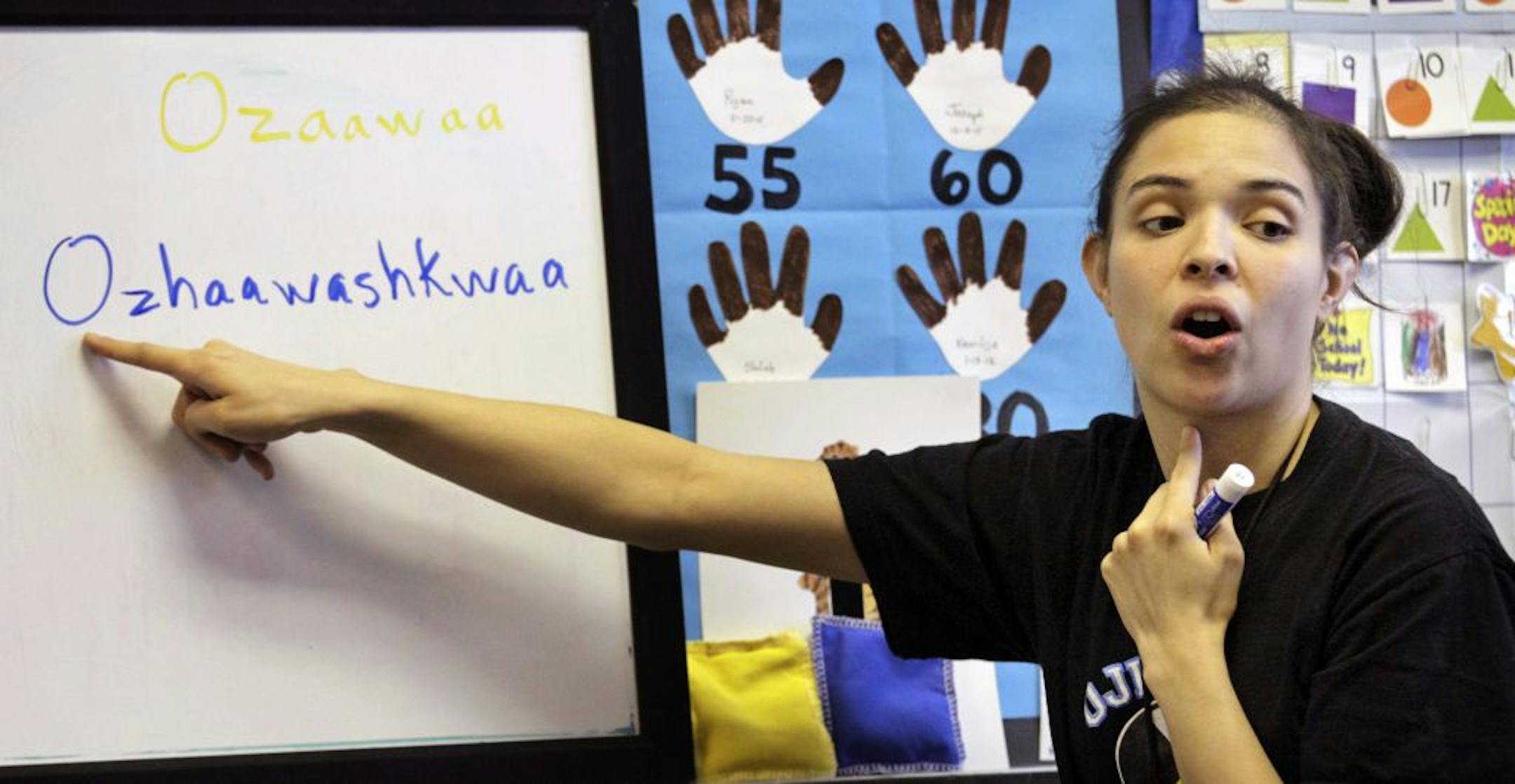
Paul Bownik admits that, as a Polish kid from the North Side, he may not be the obvious guy to infuse a classroom of 25 mostly Indian kids with the Dakota and Ojibwe tongues of their forebears.
Yet despite Bownik's roots in a far different culture, his classroom is what educators describe as language-rich, from the numbers in Dakota and Ojibwe on the wall to the way that Bownik weaves native words and phrases into everyday tasks, such as getting coats before bus time.
In its bid to raise dismal school outcomes for Indian students, the Minneapolis School District is staking money and staff on techniques such as those that Bownik and fellow teachers employ at mostly native Anishinabe Academy.
The district and Indian leaders this month approved a new five-year agreement with specific student achievement goals, which is a change from their first such pact. The latest agreement came just as Gov. Mark Dayton and Indian educators pledged at a summit to work together on improving Indian education statewide.
The first-of-its-kind 2006 agreement between the district and leaders of Indian agencies hasn't generated the accelerated test scores that both parties sought for the district's roughly 1,800 native students.
Indian students rank last among ethnic and racial groups in meeting the district's standard of getting to school 95 percent of the time, a strong predictor of achieving proficiency on state tests. The most recent data found only 44 percent of native high school students graduating.
"Looking at the data can be really depressing, and you can feel hopeless," conceded Danielle Grant, the district's Indian education director, hired midway through the first pact.
Still, she and others see less tangible improvements despite the scant progress. Parent and community leaders trust schools and teachers more, no small feat against a historical backdrop of boarding school brutality that's bred an ambivalence about schools among some Indian families. The earlier pact laying the groundwork for that was "a huge step for us," according to Noya Woodrich, who leads the nonprofit Division of Indian Work and co-signed the recent pact for the Indian community.

