

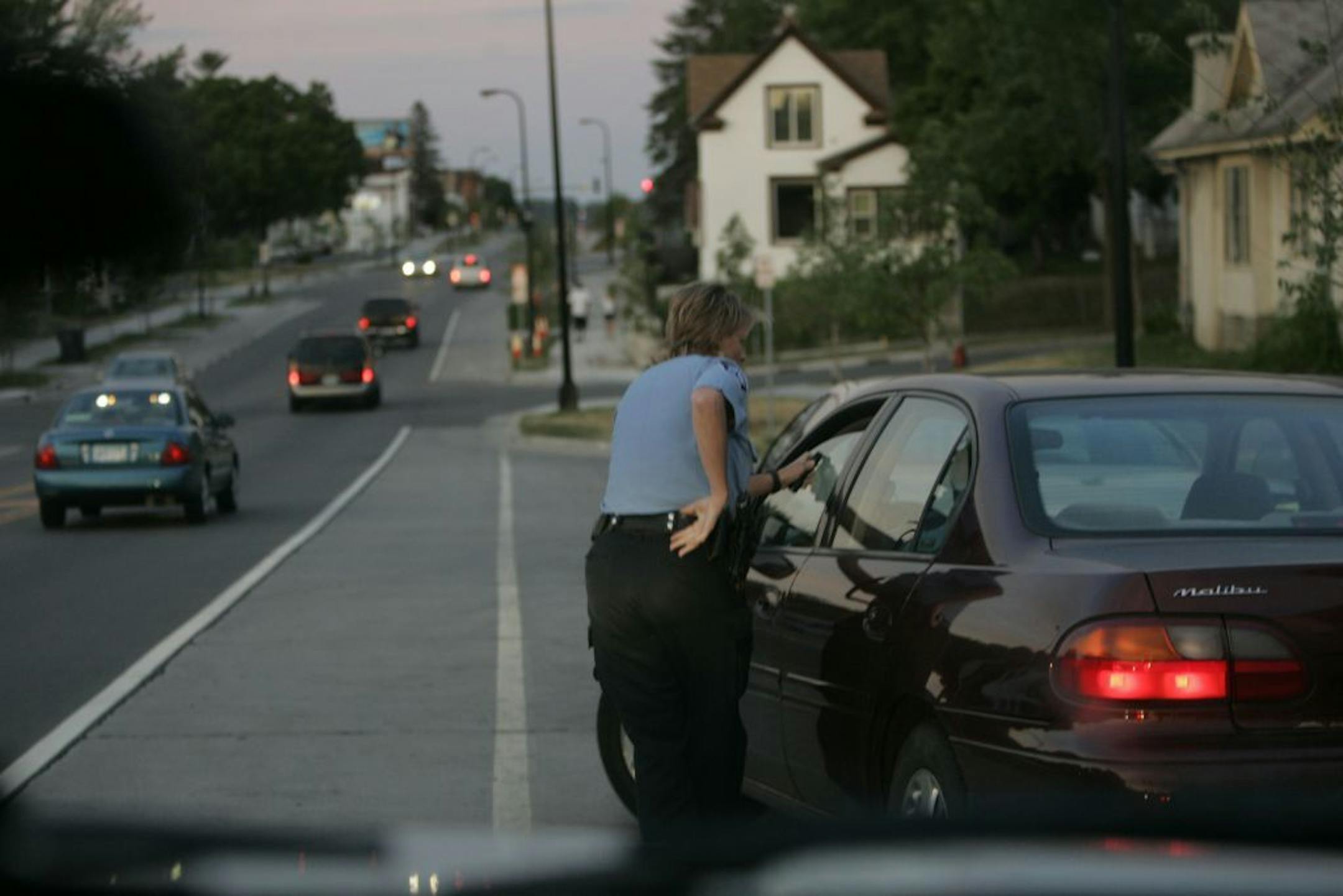
The Minneapolis police stopped fewer suspicious people, suspicious vehicles and traffic scofflaws than usual over the past year, a change that in some neighborhoods resulted in police stops falling by about half.
Police made about 66,000 of the stops, which do not include 911 calls for help, citywide in the first six months of last year. It's fallen to about 44,000 for the first half of this year, city data show. The shift has not fallen evenly across the city, and in some places the diminished police activity has been more acute: stops for traffic violations downtown have fallen by 53 percent.
Asked why the numbers are dropping, Chief Janeé Harteau pointed to the department's 784 sworn officers, its lowest staffing level in at least 10 years. She also said the drop reflects a change in crime-fighting strategies that she argued doesn't show up in the stats.
"I don't want traffic stops just for the sake of traffic stops," she said in an interview.
Harteau said she's changed officers' priorities since she took over the department 18 months ago, and argued that some of those changes have meant officers "engage with the community" rather than conduct stops.
She pointed to officers walking a beat or attending a community meeting. They might also spend more time on a burglary call or a report of a gun being fired, she said.
"That's proactive work. It's not being counted," she said.
The stops are those done spontaneously by officers on routine patrol. They might see a car without a license plate or working headlights and decide to pull it over. Or they might see someone walking in a suspicious manner and decide to stop and talk to him or her.


