

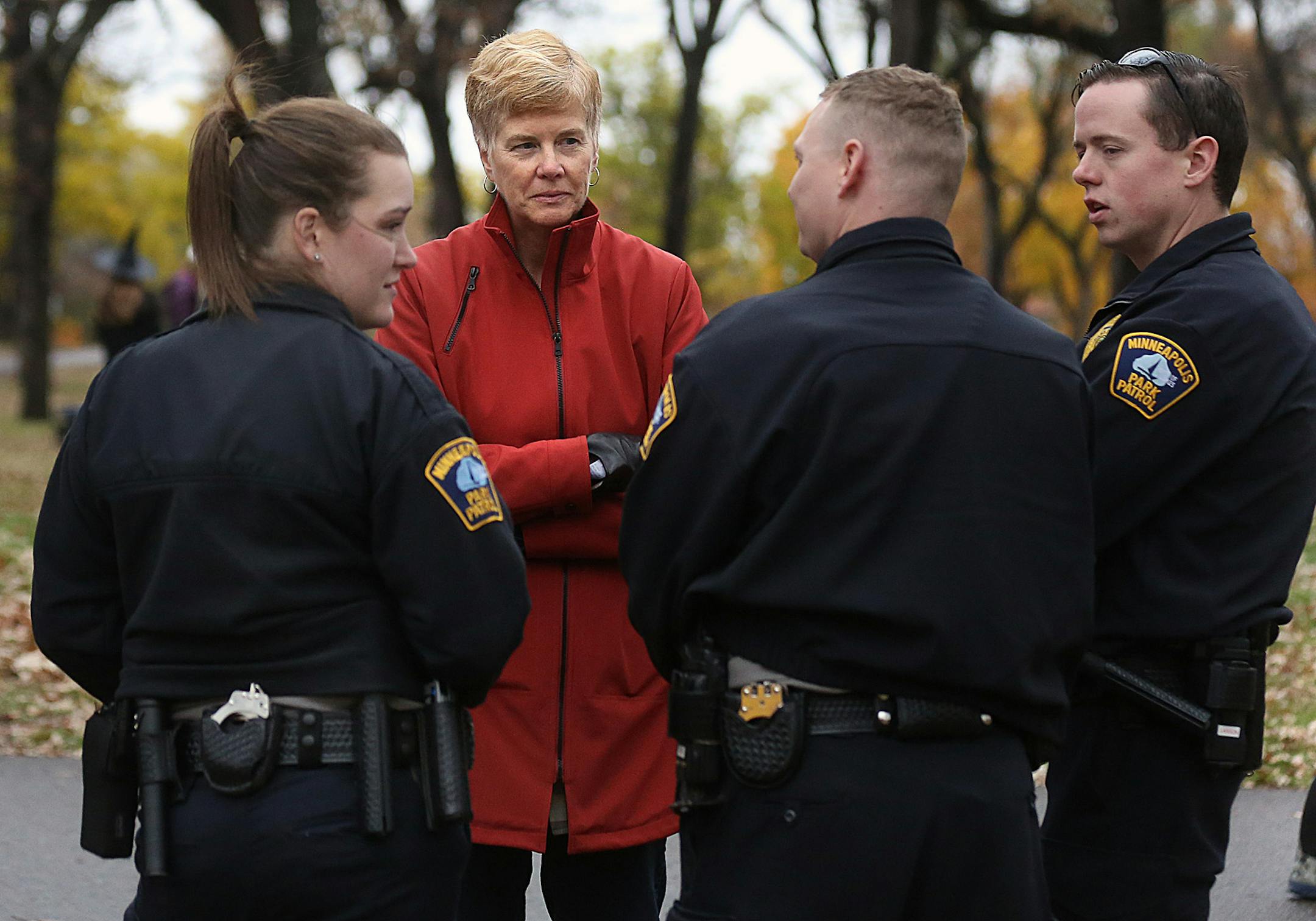
Shirley Heyer wants upgrades at Peavey Park, where the community has been waiting 15 years for a better rec center. For Minneaplis City Council Member Alondra Cano, it's getting broken playground equipment fixed faster at Cedar Avenue Field where her kids play. For Jake Virden and David Gilbert-Pederson, it's more full-court basketball outdoors.
As the Minneapolis Park and Recreation Board looks for ways to pay for a long list of fixes, through a referendum or City Hall, a growing group of activists is pushing for more emphasis on parks that serve low-income and minority residents. They have turned up at public hearings and at the board's annual legislative breakfast, asking for more focus on equity.
On Wednesday, Superintendent Jayne Miller will unveil a five-year list of upgrades to buildings and grounds in neighborhood parks. It's intended to make tangible what's at stake if there's a fall referendum on neighborhood park funding, or barring that, a City Hall decision on boosting money for park repairs.
Her proposal will rely not just on staff assessments of each park's repair needs. It will also weigh neighborhood-level socioeconomic factors, such as whether a park is in an area of concentrated poverty with at least 50 percent minority population.
"These criteria are really positive steps but there's a lot of work to do on naming the priority for addressing racial equity," said Vina Kay, executive director of Voices for Racial Justice. The nonprofit consults on equity issues with the Park Board, but it is also among the advocacy groups pressing for equity improvements in facilities, programs and park staffing.
But Park Board data analyzed by the Star Tribune shows the gap in funding needed to maintain buildings and grounds is actually slightly smaller in parks serving concentrated areas of poverty than in areas of the city with higher incomes and fewer minorities. Parks in concentrated areas on average lacked funding for 62.3 percent of facility needs between 2000 and 2020, compared to a 67.3 percent gap for the rest of city parks.
"The gap we have is systemwide," Miller said, reacting to that data. "This is overwhelmingly across the entire city."
Different perceptions
Cedar Athletic Field, East Phillips Park and Phillips Community Center in the low-income Phillips community all are listed as having no immediate facility or equipment replacement needs. The other two parks in that category are not in areas of concentrated poverty.

