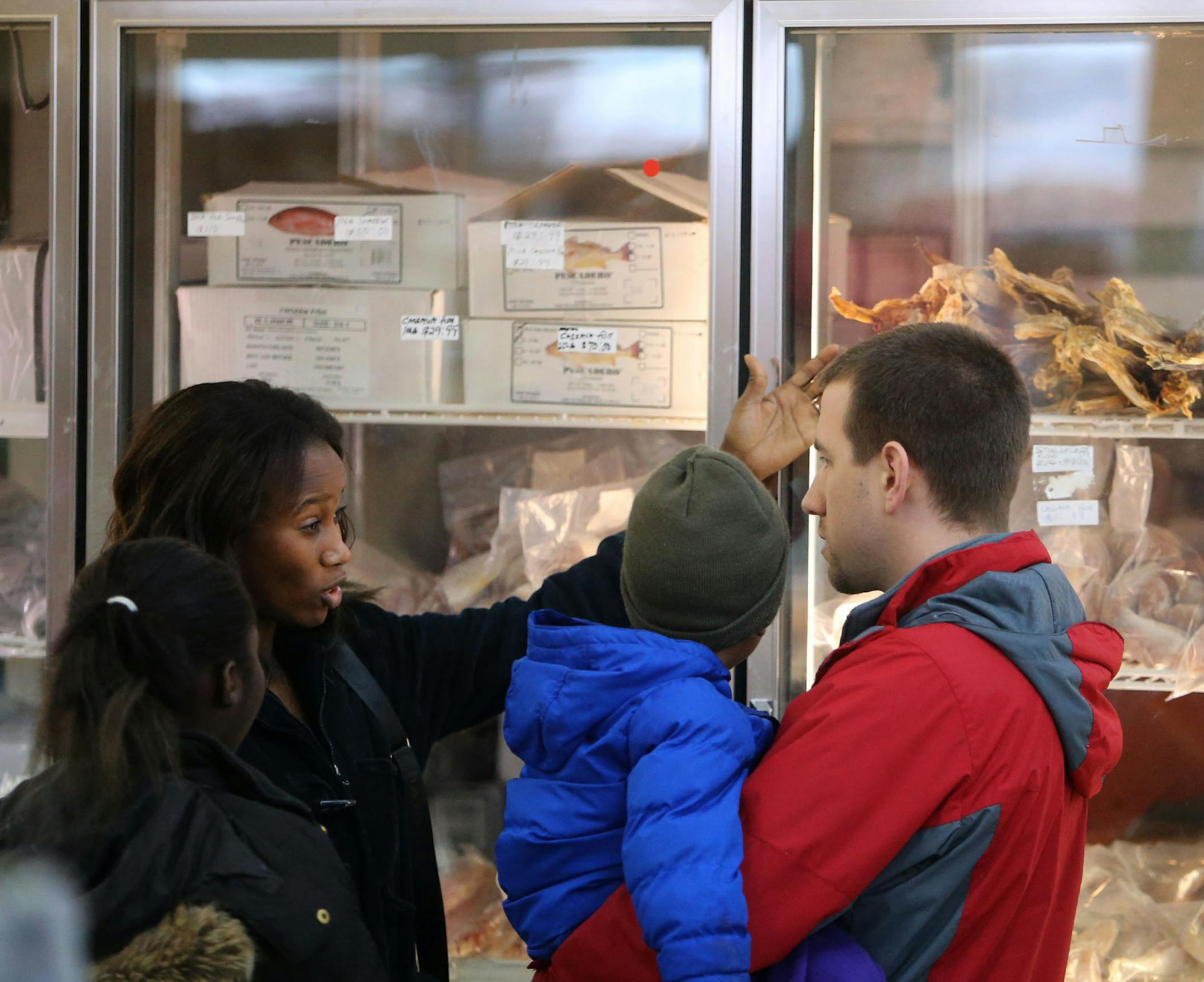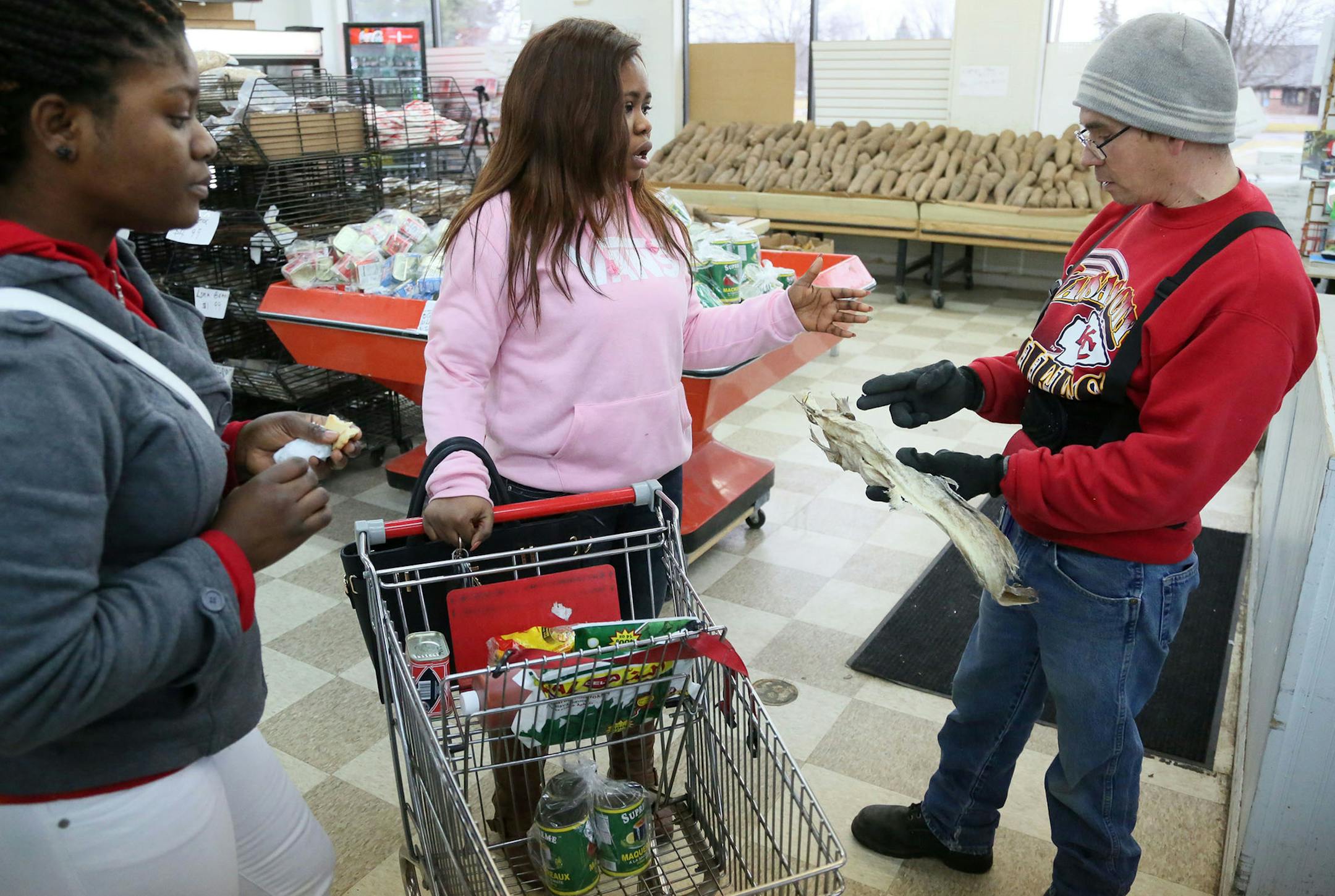
Inside the briny corporate office of the nation's largest lutefisk processing plant, Nigerian immigrant Chidi Omeoga is settling her bill for a half-dozen whole dried cod.
Their tails stick out of the top of her clear plastic bag like sun-baked corn husks.
Omeoga uses the dried cod to add flavor to traditional African soups and stews. Though she calls it a delicacy, she speaks of it with the same tempered enthusiasm many a Norwegian descendant would use to describe lutefisk, the Scandinavian holiday specialty of dried fish reconstituted in lye.
"The flavor — you have to get used to it," Omeoga said. "The smell — you have to get used to it."
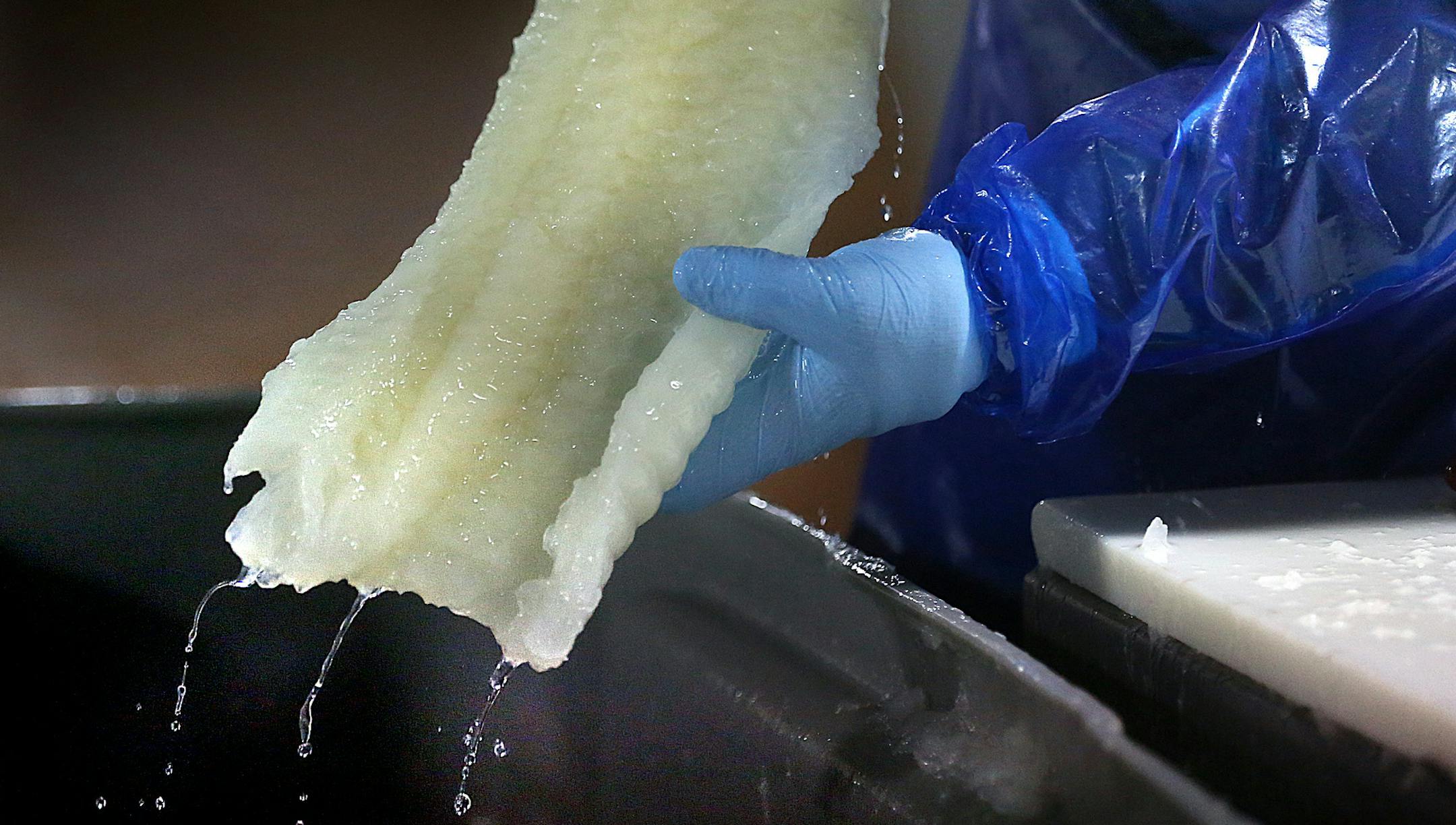
Olsen Fish Co. is ground zero for one of Minnesota's most divisive ingredients. Since 1910, the factory has been processing dried cod, which arrives by the truckload after a long journey from Norway. To turn it into lutefisk, workers soak the kiln-dried filets in a bath of caustic soda, a food-grade version of drain cleaner. When cooked, the fish is bland and chewy at its best; at worst, it's a mushy mess akin to fish Jell-O.
Lutefisk was a necessity before freezers were in every household. But as warm memories of immigrant families preparing the dish fade with the decades, a new wave of immigrants is turning to Olsen for the cod in its still-parched, air-dried form.
With a steady uptick over the past 15 years, unprocessed dried cod sales to Nigerians around the United States now account for as much of a share of Olsen's business as processed lutefisk — about $2 million a year. Lutefisk sales, on the other hand, have been dropping, said Chris Dorff, president of the company.
"With lutefisk, we've got to come up with something," he said. "I don't know what we're going to do."