

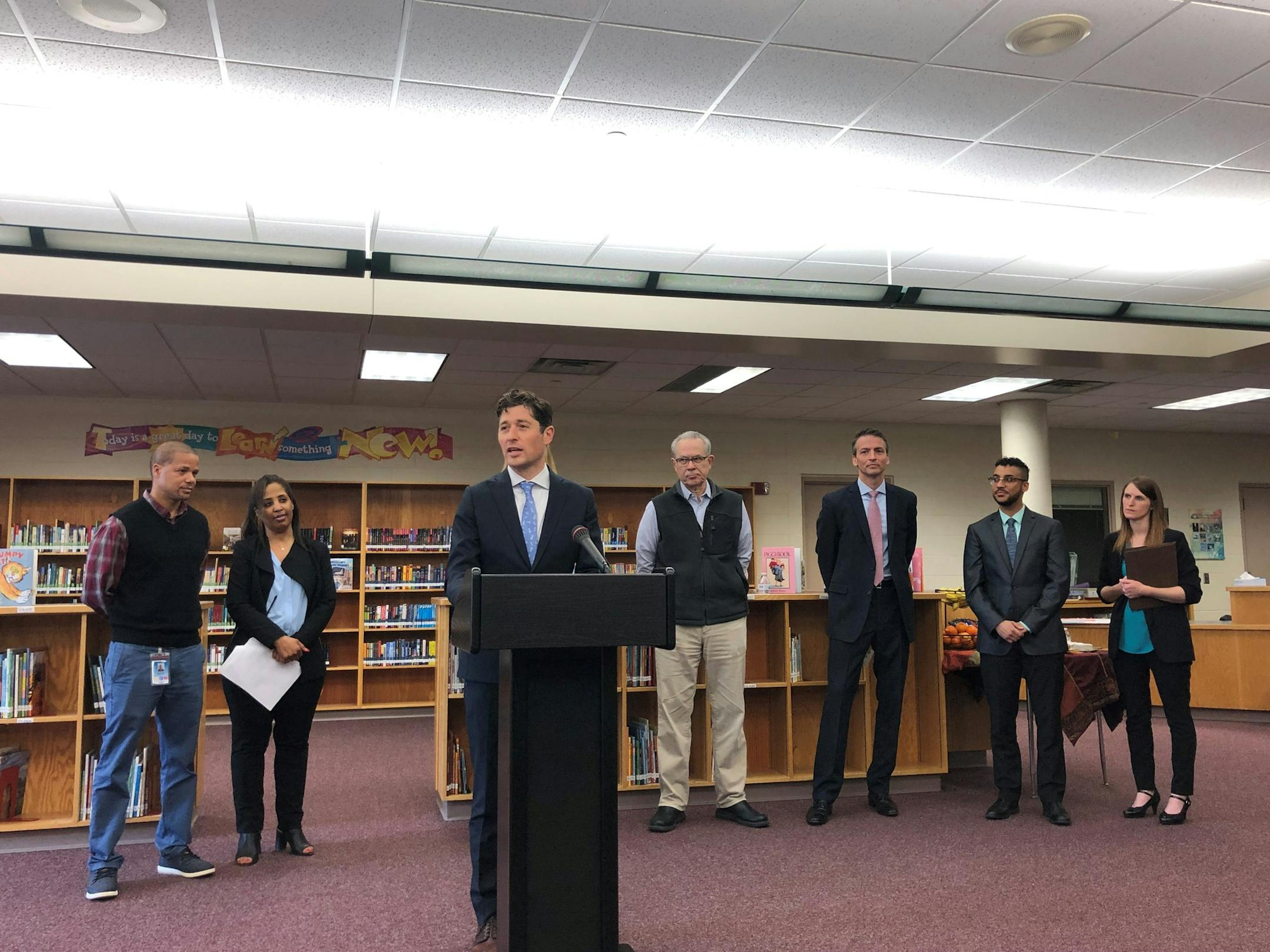
Minneapolis Mayor Jacob Frey on Thursday unveiled an update on his groundbreaking homelessness initiative — making a pitch to local property owners to make more affordable units available to help stabilize the home lives of homeless students in Minneapolis Public Schools.
The new Stable Homes, Stable Schools pilot program, which Frey announced at the start of the school year, will provide rental assistance and other support services to the families of about 650 students in the state's third-largest school district. And University of Minnesota researchers will evaluate how the program will impact the students' education.
"Stable Homes, Stable schools is really important to me," Frey said at a news conference at Cityview Community School of Innovation — one of the schools in the program. "I think it can be a game changer for students and a game changer for their families."
This is the first time the city, school district, county and the Minneapolis Public Housing Authority have attempted such a large-scale effort to help homeless students. But with a tight housing market, city officials are under pressure to find affordable housing for a growing number of homeless students. Their preliminary plan to house the first batch of families in April fell through.
Frey stressed the importance of getting property owners engaged in helping break the cycle of homelessness. Currently, about 7% of the district's 34,000 students are homeless. The program is targeting its resources at 15 elementary schools with the highest rates of homelessness.
The city is investing $3.4 million annually and the MPHA, which is administering the program, is contributing $1.4 million a year. The second phase of the program is geared toward preventing families from experiencing homelessness with the help of the Pohlad Family Foundation, which is chipping in $500,000 over the next two years.
Minneapolis Superintendent Ed Graff said each year his teachers, social workers and administrators work around the clock to help thousands of homeless students, but it's not enough.
"We need partnerships that address housing needs, we need partnerships that address employment needs of our families and we need partnerships that address the well-being of our families," Graff said.


