

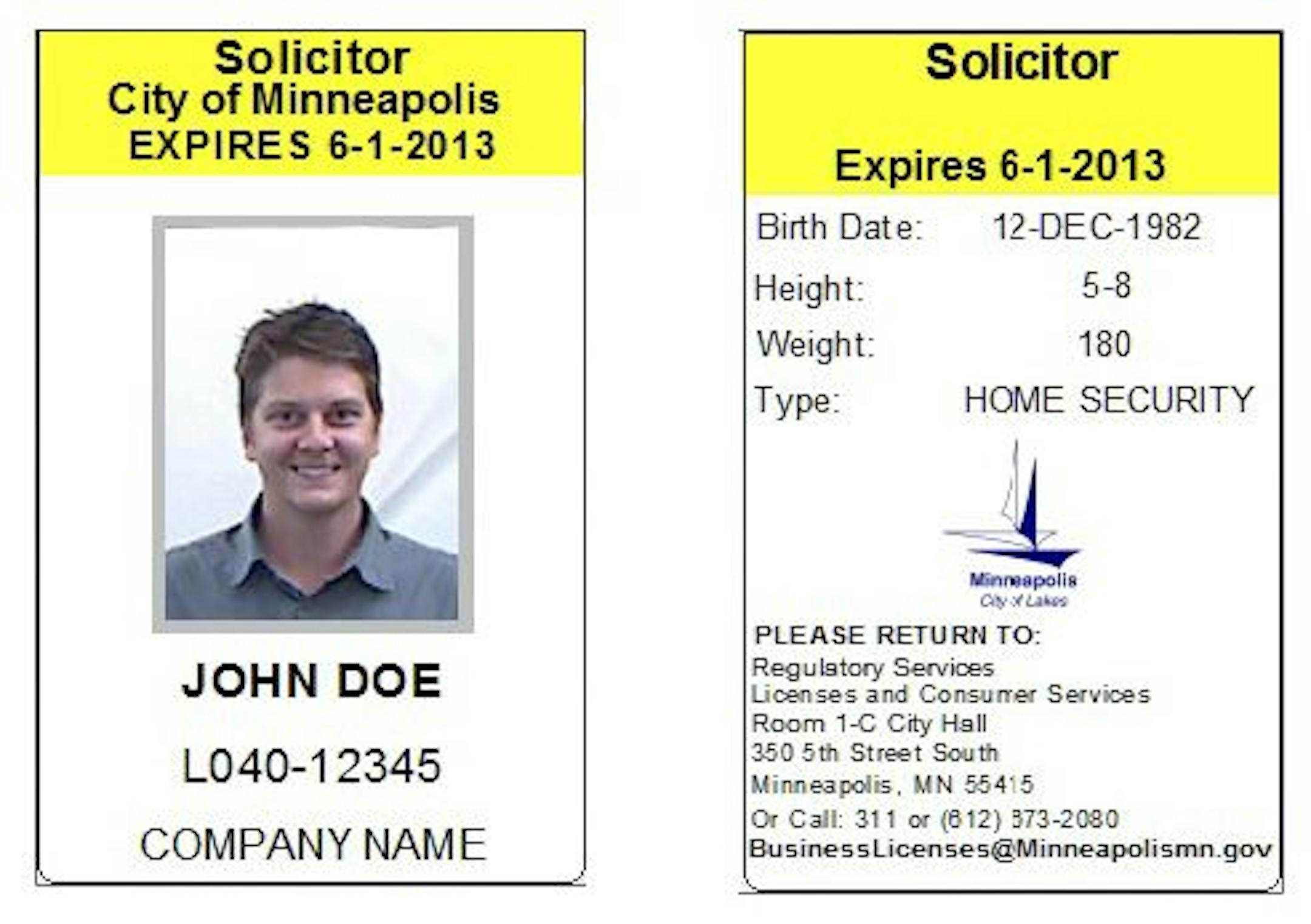
They show up at your doorstep selling security systems, collecting money for causes, hawking magazines. Distinguishing the legitimate operators from swindlers can be complicated in the world of door-to-door sales, but it might get easier in Minneapolis.
The Minneapolis City Council is expected to approve new rules this week that would require door-to-door salespeople to wear city-issued photo identification cards. The proposal is intended to help residents easily identify fly-by-night operators who scam consumers and sometimes exploit youth workers. Previously, only salespeople had to carry the license.
"They can be in our town, hit a neighborhood and be gone before we even get a complaint," said Grant Wilson, the city's head of business licensing. "So this way an exposed identification badge will be a good thing."
The broad proposal simultaneously loosens the requirements for those going door to door for political or religious causes, which have broad constitutional protections. Noncommercial solicitors will not be required to register with the city or display an ID, for example.
Under Minneapolis' rewritten door-to-door regulations, which get a final City Council vote July 20, homeowners will now be able to keep sales representatives away by posting a prominent sign that prohibits peddlers and solicitors from the property. That also won't apply to politicians and advocates.
Door-to-door activity must stop at 9 p.m. or sunset, whichever is later, per the proposal.
Council Member Gary Schiff, co-author of the proposed ordinance, said he hopes the ID requirement will help stamp out traveling magazine crews that employ youths for low wages, long hours and in extremely poor conditions. Schiff believes they won't obtain IDs, and he wants people to call 911 if they encounter a door-to-door salesman without one.
"My hope is that ... we send a strong message to the travelling magazine sales crew industry [that] you are not wanted here," Schiff said. "We do not want to see the exploitation of youth continue."


