The warm and early-starting spring has meant a healthy crop of invasive aquatic weeds and new techniques for removing them from lakes in the metro area and across Minnesota.
In Minneapolis, the park district's mechanical harvester -- a sort of floating combine that's been a familiar summer sight for two decades -- has been mowing Eurasian water milfoil in the Chain of Lakes since before Memorial Day, several weeks earlier than usual, said Deb Pilger, director of environmental operations. The harvester got an assist this year from scuba divers, who yanked weeds by hand underwater at Wirth Lake and Lake Nokomis.
The divers pulled up the milfoil by the roots, unlike the mower, which cuts only the top 4 feet of weeds beneath the surface; the divers are also able to clear targeted areas more exactly, Pilger said. They worked at Wirth Lake because a new boardwalk prevented the mowing machine from being launched, and at Nokomis because that lake doesn't have as much milfoil as others in the chain. The divers are done for now, but may return to action in July, Pilger said.
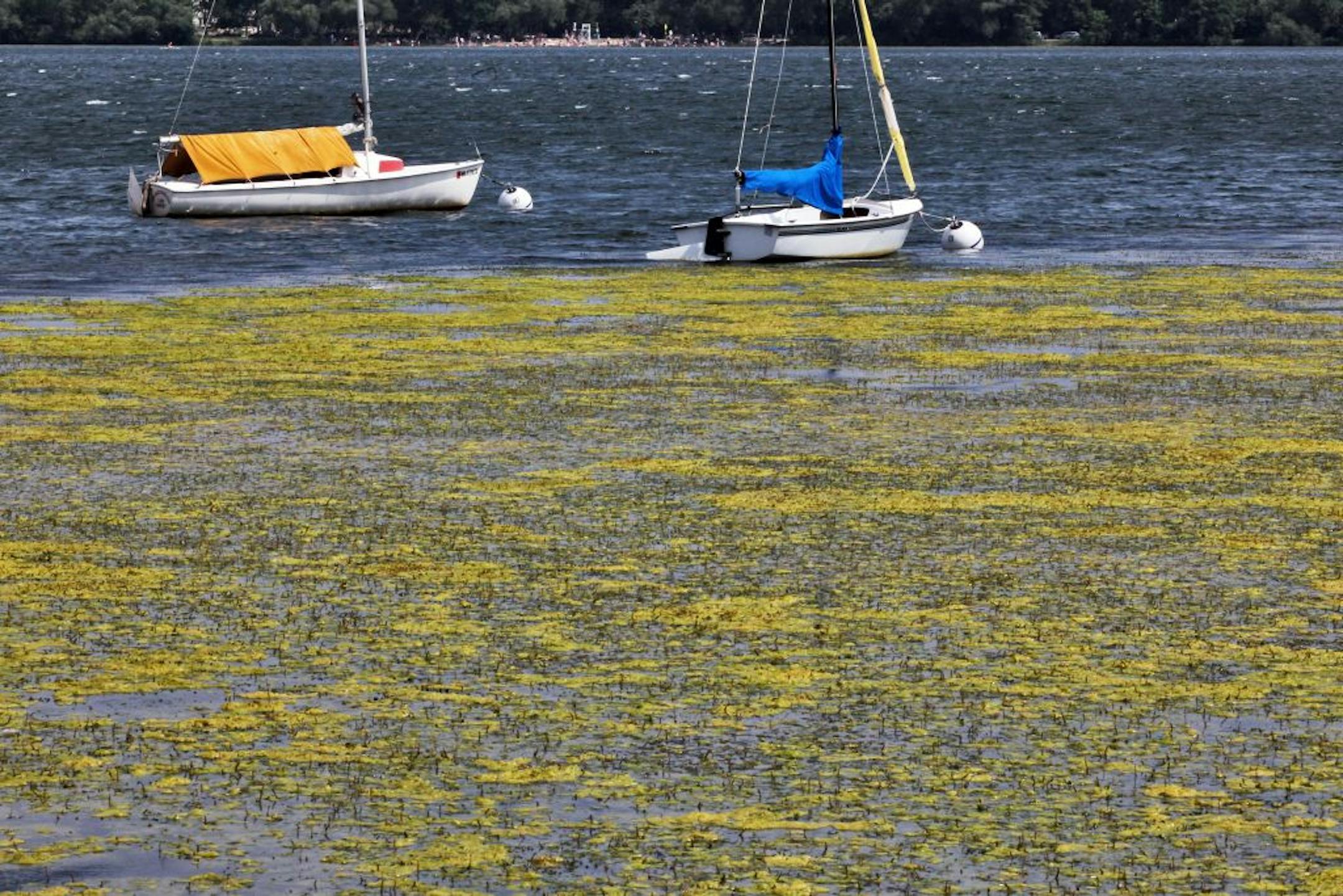
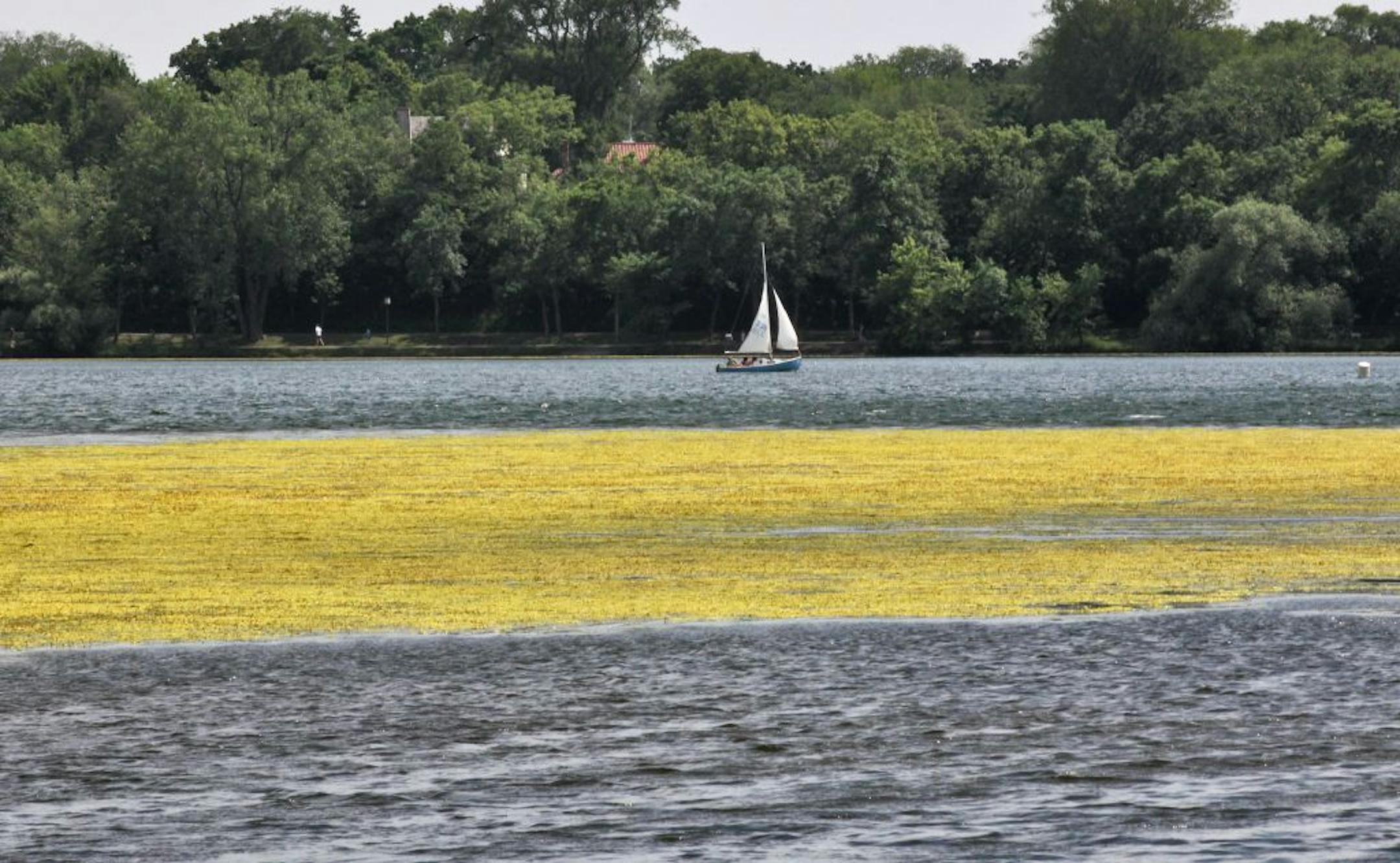
Milfoil has appeared in thick mats on the city's lakes recently. But some of the crop may not have reached the surface because of high water from heavy May rains, Pilger said.
The Lake Minnetonka Conservation District launched its two mowers Thursday, about on schedule because it uses school teachers to run them, said Judd Harper, who manages the district's milfoil removal. But weed growth on the lake is "a lot worse than it was last year," Harper said.
Telly Mamayek, spokeswoman for the Minnehaha Creek Watershed District, said milfoil is already flowering on the surface of some lakes in the district and bays in Lake Minnetonka, something not usually seen until late July. In addition, curly leaf pondweed, another aquatic invasive with an ability to grow under winter ice, has died off in area water unusually early this year, releasing phosphorous, which has caused algae to bloom. Rich Brasch, senior water resources manager for Three Rivers Park District, said that process usually occurs in mid- to late June but is well underway already.
The Minneapolis Park Board's milfoil harvest began with a single mower. A new, second one isn't expected to arrive until late July, but Pilger said the district is likely to rent a second one in the meantime because "we're seeing July-like conditions right now."
The harvesting each year generally requires at least two passes through each lake. Cedar Lake was scheduled for mowing Friday. After that, Lake Harriet is on the schedule, followed by Lake Calhoun. The second lap, starting with Lake of the Isles, should start in mid-July.