

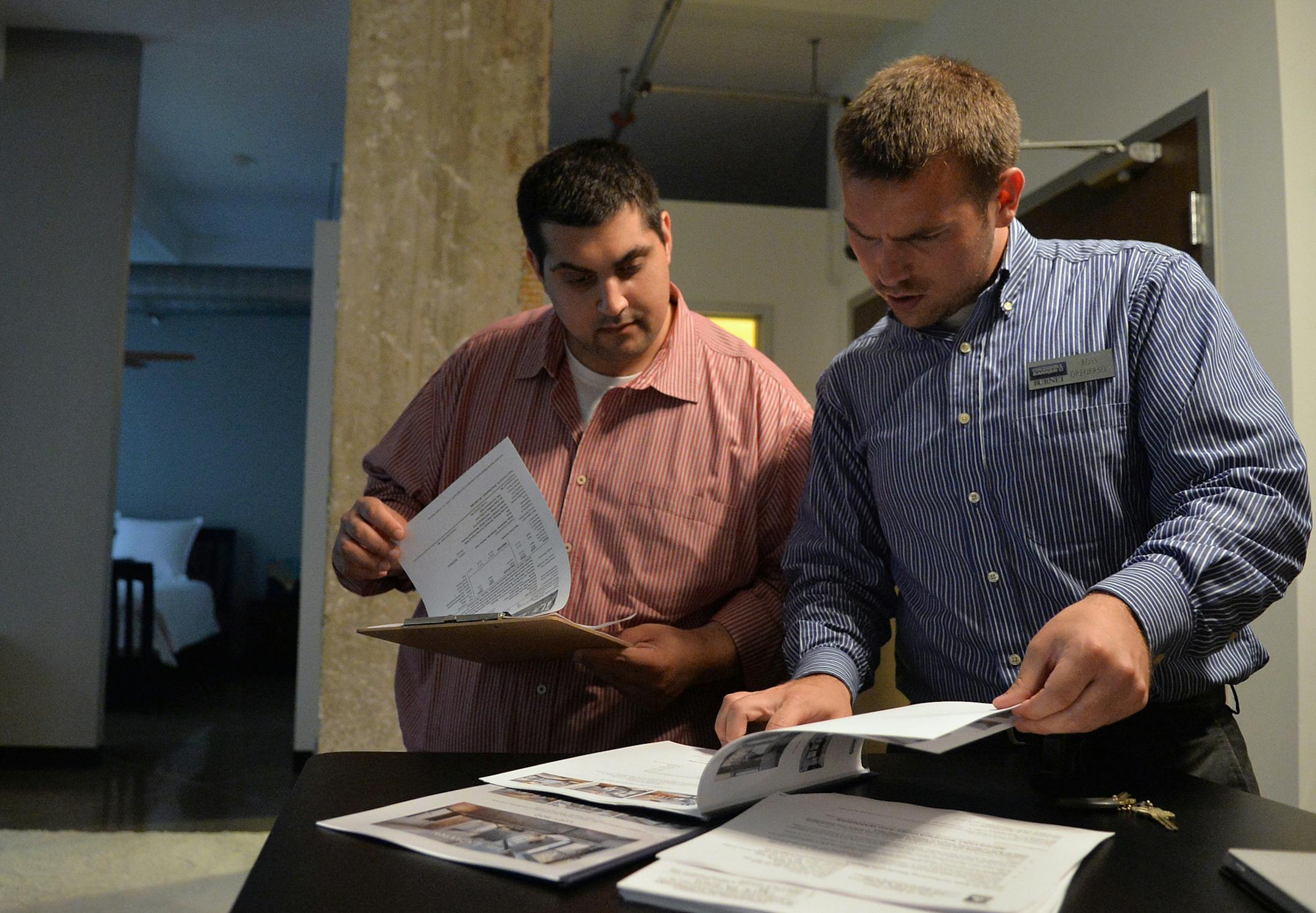
Dustin Walsh could've bought a house in his twenties, except he saw no point.
The 31-year-old had the income, but preferred the financial freedom of renting a room in his cousin's basement.
"With my generation, nobody thinks about their debt and nobody thinks about the future," said Walsh, a buyer for an international company.
But with a hearty push from his parents, he bought his first home in St. Bonifacius last week. His tidy townhouse comes with a two-car garage that has enough space to store all of his stuff.
Walsh is just the typical millennial. And like many of those born since the 1980s, he waited a beat to buy a house. The percentage of Americans under age 35 who owned a home fell to 36 percent last year, the lowest level on record.
With millennials representing the largest demographic group in the country, their noncommittal attitude toward everything from jobs to marriage is stifling the housing recovery. Even as millennials — who far outnumber the baby boomers — approach their peak buying years, sales of entry-level houses are falling.
"The millennials will have a huge impact on the housing market," said Jed Kolko, chief economist for Trulia. "Whatever this age group does, whether it's housing or jobs or consumer spending, will have a big effect on the economy."
That's especially true in the Twin Cities, where low home prices and high wages made the region the second-most affordable housing market in the nation last year. More than a quarter of the people who are new to the Twin Cities are 20 to 34 years old.


