

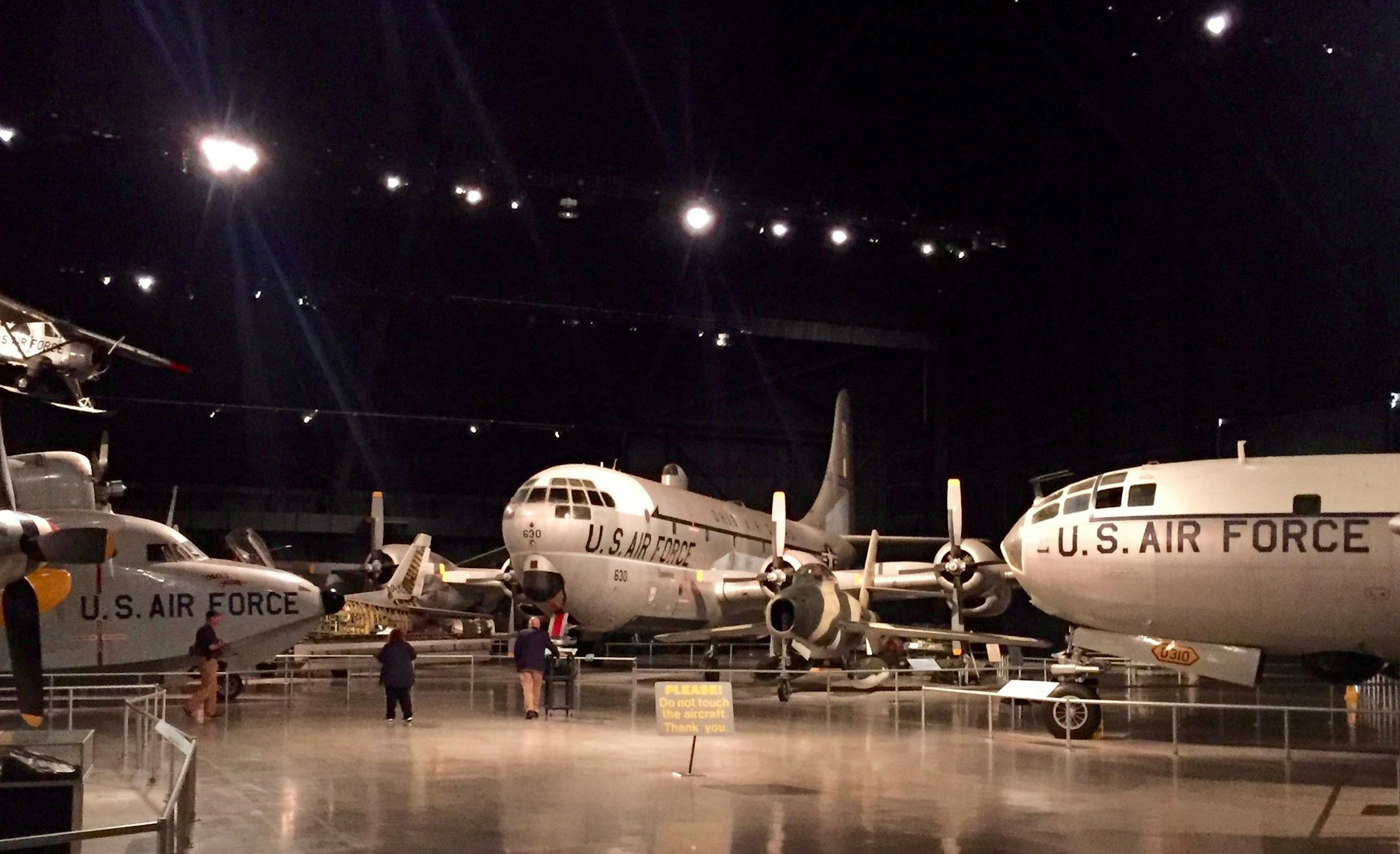
The history of Dayton, Ohio, is the story of many Midwestern cities. Its industrial heritage is impressively displayed in a place where more patents per capita were once granted than anywhere else in the nation — but the painful history of post-industrialization is not so well cataloged. You see it, however, in depopulated neighborhoods and a downtown pockmarked by empty parking lots. If Dayton didn't host Wright-Patterson Air Force Base, its population, already halved since 1960, may have declined further.
But there is an alternative to just maintaining decline. Dayton's well-preserved cultural and military heritage is worth seeing, but this is also a city regenerated by a creative class and a local government focused on quality of life. Throw in nearby Yellow Springs, a countercultural enclave set in the pastoral Ohio landscape, and you'll see that the Miami Valley, surprisingly and proudly, has something for everyone.
The Gem City
Paul Laurence Dunbar, born in Dayton in 1872 and among the first black American writers to earn worldwide popularity, called his hometown "the brightest gem that has ever decked with beauty dear Ohio's diadem," perhaps the source of Dayton's nickname. His home is preserved as a state memorial (1-937-313-2010). Excerpts from his writing, mostly written in dialect, are displayed throughout and vividly illustrate the African-American experience.
I appreciated the collection of Air Force Ones at the free National Museum of the United States Air Force, where hundreds of aircraft are displayed across four hangars. It's encyclopedic and just shy of overwhelming: I can only imagine what a visit would be like for someone with a layman's understanding. It is indescribably moving to visit alongside so many veterans (www.nationalmuseum.af.mil).
Dayton is also the birthplace of Orville Wright, and at Carillon Historical Park you can see one of the Wright brothers' five known extant bicycles, plus Wilbur Wright's perfectly balanced 1904 spruce propeller (the world's oldest) and the 1905 Wright Flyer III. The docents say it was logical that bicycle-makers invented powered flight because cyclists and pilots both must lean their vehicles into turns. The park's carillon was erected in 1942 and plays beautifully (1-937-293-2841; daytonhistory.org).
The Dayton Visual Arts Center is an intimate gallery hosting 10 contemporary exhibits a year. The works are for sale, but those in the "artomat," a revamped cigarette vending machine that dispenses bite-sized crafts like tiny handmade journals, are more budget-friendly (daytonvisualarts.org).
The Oregon District evaded the wrecking ball and is Dayton's retail and nightlife center. Brim is a hat shop selling cloches, fedoras, church hats and beyond — dressy to casual, mostly U.S.-made (brimonfifth.com). At the bawdy Heart Mercantile, browse barware, funny cards, soaps, candles and funky socks (heartmercantile.com).
Food and drink
The Oregon District's best restaurant is the Corner Kitchen (afinerdiner.com), exclusively supplied by a nearby farm. It's a "finer diner," a place to get a burger and beer as well as a steal of a prix fixe dinner. When I visited, it was quinoa pita salad, a pan-seared scallop and succotash, chicken liver mousse, braised pork pasta, New York strip and butterscotch pudding — all with wine pairings, for $60! At the macabre Toxic Brew Co., try the barrel-aged Night Ender imperial stout that packs a whiskey punch and lots of malt (toxicbrewcompany.com).

