

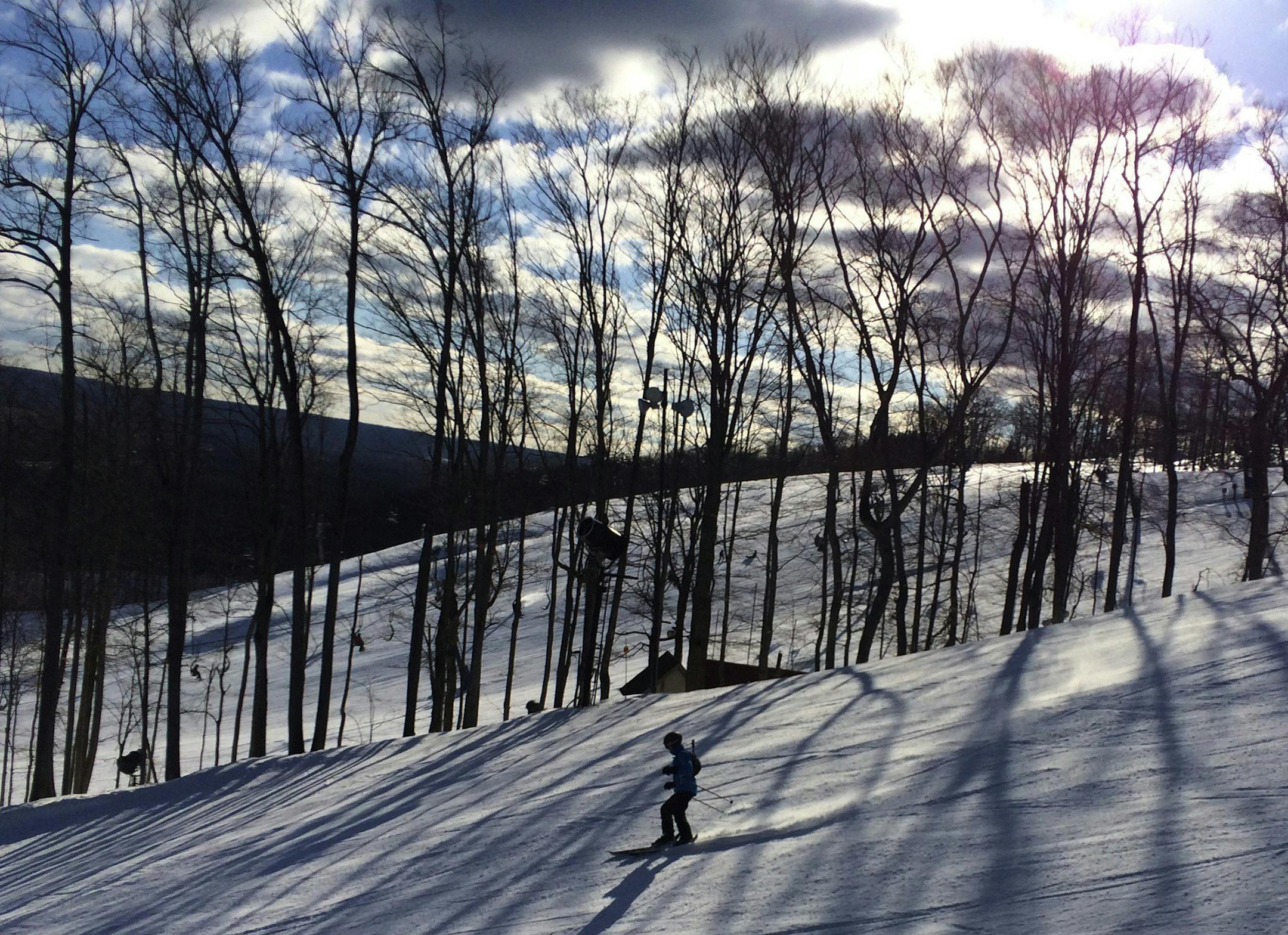
Perhaps Midwesterners were not meant to downhill ski. Consider what they've been given: flat terrain, subzero windchills and fickle helpings of a ski weekend's most crucial ingredient. During my first morning at Boyne Mountain Resort in northern Michigan, the server at the ski lodge restaurant pointed to the broad windows that led to the slopes I'd soon be whooshing down. "See those tables out there?" she said, pointing to some metal lawn furniture. "They had three feet of snow on them a couple weeks ago."
Alas, that was before the resort had opened for the winter. Now that the season had officially begun, there wasn't a flake on those tables. A most Midwestern thing had happened: Temperatures rose, the skies dropped rain and the snow vanished. The elements had conspired against Midwest downhill skiing. Again.
But skiing is fun, so we try here in the Midwest. Among the places that try hardest are the Boyne resorts. There are two Boynes: Boyne Mountain and Boyne Highlands, about 30 miles apart, just below Michigan's Upper Peninsula. They provide one of the Midwest's most comprehensive ski experiences, including the sorts of things you'd find at resorts out West: outdoor hot tubs and swimming pools rising with steam, ski-up bars and restaurants, facials and massage, plenty of rooms with wide views of the slopes and, no matter how much nature fights us, snow. Both Boynes spend ample time making it, spitting bright mists into the air from squat, hair dryer-looking machines as often as 24 hours a day.
And so it was that during a recent weekend, even as the terrain around both Boynes sat mostly brown and snow-free, the mountains (or, more accurately, hills) hosted a steady stream of skiers and snowboarders, me among them.
Boyne Mountain was opened in 1948 by Everett Kircher, a ski enthusiast who bought the resort's first 40 acres for $1. He opened with two runs, a small lodge and the region's first chairlift, which Kircher imported from Sun Valley, Idaho. In 1963, he turned what had been a private ski club into Boyne Highlands. The Kircher family still owns and operates both resorts, along with close to a dozen more both West and East, including Big Sky in Montana, Brighton in Utah and Sugarloaf in Maine.
The first thing to know about skiing at the Boynes, or most places in the Midwest, is that it is not skiing out West. It's not even skiing at the better resorts in the East. We just don't have the elevation. Out West, the runs can go on seemingly forever, or at least several miles. Here, they're lucky to reach a mile. But that's OK. It's still fun.
The Boynes don't offer a lot of ruggedness or adventure (unless of course you've never skied — in that case the adventure is ample). And the most daunting black-diamond runs here are about on par with challenging blue runs in the West. But ultimately there's no point in comparing. The greatest attraction of skiing in the Midwest is that it is skiing — in the Midwest. No airplane required.
Boyne Highlands
I began at the quieter of the two Boynes. Sitting just north of charming lakeside town (and onetime Ernest Hemingway haunt) Petoskey, Boyne Highlands is a decidedly low-key experience. That was especially the case on a Wednesday and Thursday early in the season. Aside from a group of Midwestern ski instructors working on their certification, the slopes were mostly quiet. Better still was the sun, which had decided to come out.


