An electric chandelier hangs in a small gallery at the Cedar Rapids Museum of Art. It looks like other chandeliers, except the branches are curved cornstalks and the flame-shaped bulbs rise from the pointy ends of eight life-size Iowa ears of corn. Each of the ears — which look a little singed, as if roasted — stands in a ring of eight droopy little leaves. Above, on the main stalk, between large, bending leaves, four young ears peep out brightly.
This elaborate copper-and-iron light fixture was designed in 1925-26 for the Iowa Corn Room at the Montrose Hotel in Cedar Rapids. A few years later, its creator, Grant Wood, painted a double-portrait of his sister and his dentist, holding a pitchfork, with a wood-frame farmhouse behind them.
In 1930, that painting, "American Gothic," won third prize at the Art Institute of Chicago, which bought it. Did anyone imagine it would become the one work in the museum's collection known by every adult in America (or darn near, as they say on the farm)?
Grant Wood's 124th birthday would be Feb. 13. (He died from pancreatic cancer in 1942, one day short of 51.) He has been called "American art's most famous one-hit wonder," but in fact he's an artist and a craftsman — a student of Ernest Batchelder in Minneapolis — who gets more interesting the more you see of his work.
And the place to do that is Iowa.
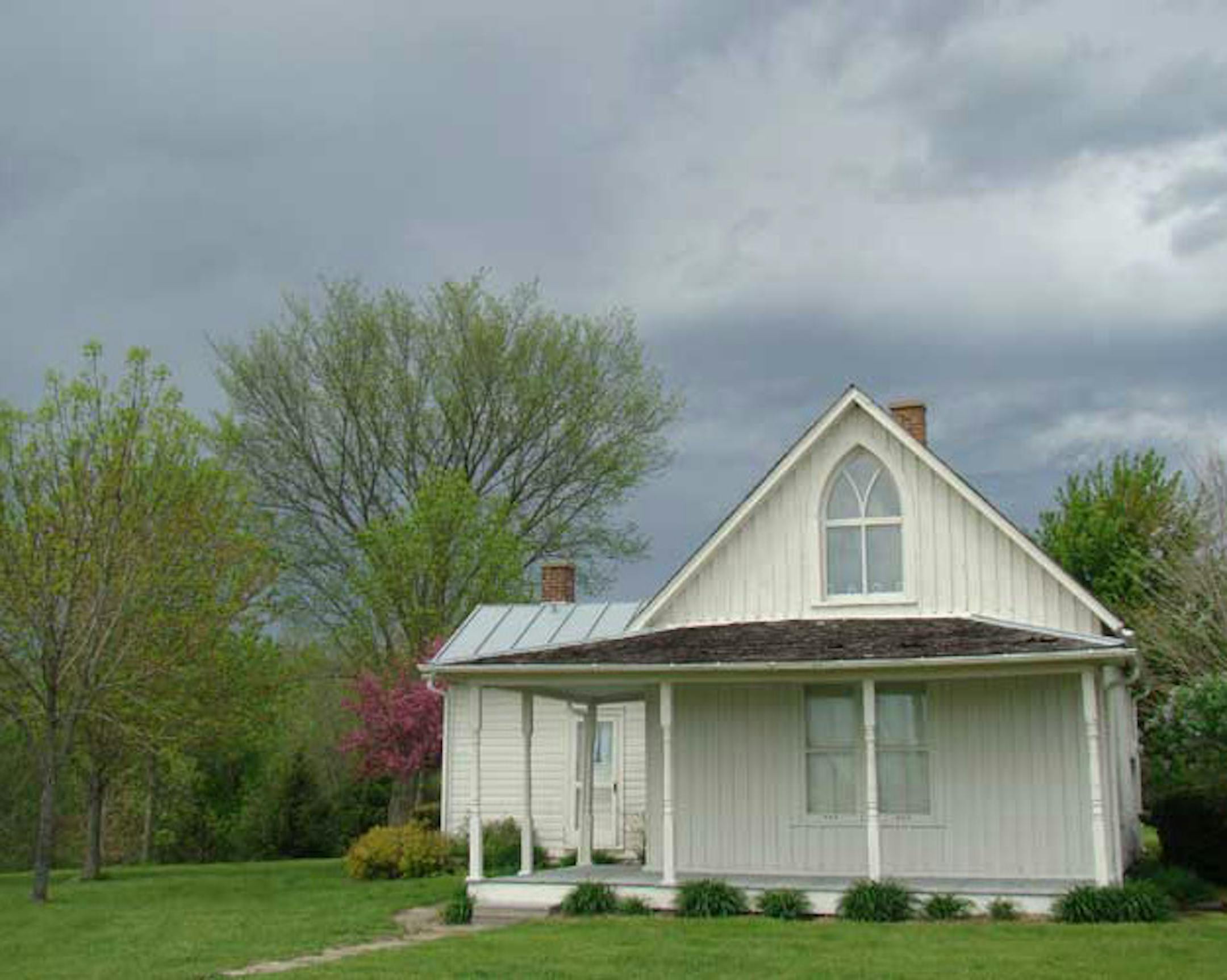
First, let's get the house out of the picture. At the American Gothic House Center (free; 1-641-652-3352; americangothichouse.net) in Eldon, about 120 miles southwest of Cedar Rapids, they'll give you the clothes and the pitchfork to re-create the pose of those two sourpusses. On the second Saturday of the month, April to October, tours inside the house will be offered for the first time. Visit June 12-14 for American Gothic Days.
The best cities for viewing Grant Wood's art are Cedar Rapids and Davenport, 90 minutes apart, if that.
Wood's most monumental work fills the front wall of the Veterans Memorial Building in Cedar Rapids. A stained-glass window 24 feet high and 20 feet wide, it depicts the Republic as a Greek goddess holding the palm of victory and the wreath of peace. Below, their hats and helmets reaching the height of her sandaled feet, are six soldiers, representing six American wars from the Revolutionary War to World War I.