

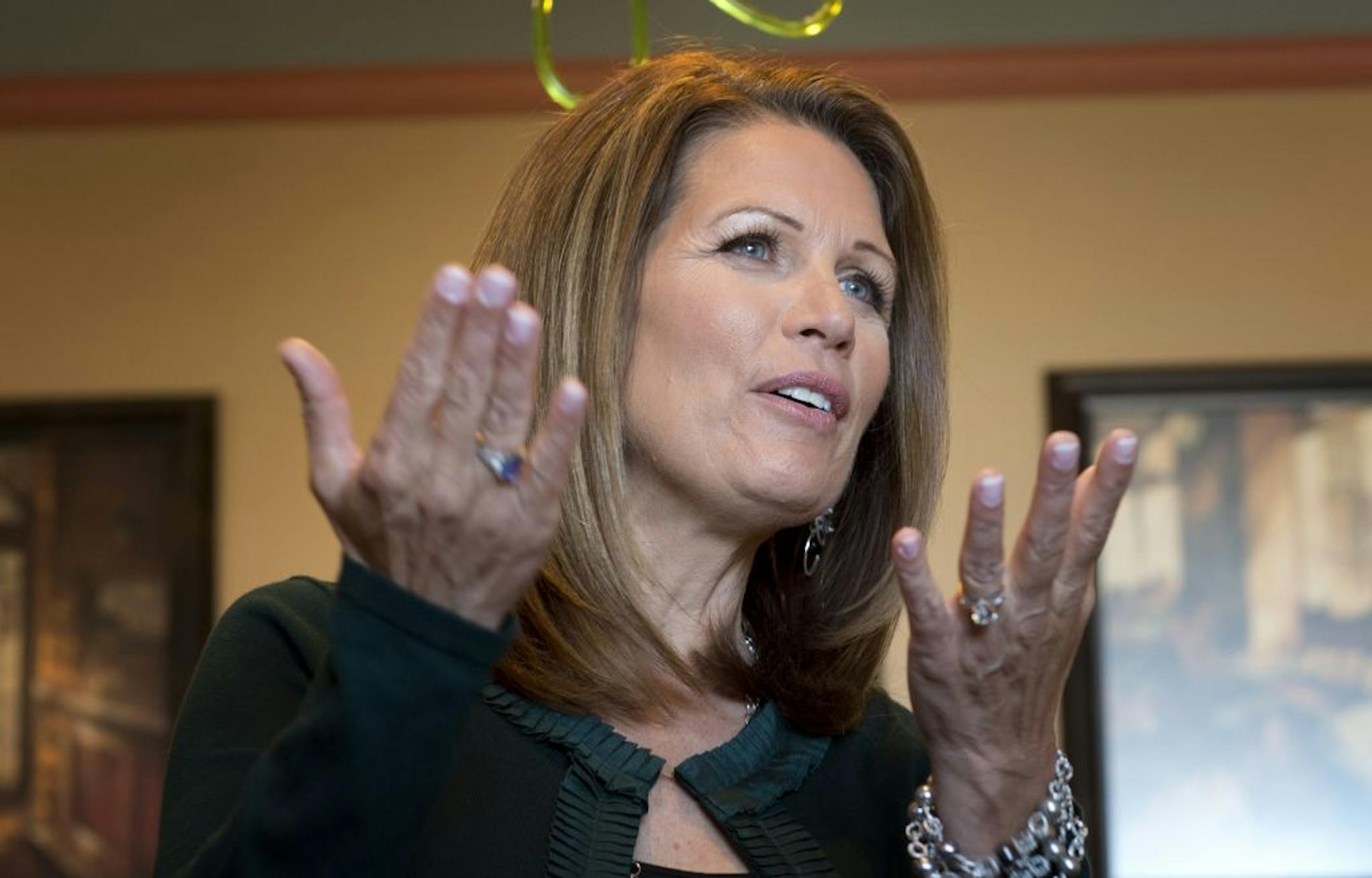
Normally, it's an outrageous statement or a stunning disregard for the facts that puts an unflattering national spotlight on Minnesota congresswoman Michele Bachmann.
Bachmann's typical response is to ignore the negative publicity and the questions about her judgment and act like nothing happened. That strategy has served the charismatic conservative firebrand and four-term U.S. House representative fairly well — up to this point.
Her core supporters usually shrug off bad press as media bias. The media, particularly in this age of nonstop news coverage, gives up and speeds off to the next political gaffe or miniscandal of the day.
But Bachmann's just-ignore-it approach is completely unacceptable for the high-profile political imbroglio she's in now. Her Sixth District constituents — who have watched Bachmann campaign for years on her character and values — in particular deserve better than the brushoff she's given to questions about the disturbing series of legal problems still ensnaring her 2012 presidential campaign.
According to an April 21 Star Tribune story by Kevin Diaz, Bachmann's presidential campaign is "under investigation by police and federal regulators from Iowa to Washington.'' There are troubling allegations of campaign-finance violations, including questions about under-the-table payments to a high-ranking Iowa campaign staffer, improper use of political action committee funds to pay the campaign's national political director and improper use of campaign staff to help market Bachmann's autobiography.
In addition, the alleged theft of an valuable e-mail voter list from one former Iowa staff member's laptop by another member of Bachmann's campaign is the subject of a criminal investigation in Iowa, as well as the basis of a civil lawsuit claiming there was a campaign cover-up of the theft.
The quantity and complexity of campaign-finance laws — in the controlled chaos of a campaign, lines can easily get crossed and often do — make it challenging to understand how serious these alleged improprieties may be.
But inquiries by the Office of Congressional Ethics and the Federal Election Commission suggest that potential irregularities went beyond forgetting to fill out a form or other understandable mistakes.

