

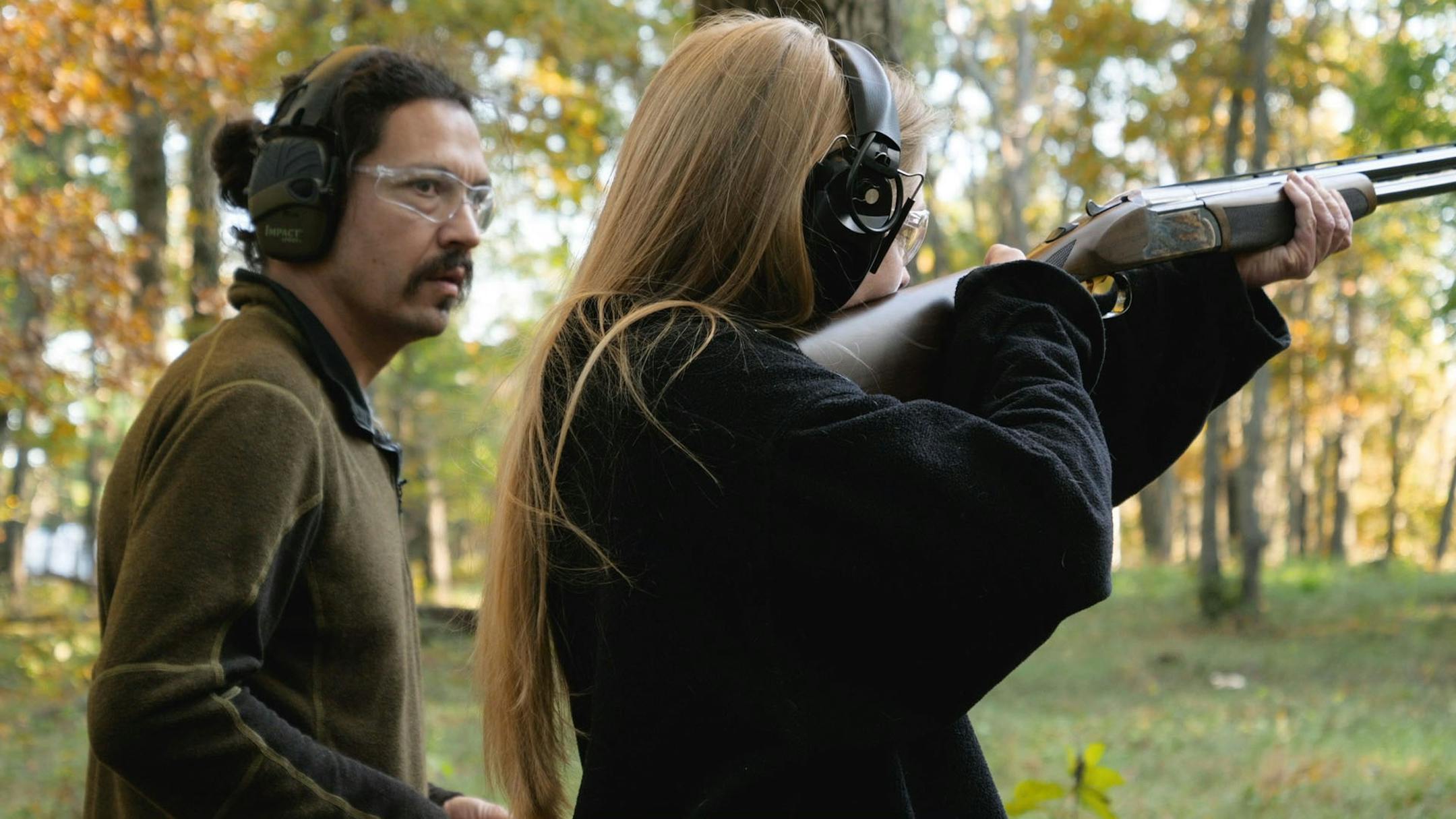
Ben Peña is an unlikely hunter. Raised by a single mom, he shuttled between south Minneapolis and Mexico, but his mother nevertheless took up deer hunting and taught it to her son.
Peña's mother died in 2007, the same year he returned from serving in Iraq as an Army medic in the Minnesota National Guard. "I just wanted to do something," Peña said, to pass on to others the love of the outdoors that his mother passed on to him.
Peña, an avid angler, started by volunteering at Fishing for Life, teaching city youth to fish. Then he took some novices turkey hunting, and he helped out with Becoming an Outdoors Woman, an outreach program of the Minnesota Department of Natural Resources (DNR). His portfolio of teaching others to fish and hunt has expanded from there. Now Peña, a captain in the Minneapolis Fire Department, spends much of his autumn mentoring others rather than seeking game on his own.
But Minnesota doesn't have enough Ben Peñas, said James Burnham, the DNR official whose job it is to recruit and retain hunters and anglers. Burnham said there are more people interested in trying hunting and fishing than there are veteran sportsmen and women willing to teach them. And the DNR has launched new programs and a new advisory council to bridge that gap.
The decline in hunting and fishing license sales is a well-known problem — the DNR recently announced that deer license sales dropped 5 percent from 2017 to 2018. The constant drumbeat of troubling news about chronic wasting disease hasn't helped. The DNR sold 805,242 fishing licenses through the Fourth of July weekend in 2018, but that was down 41,000 licenses from the previous year. The numbers are still being tallied for all hunting and fishing licenses for the 2018 seasons, but recent years have seen declines in small game licenses of up to 12 percent from one year to the next.
To stem the drift, the DNR has embraced the "R3" model: recruitment, retention and reactivation. Burnham said R3 is based on a social science research, started in the 1950s, that studied how people adopt new activities — first they become aware of it, then they express an interest and then they try it.
But people rarely stick with a new activity without a community of support, and that can be lacking when taking up outdoor activities. Because a lot of adults who want to experiment with recreation don't have family and friends on whom to lean, the DNR is working to build support networks for novice hunters and anglers.
"Minnesota has a unique community of people who eat, sleep, live and breathe hunting and fishing," Burnham said. "And we also have a growing community of people who want to try these activities but don't have any connection to people who do them."


