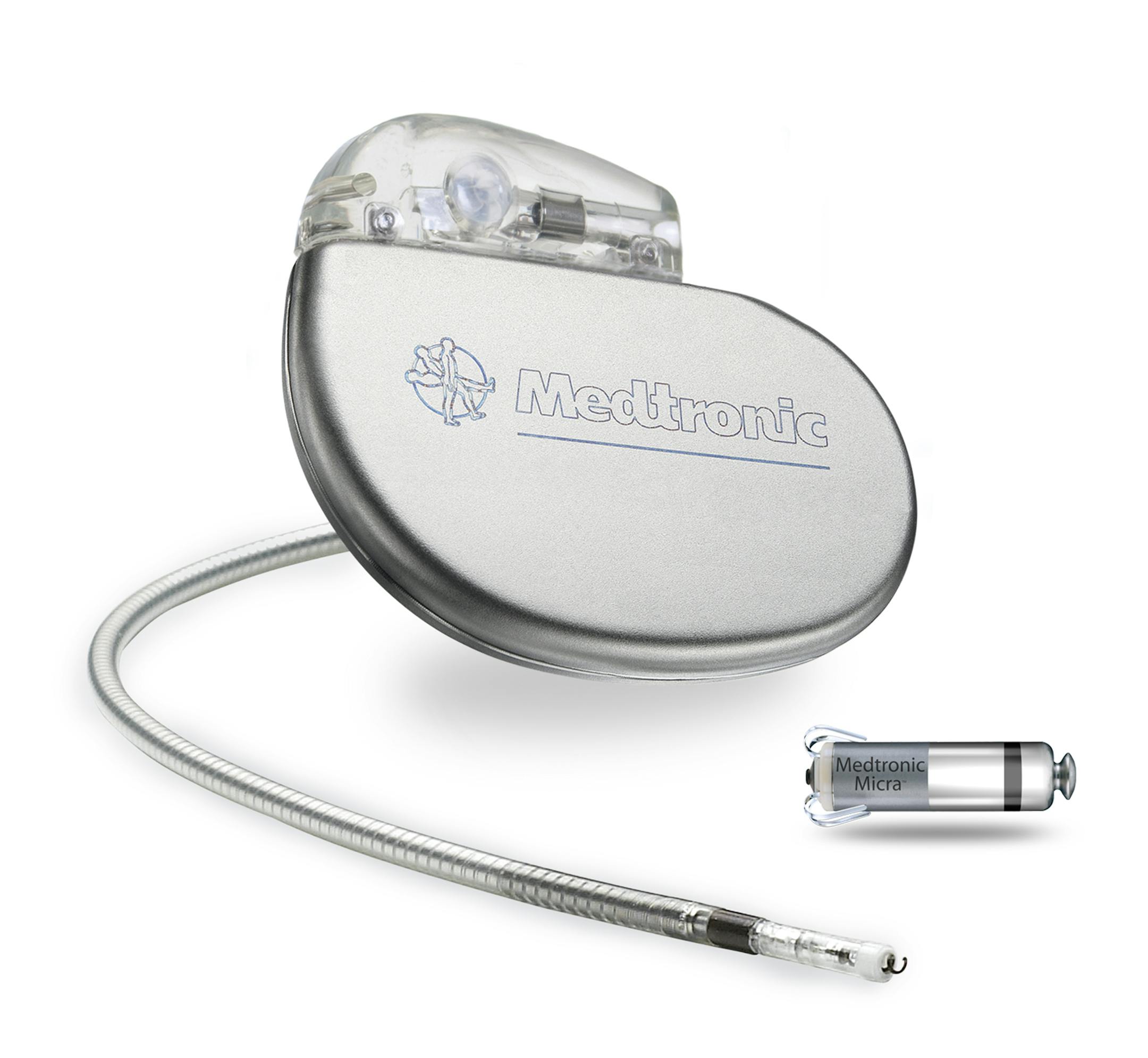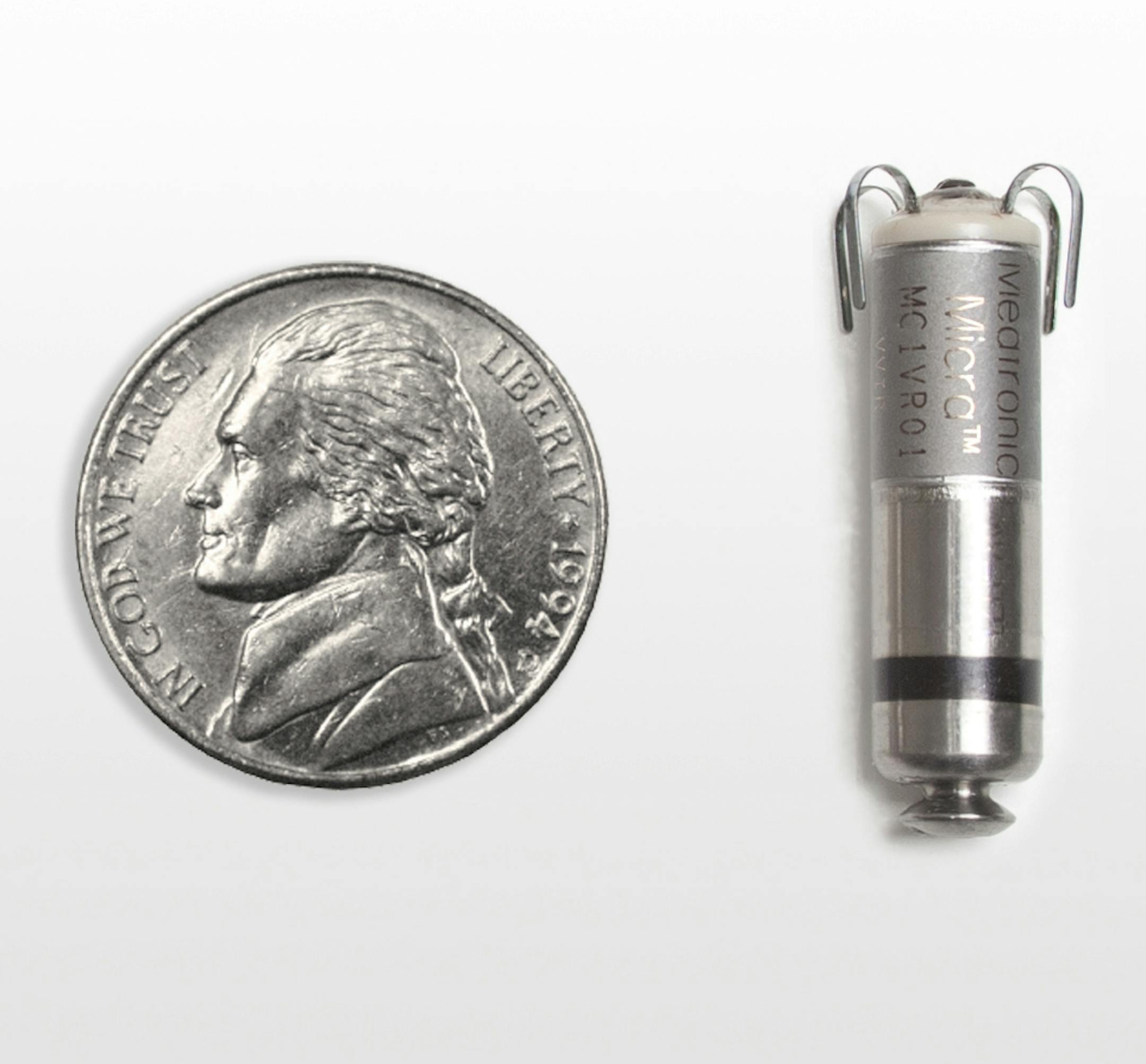
Fifty-seven years ago, when Medtronic co-founder Earl Bakken invented the world's first battery-powered transistor pacemaker, it was the size of a small book.
Medtronic's latest is about as big as a vitamin.
The world's biggest medical device company just grabbed the mantle for having the smallest pacemaker cleared for sale by a government regulator. That approval came in Europe, Medtronic said Tuesday. Now, Medtronic joins crosstown device rival St. Jude Medical Inc. in speeding toward full commercial approval from the Food and Drug Administration for the sale in the United States of tiny pacemakers that fit entirely inside the heart.
Both devices are so small that they're not implanted through traditional surgery, but by using a tube fed to the heart through an incision in the femoral artery in leg. Both companies are enrolling hundreds of patients with slow heartbeats in clinical trials that are needed to get U.S. approval.
"We view this technology as disruptive," Medtronic's cardiac rhythm medical director Dr. David Steinhaus said of the Micra Transcatheter Pacing System.
"It may be that someday all pacemakers use similar technology."
Like the Bakken pacemaker, the Micra was invented in Minnesota. But unlike the Bakken, the Micra is not the first to market — St. Jude Medical in Little Canada nabbed European approval for a similarly small pacemaker called the Nanostim in 2013. It is slightly larger than the Micra.
Pacemakers are designed to electrically stimulate the heartbeats of patients whose heart rhythm is too slow because the chambers don't communicate with each other properly, a multitiered condition known as heart block or bradycardia.